
Thor Heyerdahl was born in Norway in 1914. After studying at the Oslo University he went to the Marquesas Islands in the Pacific. He and his wife studied the possibility that the Pacific Islanders could have migrated from South America many centuries before. World War II interrupted his work. He served with the free Norwegian Air Force as an officer in the special parachute unit operating in the Arctic Norway. After the war he continued his research. He led archaeological expeditions to the Galapagos and Easter Islands.

He built the Kon-Tiki Balsa raft in Peru. He left Callao on the 28th April 1947 and sailed it for 6,900 Km across the Pacific to Tuamotu Islands arriving on the 7th August 1947. This proved that the Incas had the ships capable of navigating the vast distances of the Pacific.
He then considered that the Phoenicians sailed across the Atlantic many centuries before Columbus “discovered” the “West Indies”. Similar reed boats are used in the Mediterranean, along the West Coast of Africa and in South America, notable on Lake Titicaca. Wherever these boats are used the pyramid type buildings were constructed.
The Olmecs, Aztecs and Incas used a similar calendar to the one used by the Egyptians. Both of these calendars start around 3000BC. This led him to believe that the early Olmecs originated or were influenced by the Phoenicians. But could reed boats cross the Atlantic? The experts said no.

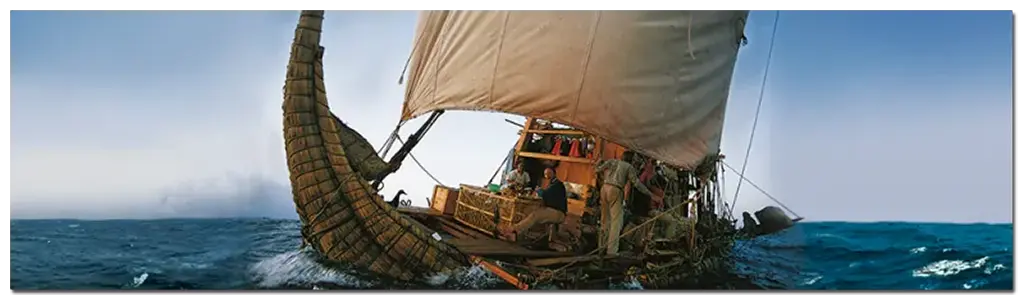
In 1969 and 1970 he built papyrus reed boats and sailed from Morocco. He named these boats Ra after the Sun God. The first started to break-up and had to be abandoned before it reached the Caribbean. Undaunted by this setback he returned to Morocco and built Ra II. This time he employed four Quechua and Aumara Indians and a translator from Lake Titicaca on the border of Peru and Bolivia. They built boats almost exactly as depicted in the carvings of the Pyramids.
Ra II was 40 feet long, 16 feet wide and 6 feet deep. It had a 12 x 9-foot cabin. It was made from Papyrus reeds source from Chad. They set sail from Safi in Morocco on 17th May 1970 and arrived in Barbados late on the 12th July 1970. A journey of 6,100 Km.
Pat Toppin (8P6AZ) and Allan Otway (8P6AH), Barbados Radio Amateur Operators, were in contact with them during their voyage. They provided a reliable link to the families of the explorers.
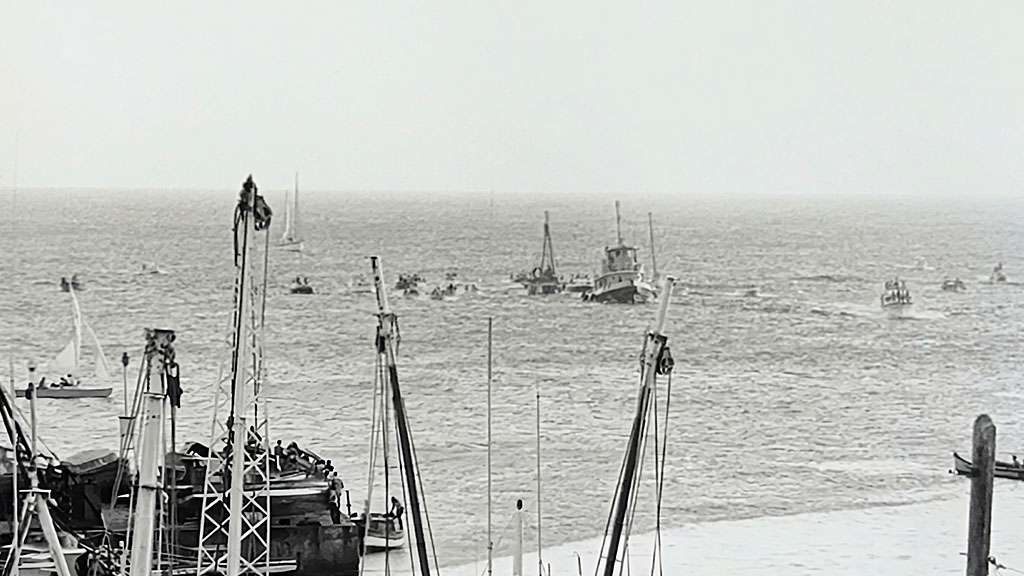
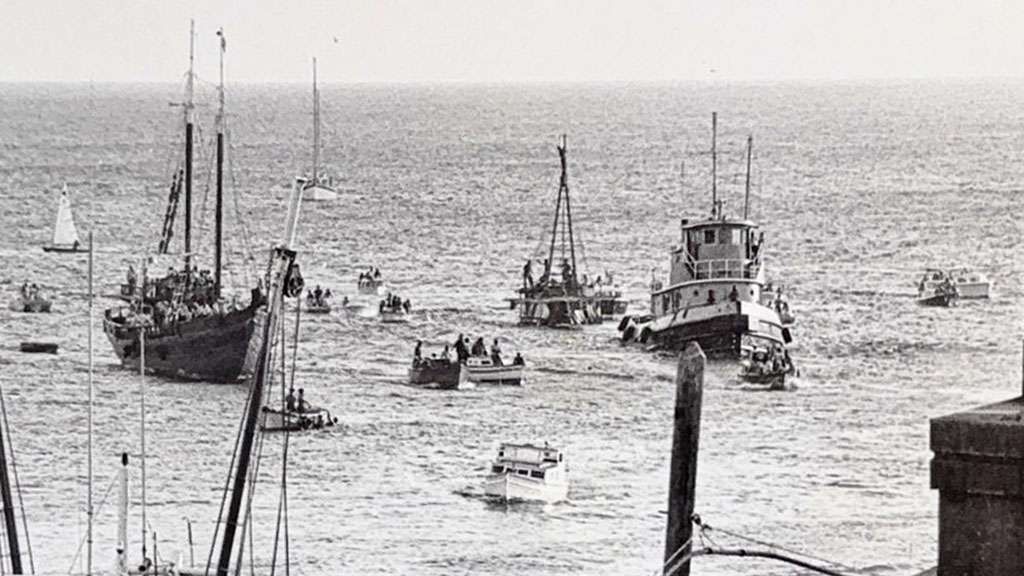
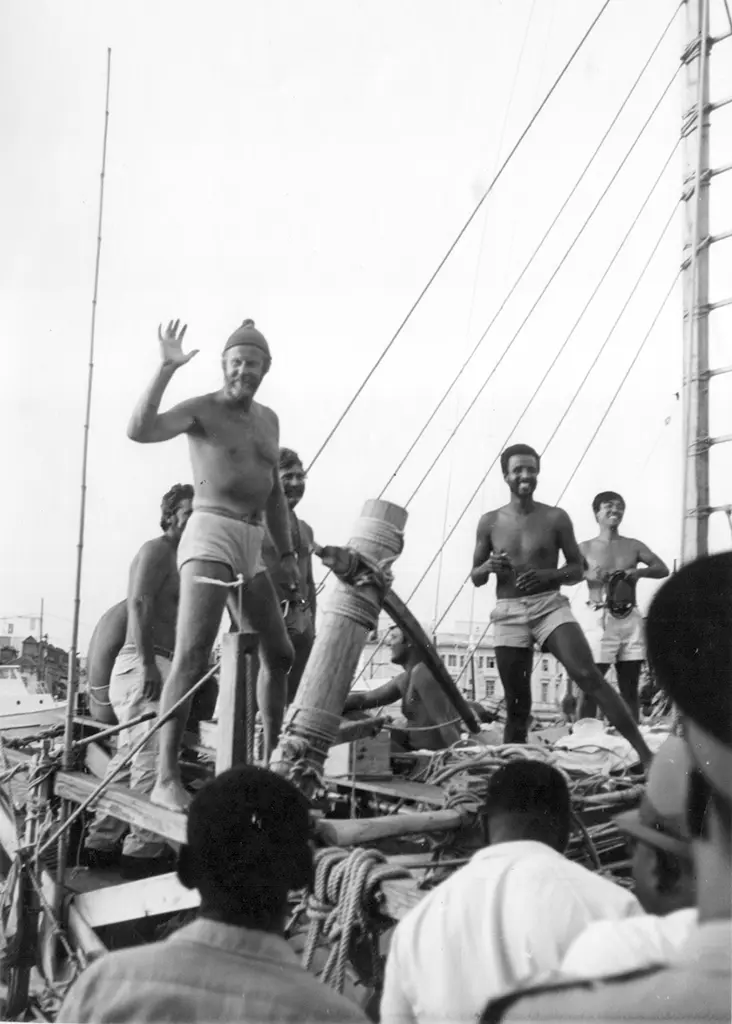
As they got close they were met with the MV Calamar and the Tug Culpeper from Barbados. As they sailed along the South Coast and into Carlisle Bay a flotilla of boats including fishing boats, pleasure boats and the pirate ship Jolly Roger accompanied them.
Prime Minister Errol Barrow flew a small plane and circled them.
My brother, parents and I were at the Pierhead, along with hundreds of others, when they arrived. The boat was very low in the water, as the Papyrus had absorbed a lot of water. It was put on the Blackwoods Screw Dock and lifted out of the water. When I visited it a few days later water was still dripping out of it.

It is still debated if the Ancient Egyptians influenced the pre-Columbian civilisations of Central America. Thor Heyerdahl has proved that they had the sailing craft to reach the area. It is left to an archaeologist to find hard evidence that they did make the crossing.
During his stay in Barbados Thor Heyerdahl stayed at a house close to Sam Lords Castle. Daddy had a book on his earlier Kon-Tiki adventure which I borrowed, rode to The Castle and found his house. He invited me in and we talked for a long time. He showed me a lot of gear that they used on the crossing including the HF radio.
Little did I know that in a few months I would join Cable & Wireless and embark on a career in radio communication. Before I left he autographed the book, which I still have.
Below are a selection of Ra Expedition photos. You can click on the thumbnail images below to see a larger image with captions.




Link to Kon-Tiki Museum videos on YouTube
Click here to view: Thor Heyerdahl, on Ocean Pollution, 1970
Here are some addition photographs of Ra II sent to us by Jim Webster. You can click on the thumbnail images below to see a larger image with captions.


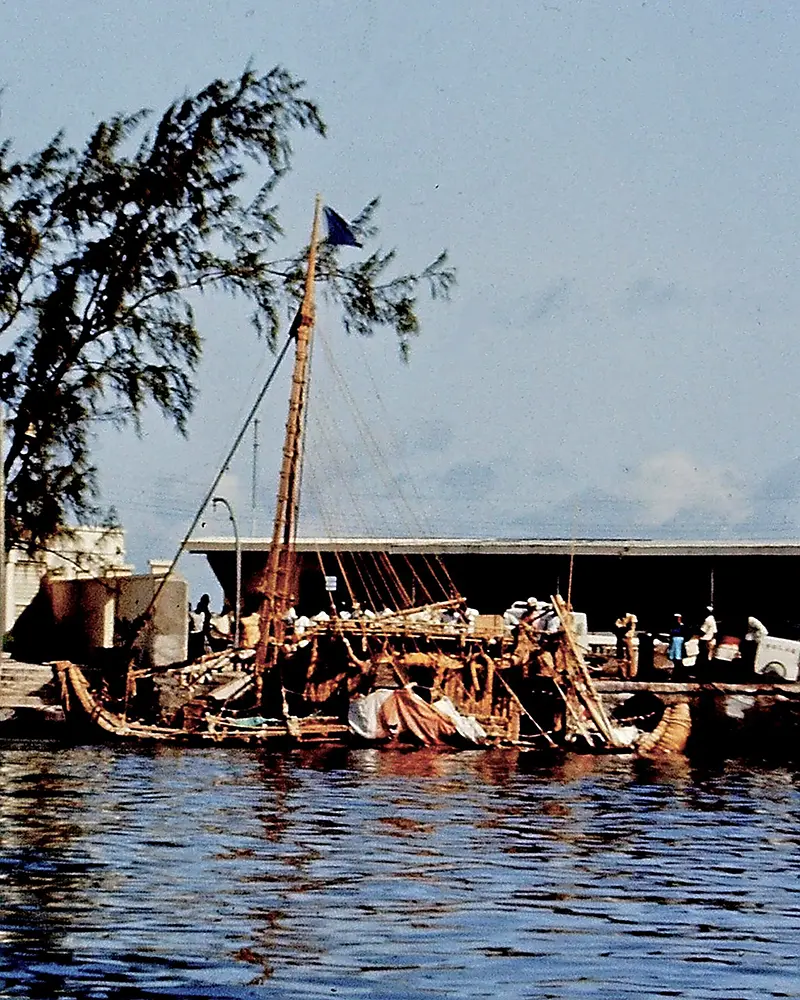


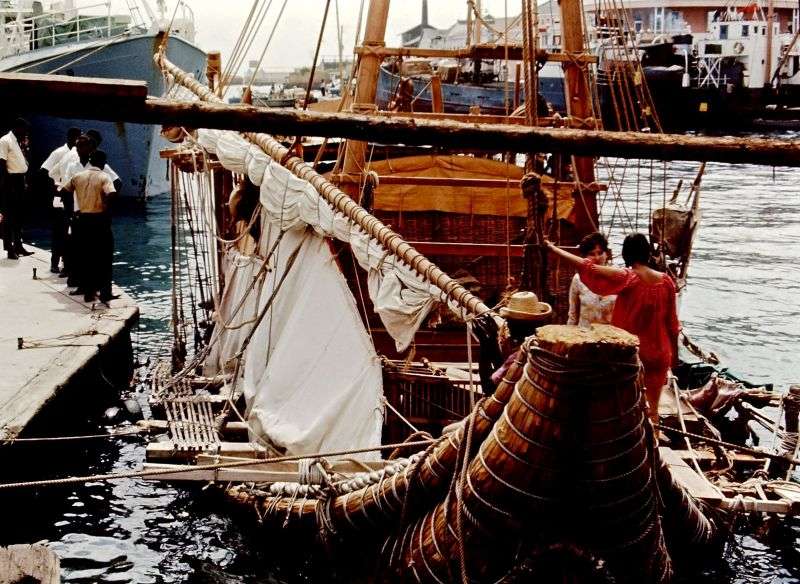


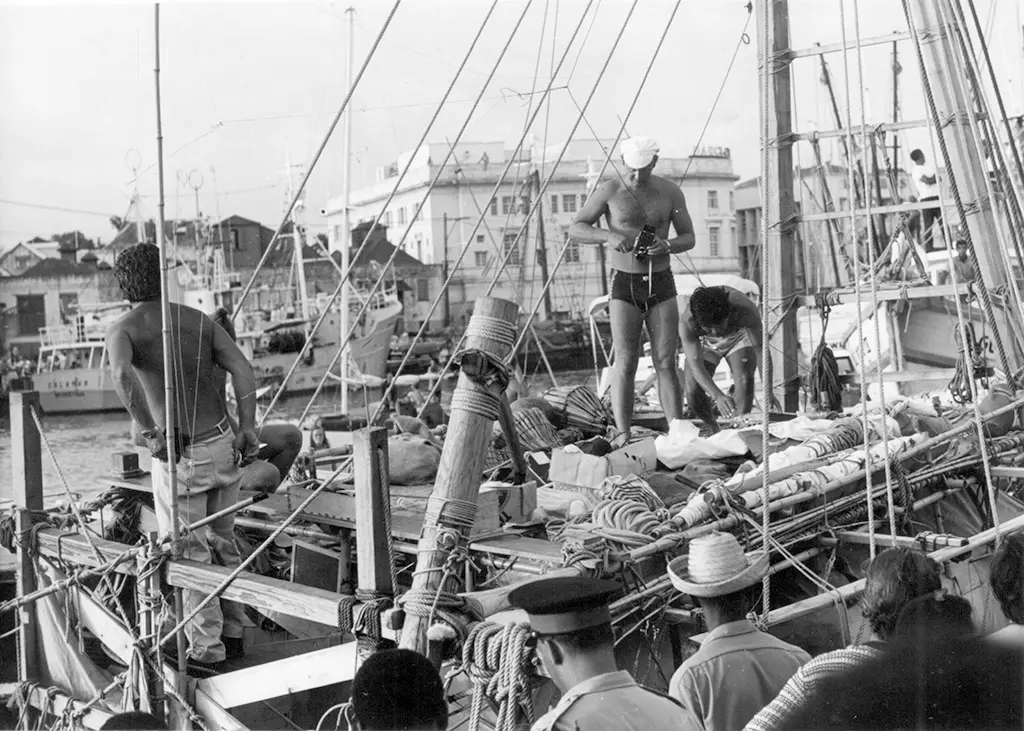
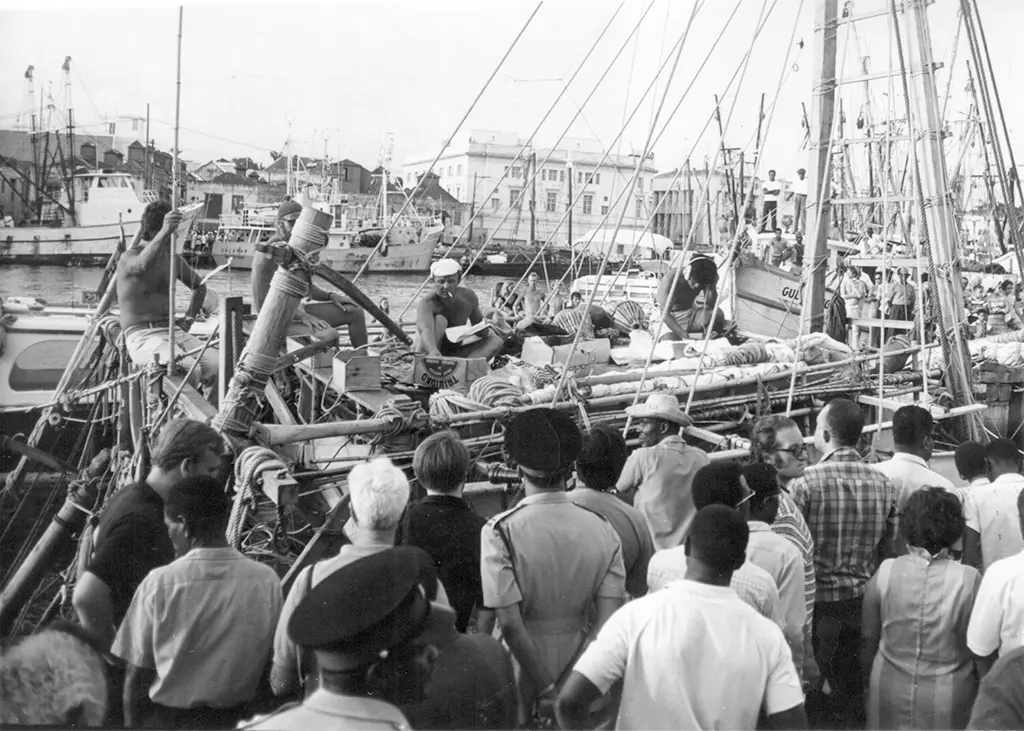
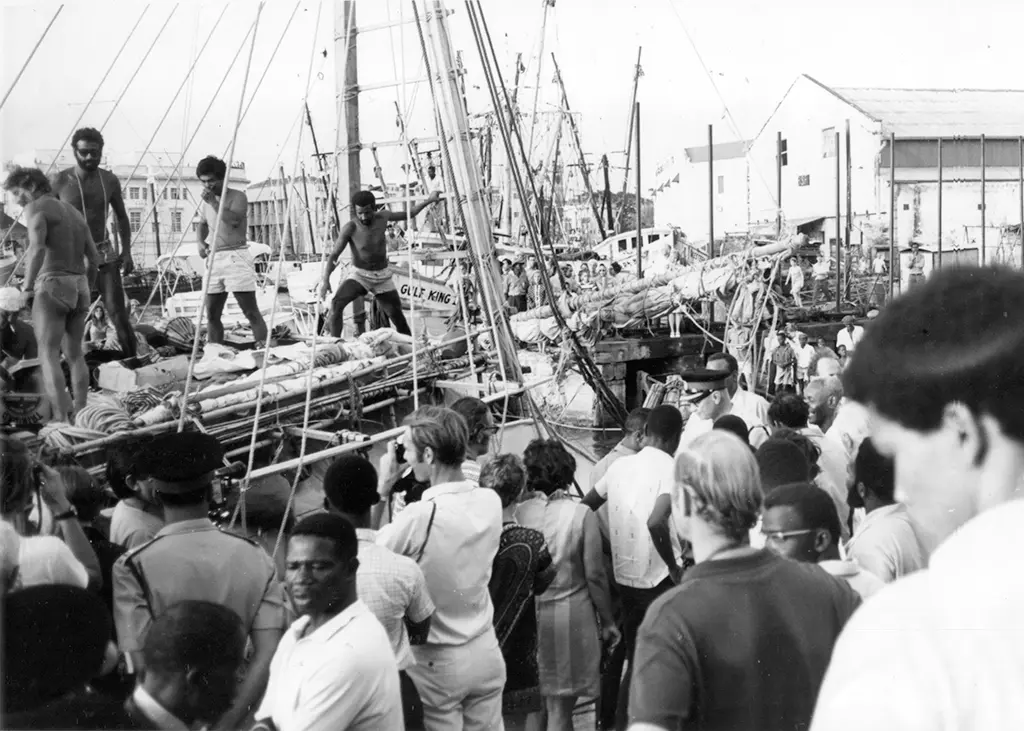
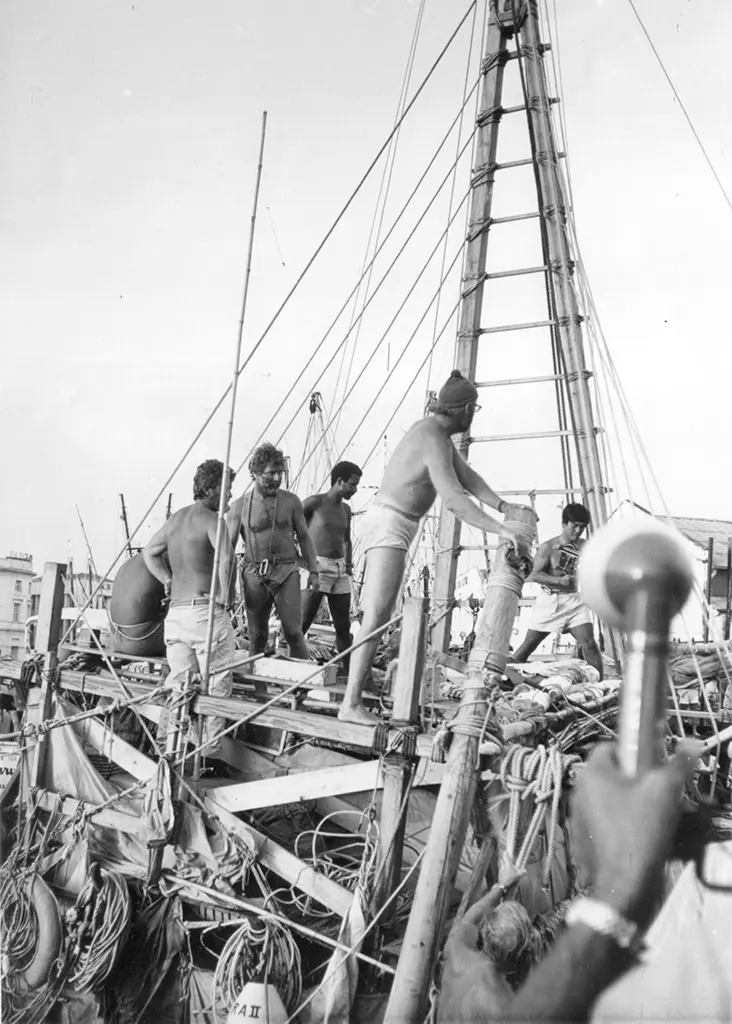
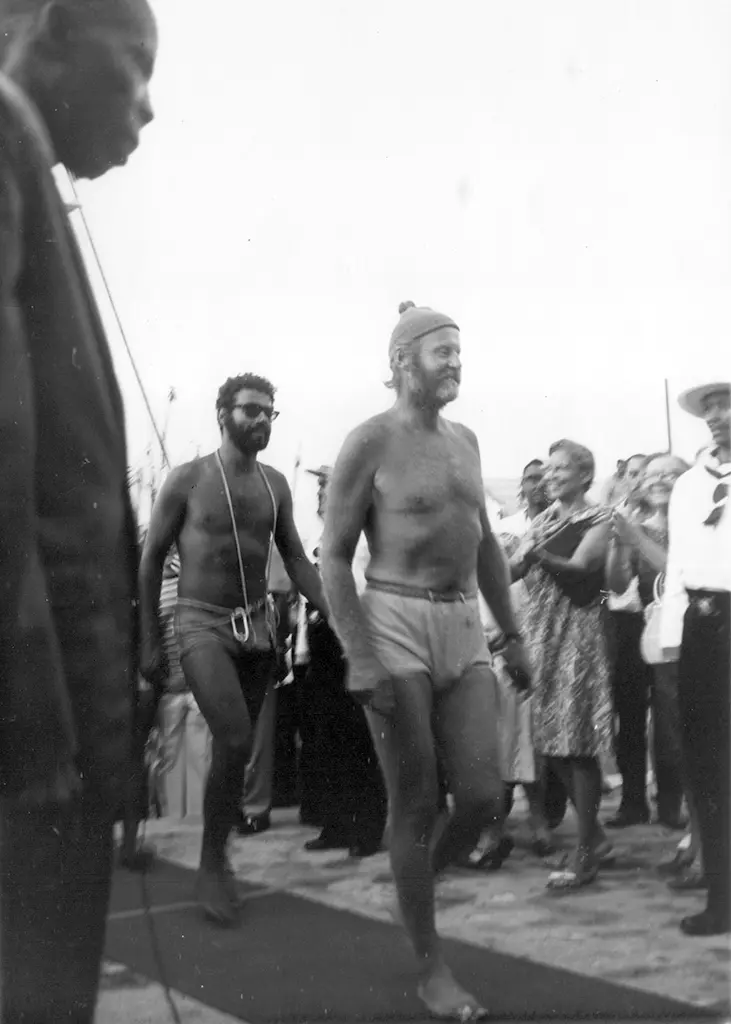
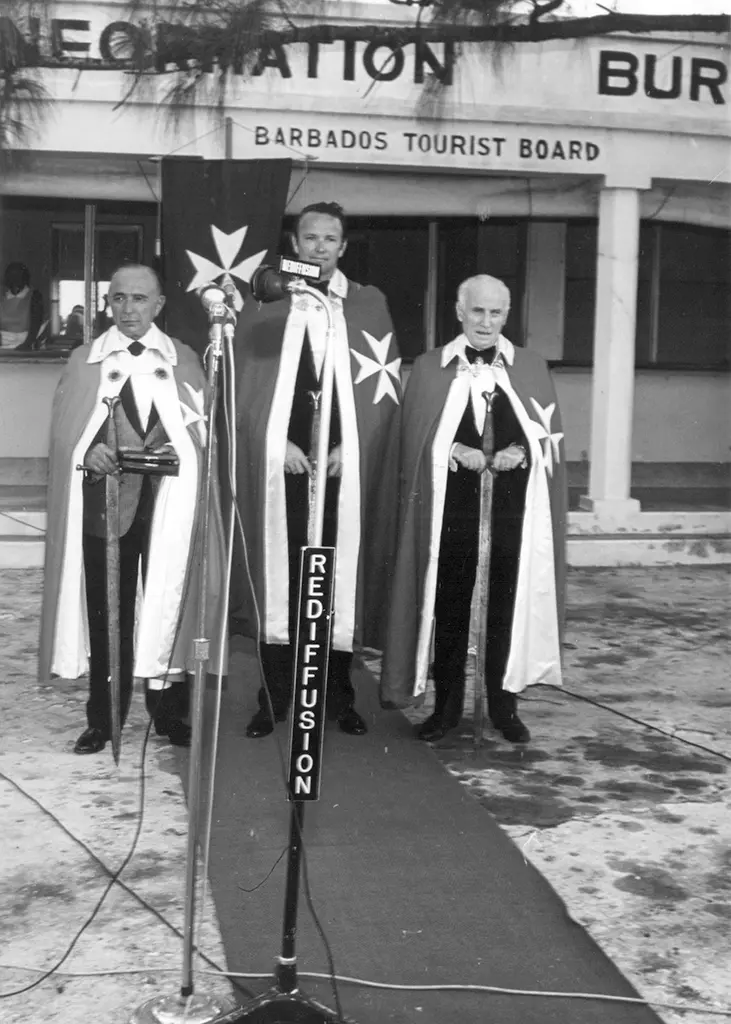
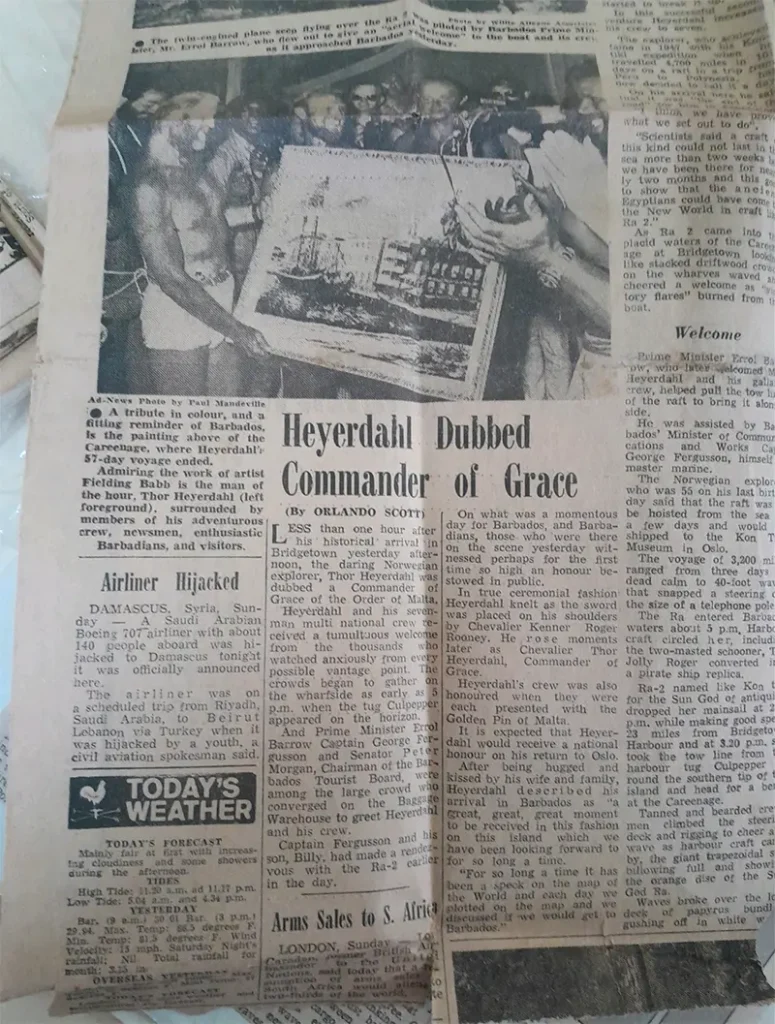
And here are a selection of of Ra II photographs Jim Webster’s cousin James S Webster sent us. The welcoming committee on the dockside at the Baggage Warehouse included: Prime Minister Errol Barrow, Senator Peter Morgan, Chairman of the Barbados Tourist Board and Captain George Fergusson, Minister of Communications and Works.
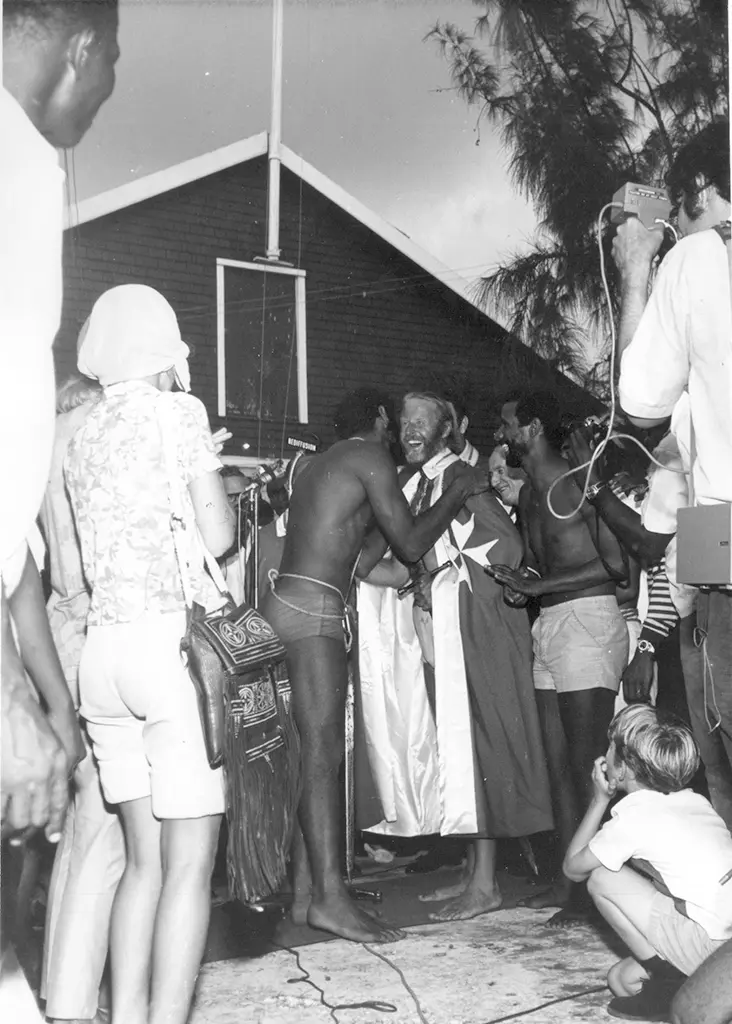
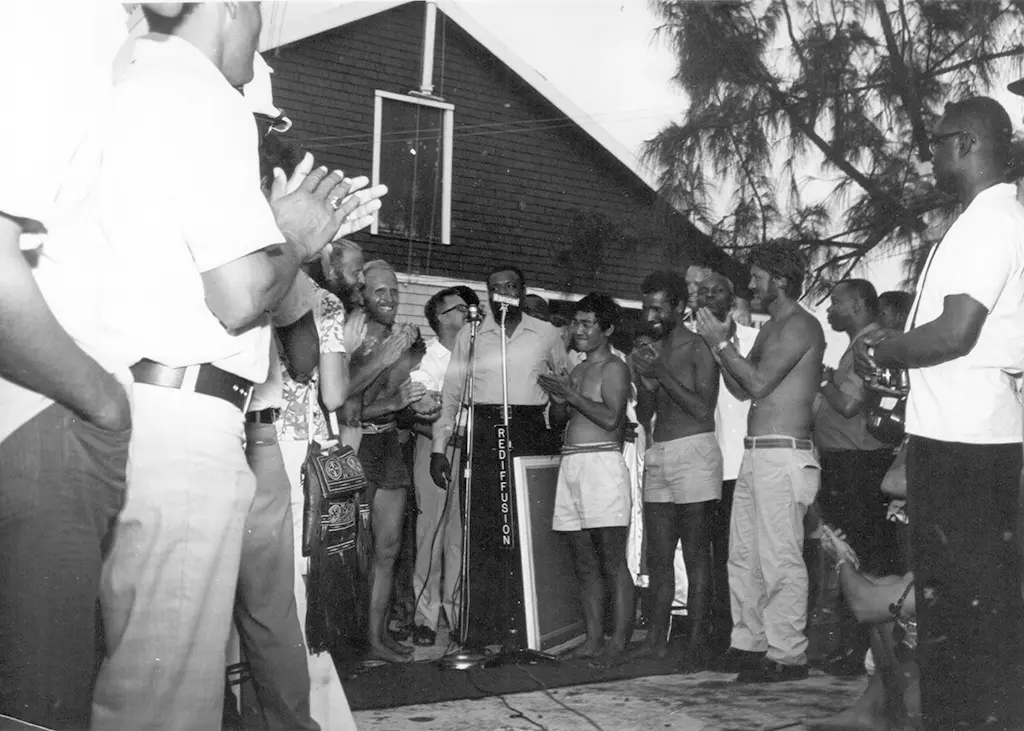
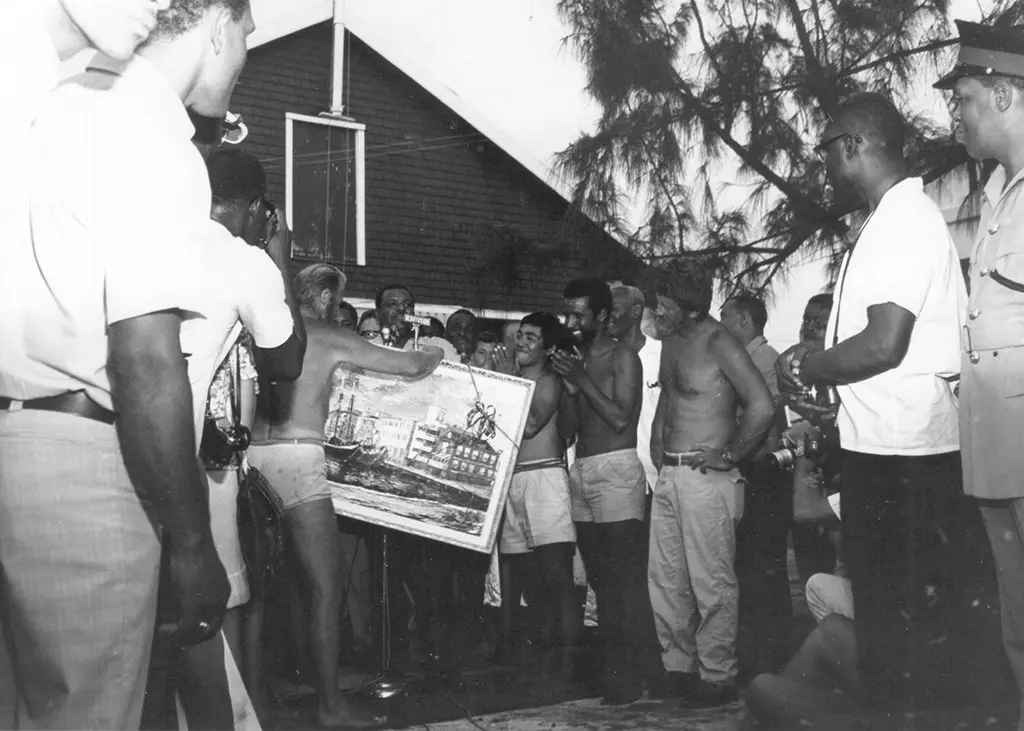
Presentation by William Burton at the 50th Anniversary of Ra II Expedition landing in the Careenage, Bridgetown held on 12th July 2020, arranged by the Barbados Museum and Historical Society in conjunction with the Kon-Tiki Museum in Norway.
I will start by giving a short introduction on others who have drifted or crossed the Atlantic without knowing exactly where they were going.
Barbados has always been a port of call for people drifting or exploring routes across the Atlantic.
Barbados first appeared on a map by Juan de Cosa about 1500. This was based on his and other explorer’s information. 8 years after Columbus’s first voyage.
The first permanent settlement was in the early 1600’s by the British.
During WW2 many survivors, from both sides of the war, of ships sunk in the Atlantic found refuge in Barbados.
After WW2 Dr. Alain Bombard after learning of the number of deaths of sailors who abandoned their ships during the war but subsequently died of hunger and thirst wanted to prove that you could live off the sea for a period of 2 to 3 weeks. He left Las Palmas in October 1952 and drifted in an open Zodiac rubber boat and arrived in St. Lucy on the 23rd December. He proved that it was possible to cross the Atlantic on the fish and rain water that you collected to supplement your stores.
Then in 1958 the Small World balloon left Tenerife with the intention of reaching the West Indies. The balloon failed soon after but the designers had planned for that and the gondola was able to float and it arrived at the Crane beach in January 1959.
Other adventures made the crossing on a wide assortment of rafts. One in an old Boiler Drum. This is now somewhere under the Oistins land reclamation area.
So crossing the Atlantic from Africa has been done many times over the last 500 years.
Thor Heyerdahl wanted to prove that with the technology and ship building expertise of 1,000 or more years ago people could have successfully crossed the Atlantic. In 1970 he build a boat made of the papyrus reeds, using the same tools available 1 to 2 thousand years ago. He christened her RA after the Sun God. The first attempt was unsuccessful and he was rescued by the Calamar a boat from Barbados.
He was not defeated. He returned to Morocco but this time he enlisted the help of reed boat builders from Peru who had been, and still are, building these type of boats on Lake Titicaca from very similar reeds for many generations.
They made one important addition which was not apparent on the drawings in the Pyramids of Egypt. With the correct design and construction techniques he set out on the 17 th May from Morocco. He had a crew of 8 comprising of men from 8 nations. He arrived in Barbados on the 12th July 1970.
I vividly remember my parents bringing my brother and I to watch the arrival. We were at close to Carlisle House and had a very good view of the arrival. Ra II was towed by the Tug Culpeper around Needlams point and into the Constitution River

As Ra II entered the Careenage one of the crew lit an Orange flare to celebrate. I remember how low Ra II was in the water and even the smallest wave would wash over the deck. She docked at the Baggage Warehouse – where the Coast Guard station was or where the Buccaneer is now. Most of us who were present thought that Thor Heyerdahl was mad to cross the Atlantic in a vessel made of what we called Bamboo. But I think that we all appreciated what he was trying to prove.
Both sides of the Careenage were lined with people and there was a shout of RA – RA as they got closer.
I took a few pictures and returned another day to take more from the area of the Blackwood Screw Dock. It was raised on the screw dock and stayed there for a week or so to allow the water to drain out of the reeds. Along with the 8 crew, of different nationalities they had a monkey and a duck.
Daddy had a book on Thor Heyerdahl’s previous expedition Kon-Tiki where he crossed the Pacific. I knew that Thor was staying at a house close to Sam Lords Castle. So I borrowed the book and rode there, found the house. I am not sure how I found the house, I did not have GPS or FaceBook! But in those days there were not many houses in the area.
Thor Heyerdahl was kind enough to invite a 17 year old in and we talked for a long time. I remember him showing me a lot of the equipment and things he had on the crossing including the radio transceiver that was used to contact Radio Amateurs in Barbados. Some of these were Pat Toppin and Allan Otway. He autographed the book which I still have.
The challenge I give to researchers is to prove, by finding some artefact, that explorers from Africa did in fact reach Barbados, the Caribbean and Central America 2,000 years ago.
William Burton – 12th July 2020 at 50th Anniversary of Ra II Expedition landing in the Careenage, Bridgetown.

The Barbados Advocate front page 14th July 2020
Below is a RA II 50th Anniversary video message from Marian and Bettina Heyerdahl. In this video, Marian and Bettina Heyerdahl share a very special message for everyone in Barbados together with some of their memories of the arrival of RA II. They were unable to come to Barbados in person in July 2020 due to the Coronavirus pandemic.
Marian and Bettina Heyerdahl’s video message is available on the Barbados Museum & Historical Society Facebook page.
Were you at the Careenage when the RA II arrived? Share your memories with us!
Another source of photographs of the the arrival of Ra II in Barbados on 12th July 1970 is from American born, Bajan bred, San Francisco based photographer Craig Burleigh.
Below is a feed from Craig Burleigh’s website:
Why We Suddenly Have A Plastics Crisis by Chris Rose of the campaignstrategy.org blog featured BajanThings: Thor Heyerdahl’s Ra Expeditions to Barbados. He was highlighting how Thor Heyerdahl back in 1970 shocked the world with reports of mid-ocean pollution. It has taken nearly 50 years for the UN Environment to ‘Declared War on Ocean Plastic’. Erik Solheim, Head of the UN agency said, “It is past time that we tackle the plastic problem that blights our oceans. … We’ve stood by too long as the problem has gotten worse. It must stop.”
For further information see:
- The Kon-TiKi Museum, Oslo, Norway
- Thor Heyerdah’s Expeditions – The Kon-TiKi Museum, Oslo, Norway
- Kon Tiki exedition, – The Kon-TiKi Museum, Oslo, Norway
- Ra (1969) and Ra II (1970) expeditions – The Kon-TiKi Museum, Oslo, Norway
- Remembering the RA II, Barbados Today, 15 July 2020
- 50th Anniversary of Ra II Expedition Observed, Barbados Advocate, 14 July 2020
- The Ra expeditions, when a Moroccan sailed from Safi to Barbados on a reed boat, yabiladi.com
- Norman Baker: adventurer who was Thor Heyerdahl’s ‘last crewmate’ dies aged 89
- Caballito De Totora Surf Riders Of Peru by Phil Wilson includes clips of Thor Heyerdahl talking about totora reed boats.