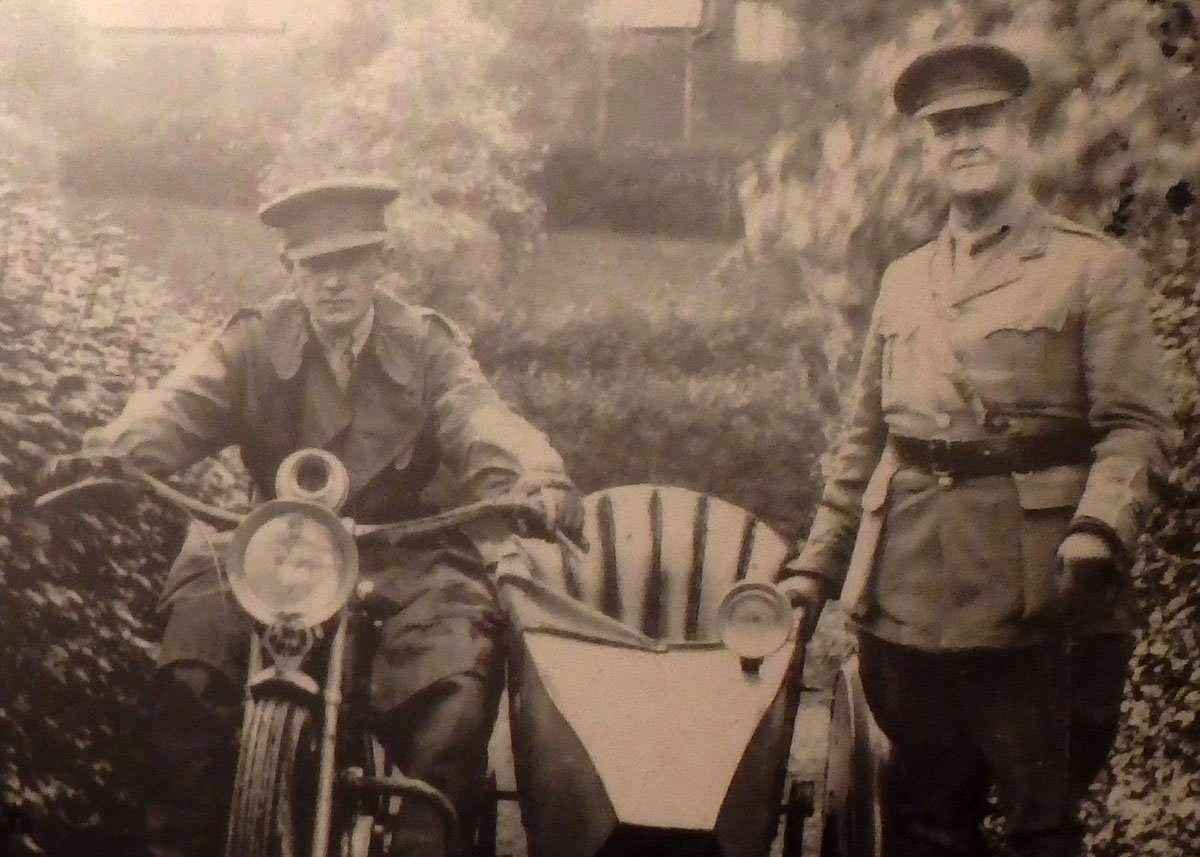
Surgeon: Frederick Gustave Ameile Delisle Saphile Wooding Deane was born in Nevis of Barbadian Parents. His parents were Joseph Deane and Mary Elizabeth Ashby Wooding. Joseph Deane was working in the sugar industry at the time. When the family returned home Frederick went to school at Harrisons College.
After completing his education in Barbados he went to medical school in Scotland. He married Helen Carr and together they had four children. She died of Swamp Fever. He worked for a while in British Guiana, now called Guyana.
His second wife died soon after they were married. His third wife was Maud Batson, and they had six children.
At the outbreak of World War I Frederick Gustave Ameile Delisle Wooding Deane joined the Royal Army Medical Corps and served with distinction in France. He rose to the rank of Lieutenant Colonel.
After a spell he was transferred to a military hospital in Edinburgh. Here he treated both allied and German patients.
After the war he was presented with a dinner gong made by the German POWs in recognition of treatment he gave them. This is kept by his grandson, Mr. Geoffrey Dean, at his home in St. Philip. He also received a leather wallet which is also kept by his grandson.
He was also presented with a drawing of one of his children as a token of appreciation for the treatment he gave them during their recovery. These gifts show the gratitude that his patients had for him for the part he played in getting them well.
Tansy Bishop, National Archivist with the Jane Cameron National Archives in the Falkland Islands supplied the following information:
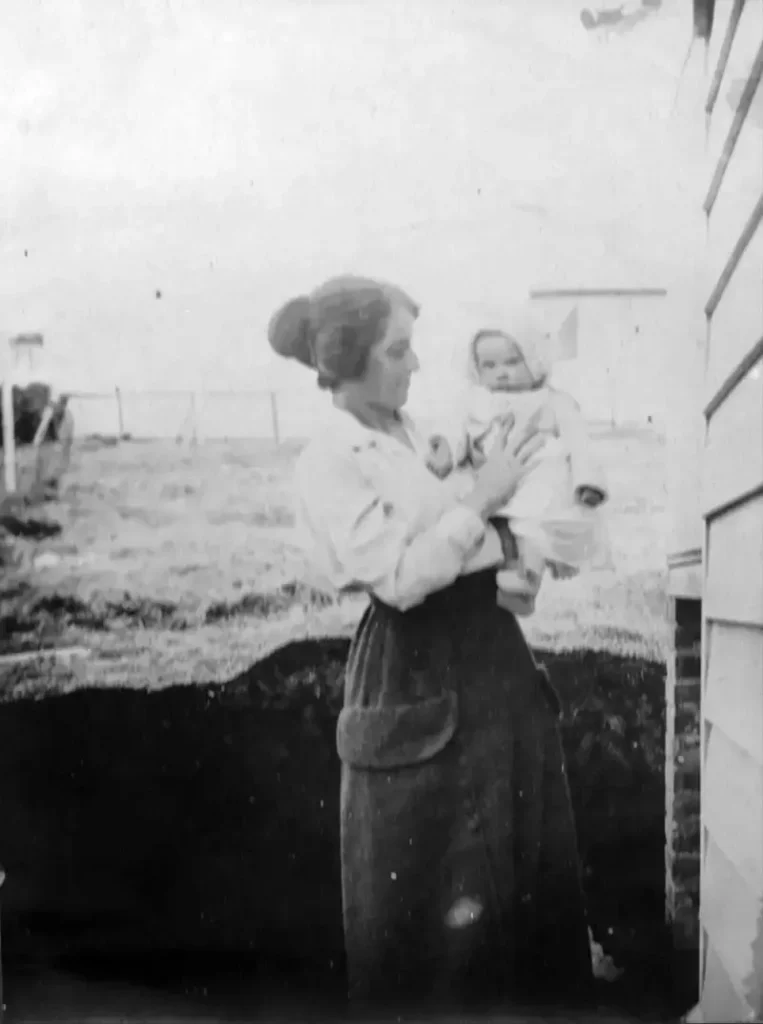
Dr. Frederick Gustav Wooding DEANE, his wife Maud Gorringe DEANE née BASTON and their three children, Freda Sewell Wooding DEANE, Wilfred Sewell Wooding DEANE and David Sewell Wooding DEANE, arrived in Stanley (Falkland Islands) on the 19th August 1920 on board the Orita.
Dr. Deane had been appointed Colonial Surgeon.
On 28th September 1920 a daughter, Heather Sewell Wooding DEANE, was born in Stanley.
Dr. Deane was suspended from duty 23rd December 1927 for improper collection of personal fees, the neglect or ill treatment of patients and drunkenness.
Dr. Deane and his family departed for Barbados on the Lagarto 9th April 1928.
Souce: Jane Cameron National Archives – The Falkland Islands
Lt. Col. Frederick Gustave Ameile Delisle Saphile Wooding Deane died in Barbados on 31st October 1935 aged 65 and is buried at Westbury Cemetery in the HS Batson family vault.
Dr. Deane’s third wife Maud died aged 50 as a World War II volunteer when the SS City of Benares was torpedoed by U-Boat U-48 on 18th September 1940. Maud was sailing from Liverpool to Montreal and was caring for 90 evacuated children on their way to Canada to escape the German air attacks on Britain. 77 of those 90 evacuated children lost their lives when the SS City of Benares was sunk. After this incident, no more children were sent overseas.
Dr. Deane and Maud’s son, Sergeant – Pilot David Sewell Deane, who joined the RAF in World War II as a pilot attached to No 2 AFU – Millom Coast Guard Station was killed in action on 22nd September 1943, aged 26, when his Anson aircraft crash landed in the sea, killing all the occupants.


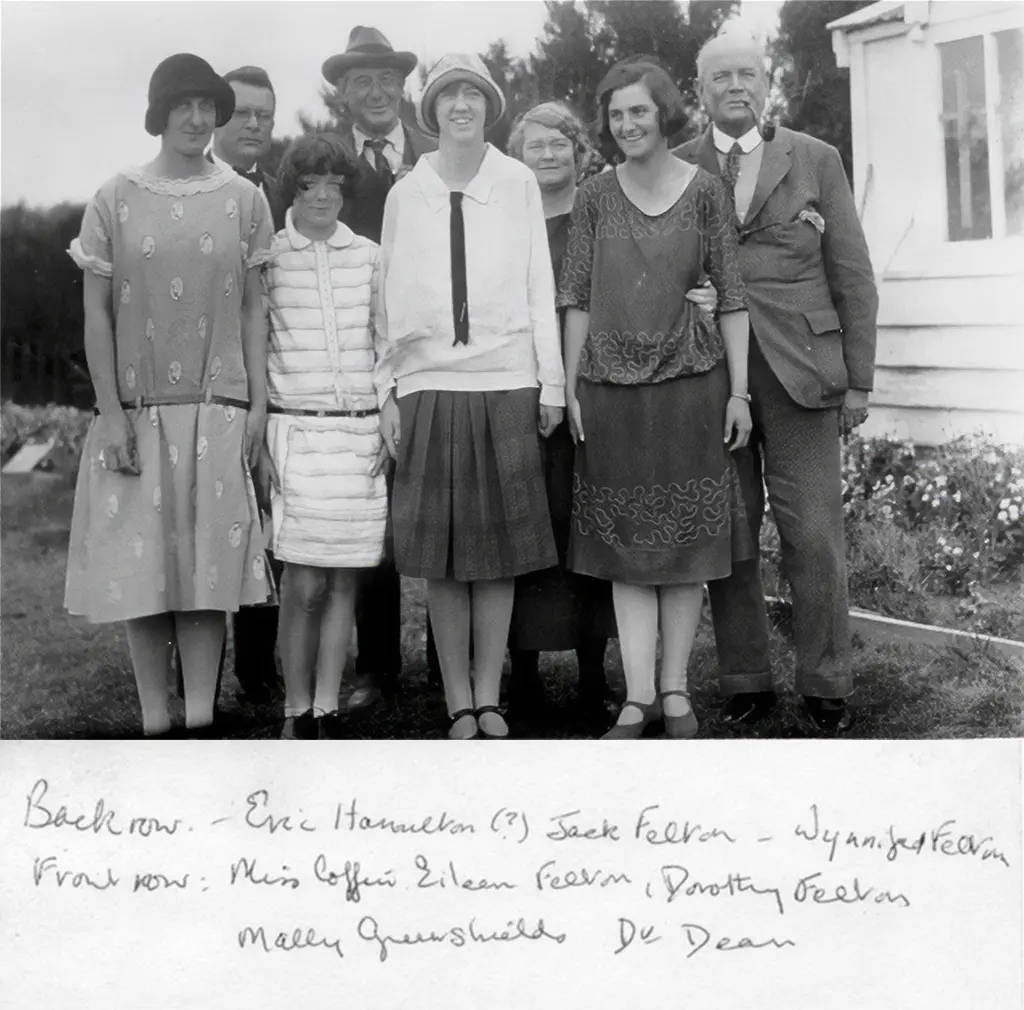
Back row: Eric Hamilton(?), Jack Felton, Jack’s wife Wynnifred Felton.
Front row: Miss Coffein, Eileen Felton, Dorothy Felton, Mally Greenshilds, Dr. Deane.
James Erik Hamilton was the Falkland Islands Government Naturalist.
Eileen and Dorothy were the two daughters of Jack and Wynnifred Felton.
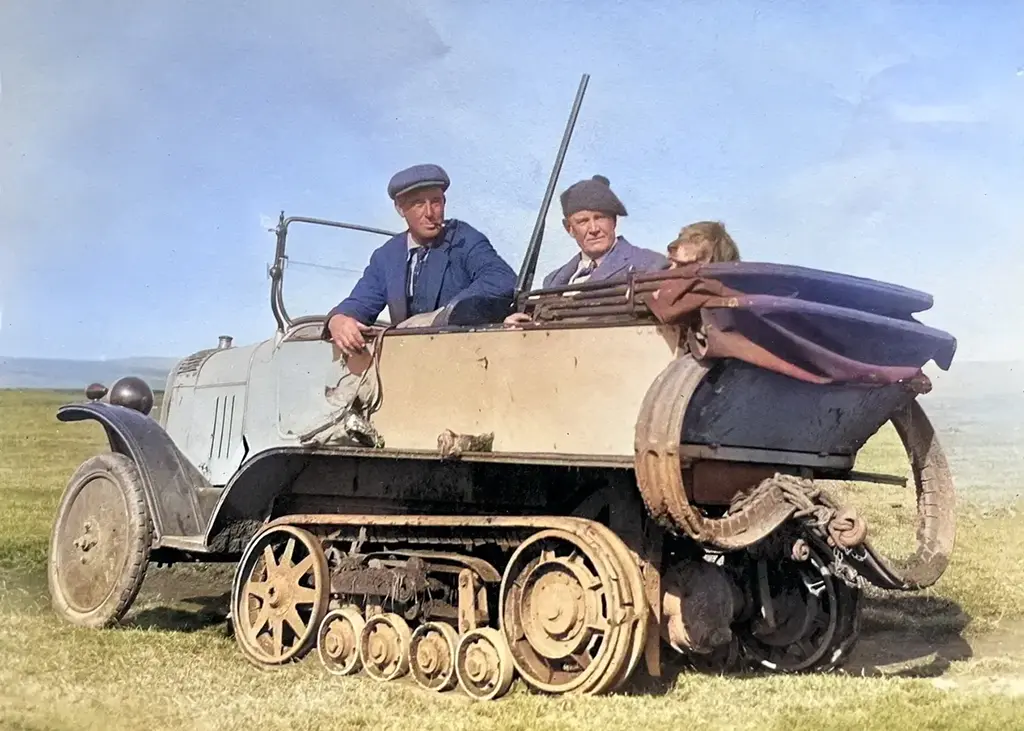
This is a colorized black& white photograph.


I wish to thank Mr. Geoffrey Deane for taking the time to give us this information and allowing me into his home to take these pictures. We would also like to thank Sarah Jane Card who sent some additional photographs. Her mother was Heather Sewell Wooding Deane who was born in Stanley in 1920, a month after the family arrived in the Falkland Islands.
Reference Material
- A brief history of the Falkland Islands – Falkland Islands Government
- Photographic Collections – Jane Cameron National Archives, Falkland Islands
Citroën Kégresse K1 photograph
There has been a lot of interest from Citroën Kégresse enthusiasts, collectors and restorers in this Citroën Kégresse K1 photograph.
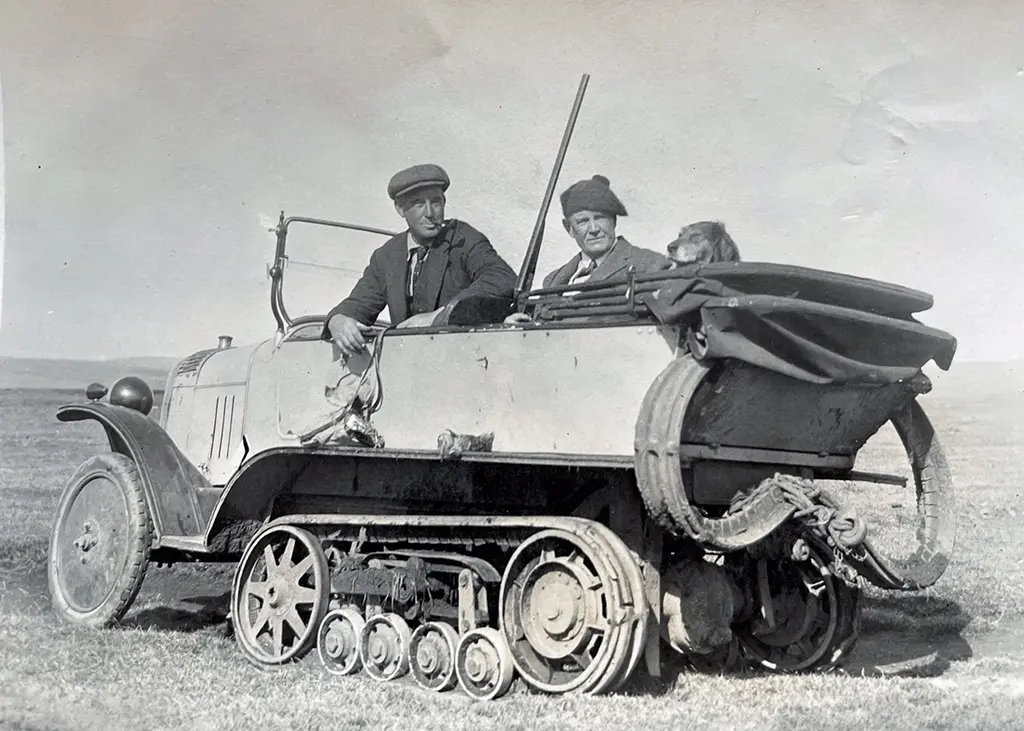
This photograph showing Jack Felton sitting in the front passenger seat and Dr. Deane in the rear seat of a Citroën Kégresse K1 on a day out shooting at Teal Inlet was shared by Dr. Deane’s granddaughter, Sarah Jane Card. It was given to her mother, Heather Sewell Wooding Deane, by her grandmother’s dear friend, Alice Felton. Sarah Janes mother Heather was born on Stanley.
On the rear of the photograph there is a caption:
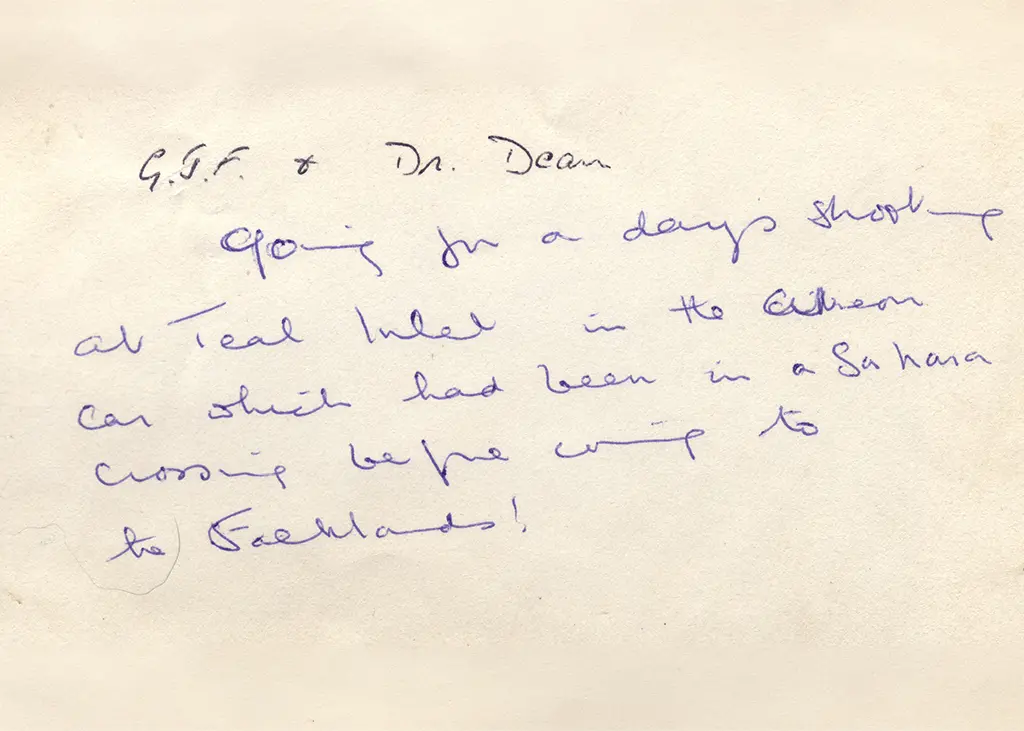
GJF & Dr. Dean[e]
Going for a days shooting
at Teal Inlet in the Citroën
car which had been in a Sahara
crossing before coming
to the Falklands!
GJF is George John Felton (known as Jack) who manged the Felton family sheep farm at Teal Inlet on the northern coast of East Falkland.
The photograph was probably taken between 1924 and 1928. Motor vehicles were first imported into the Falkland Islands in 1924 and the Deane’s left the Falkland Islands in April 1928.
The Citroën-Kégresse K1 was built to conquer the unforgiving Sahara Desert. On 17th December 1922 five Citroën-Kégresse K1s – nicknamed “Scarabée d’Or” (Golden Scarab), “Croissant d’Argent” (Silver Crescent), “Tortue Volante” (Flying Turtle), “Bœuf Apis”, and “Chenille Rampante” (Creeping Caterpillar) departed the Algerian town of Touggourt and headed into the vast Sahara. On 7th January 1923, after 21 days of travel, the five vehicles having travelled 3,200km across the Sahara Desert, reached their destination: Timbuktu.
This was a monumental public relations coup that established Citroën as an innovator in automotive design. This expedition was a major success for André Citroën, showing that mass produced cars could cross the Sahara Dessert in just 21 days, compared to the 6 – 7 months that it took by camel.