
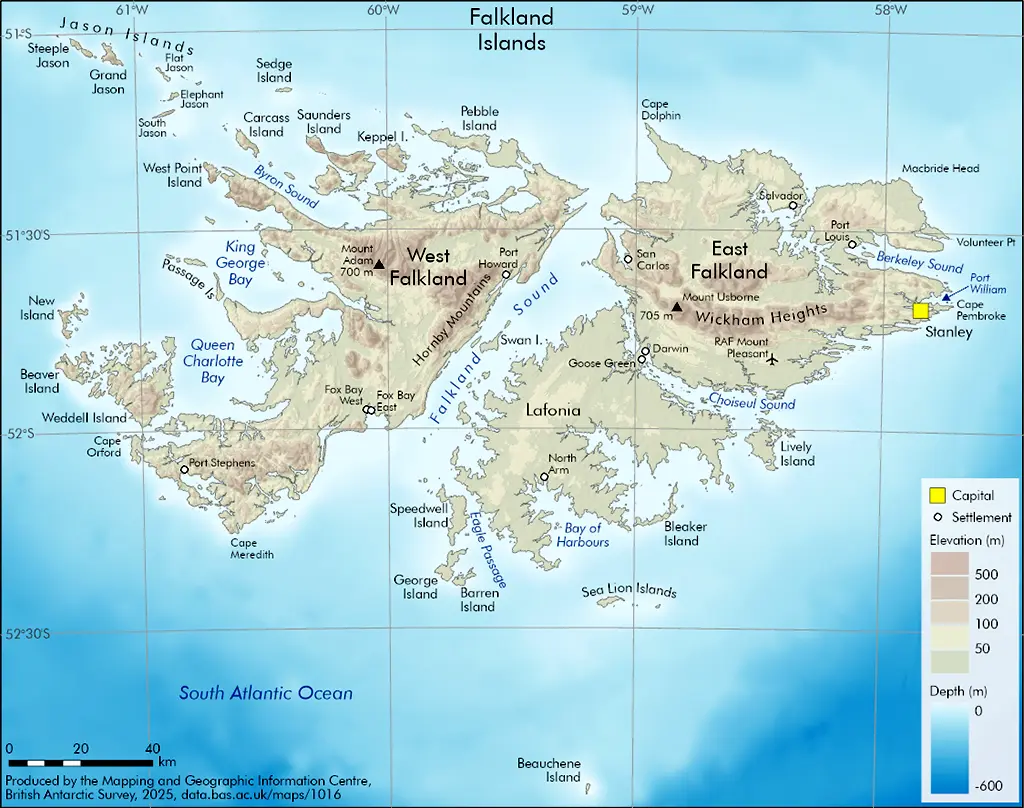
Falkland Islands had their origins 300 to 400 Million years ago as part of the Gondwanaland continent. This broke up and today is between South America and Africa. In addition to the 2 larger Islands, East Falkland and West Falkland, there are about 750 other islands. Some large but most very small and uninhabited but with a lot of wildlife. The highest mountain is Mount Usborne on East Falkland at 705m (2,312 ft). The total land area is 12,000 Square Km.
There are no native trees and the natural vegetation consists of grasses and low shrubs. Over the last 200 years other plants have been introduced including some trees which are difficult to establish, mainly due to the very high winds and poor soil.
Falkland is very important for the survival of many species of Penguins, Albatross, migratory birds and marine mammals that visit the islands to breed. There are two Endemic species: Falkland Steamer Ducks and Cobb’s Wren. In the ocean are many species of Whale and Dolphin.
There is no record of people living there before the arrival of the first European visitors in the 1690’s for the capture of Seals and Whale but it was not until 1830’s that permanent settlements were made by the Spanish, French and English. At one time both the French and English had settled different parts of the islands without being aware of each other.
Today the population of the Falkland Islands is about 3,500 and most live in the capital, Stanley. The small settlements on the farms, called camps, usually just have 1 or 2 families. The main sources of revenue are Fishing, Sheep farming and Tourism.
My 2026 trip to the Falkland Islands
I visited the Falkland Islands in January 2026 traveling via Panama, Santiago de Chile and Puerto Arenas and after a 24 hour delay, due to bad weather, I arrived at Mount Pleasant Airport. The journey from Mount Pleasant in Barbados to Mount Pleasant in Falkland took over 48 hours.
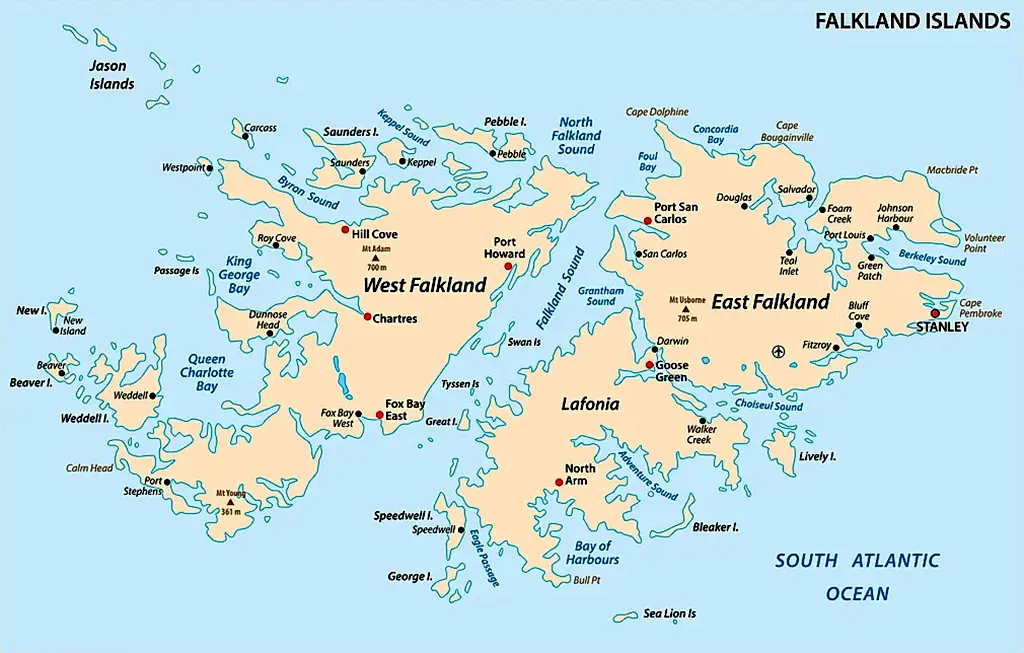
During my 3 weeks I stayed for 3 to 4 days on each of four islands. During this time I was able to walk as I pleased and observe the wide variety of wildlife.
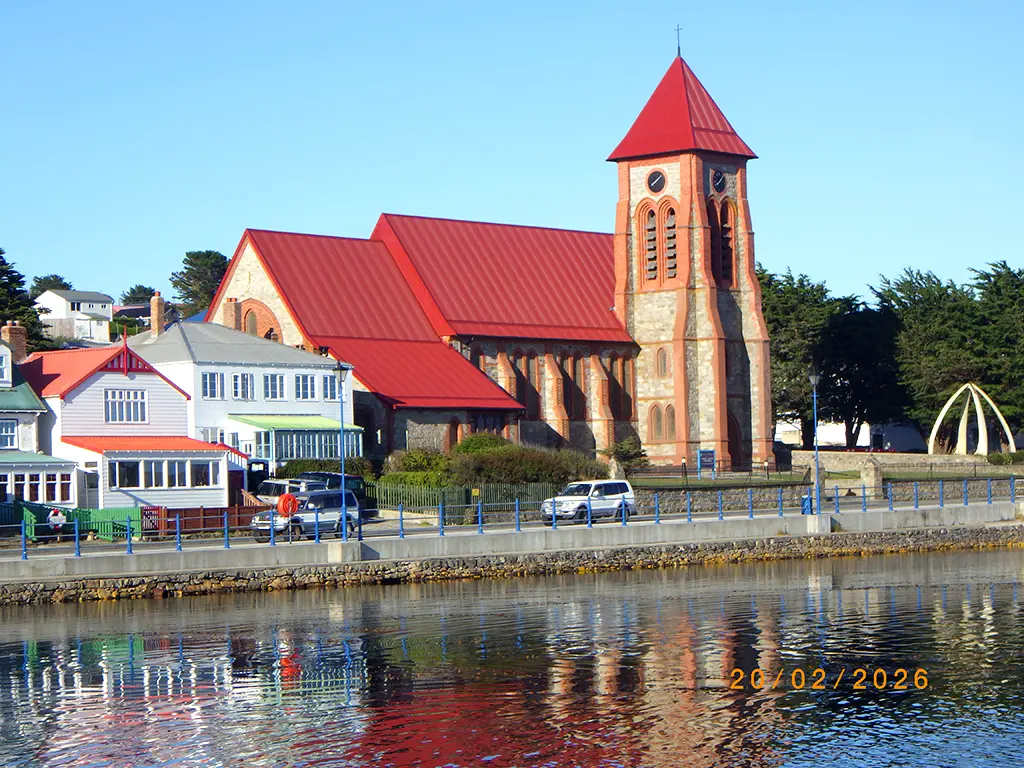
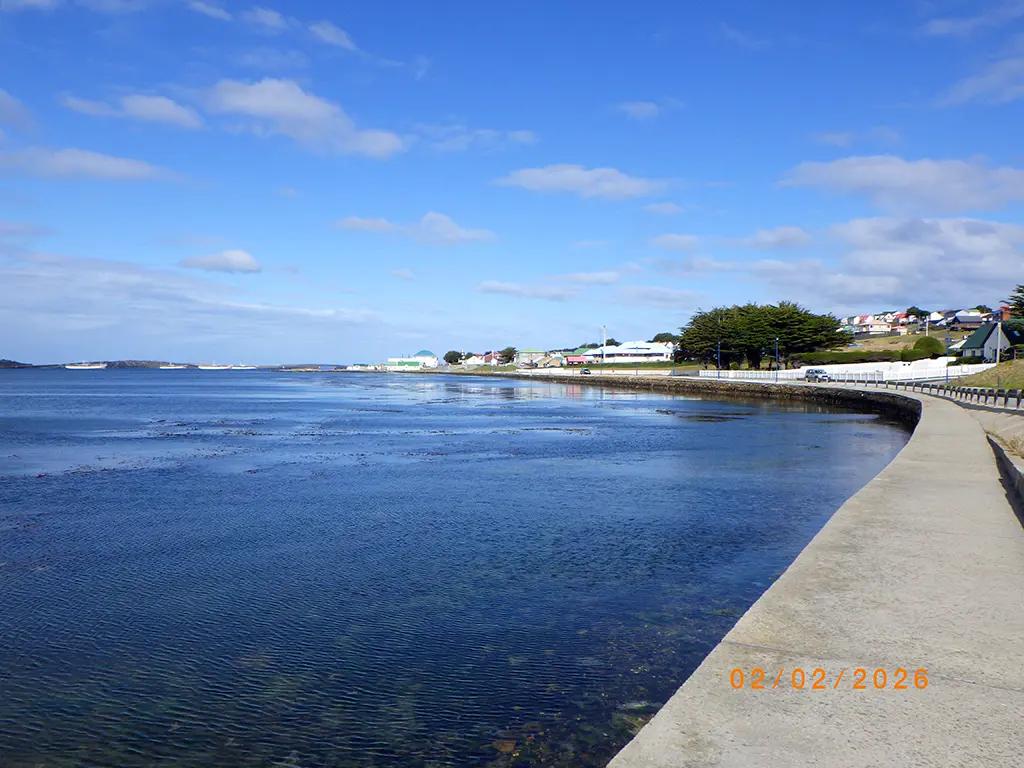
Stanley
Stanley was previously named Port Jackson but Governor Moody renamed it Stanley in 1844 after Edward Geoffrey Smith Stanley, Secretary of State for the British Colonies.
It is a quiet town but is the capital and center of the government, social life, culture and business. Before the opening of the Panama Canal, in the late 1800’s, it was a important resupply and repair port for ships trading between the Pacific and the East Coast of America or Europe. Either before attempting to round Cape Horn or just having made the passage from the Pacific. It was also a base for whalers and sealers.
Today it is the hub for a fishing fleet, expeditions to the Antarctic and a growing oil extraction industry. At present there is no jetty for the few cruise ships that call but a new harbor is being constructed.
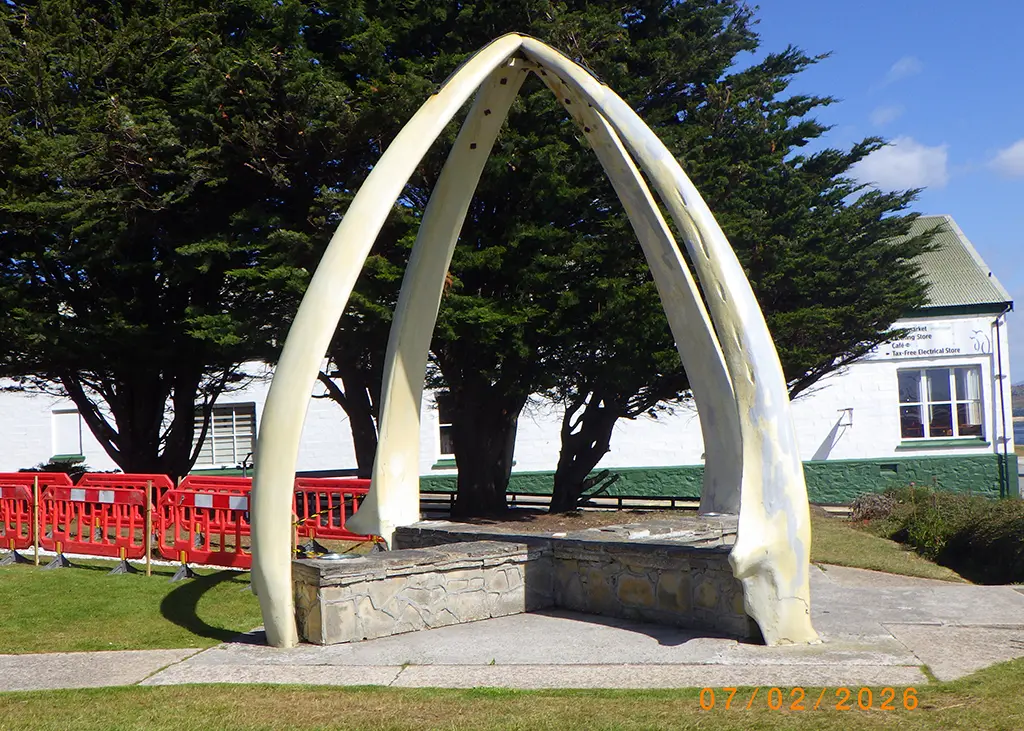
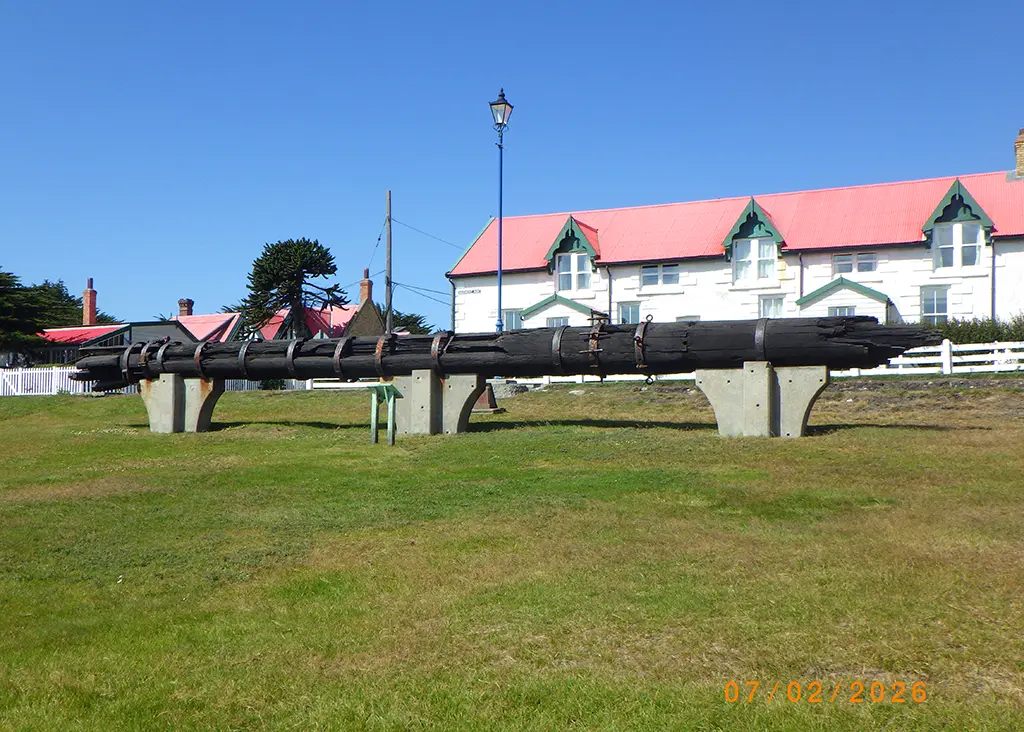
Falkland Islanders are proud of their country. Like the Caribbean people, Falkland Islanders are conscious that they have always been pawns of the larger countries in their quest of world dominance. You can not walk far with out seeing a memorial or plaque to some person or event.
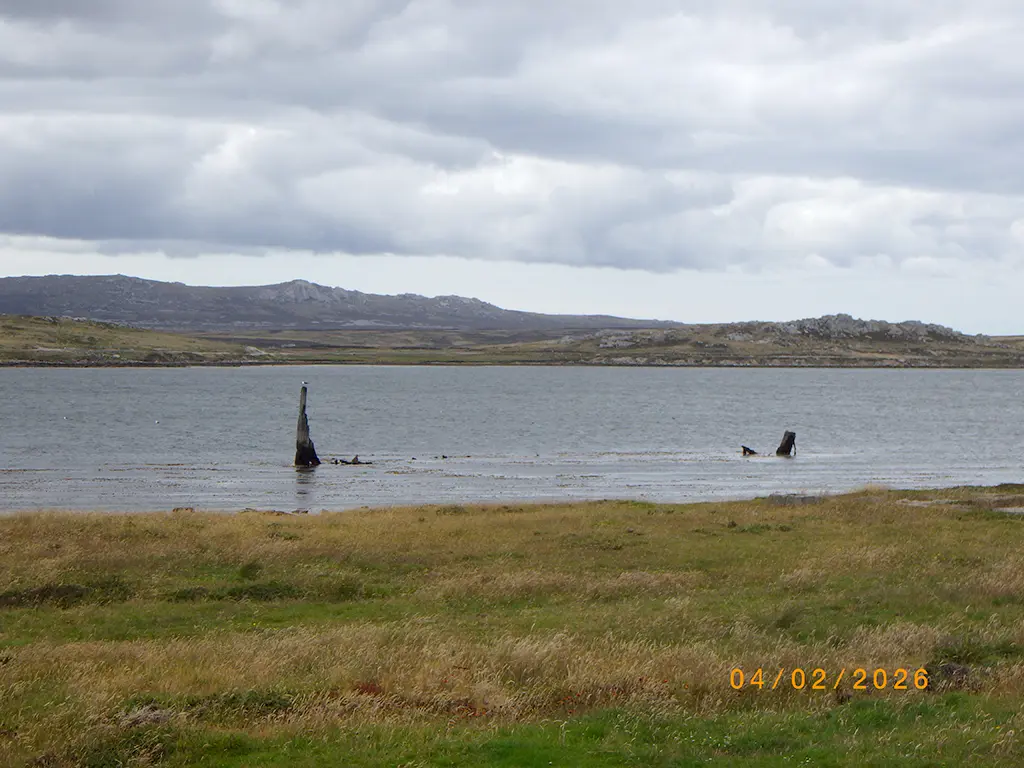
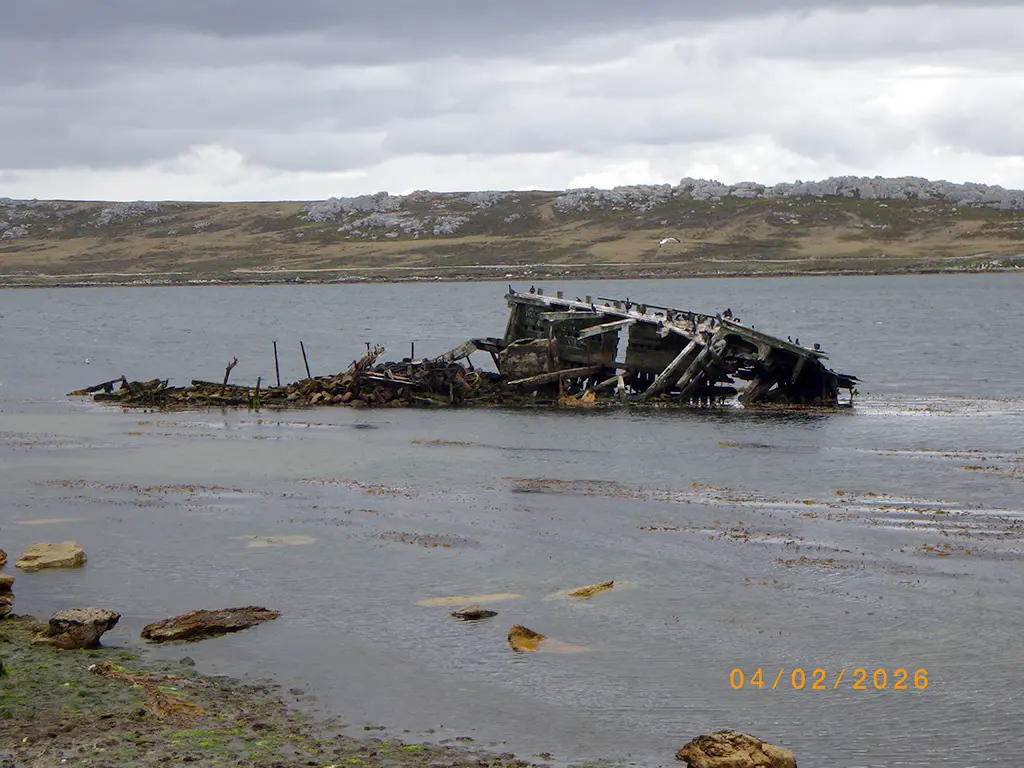
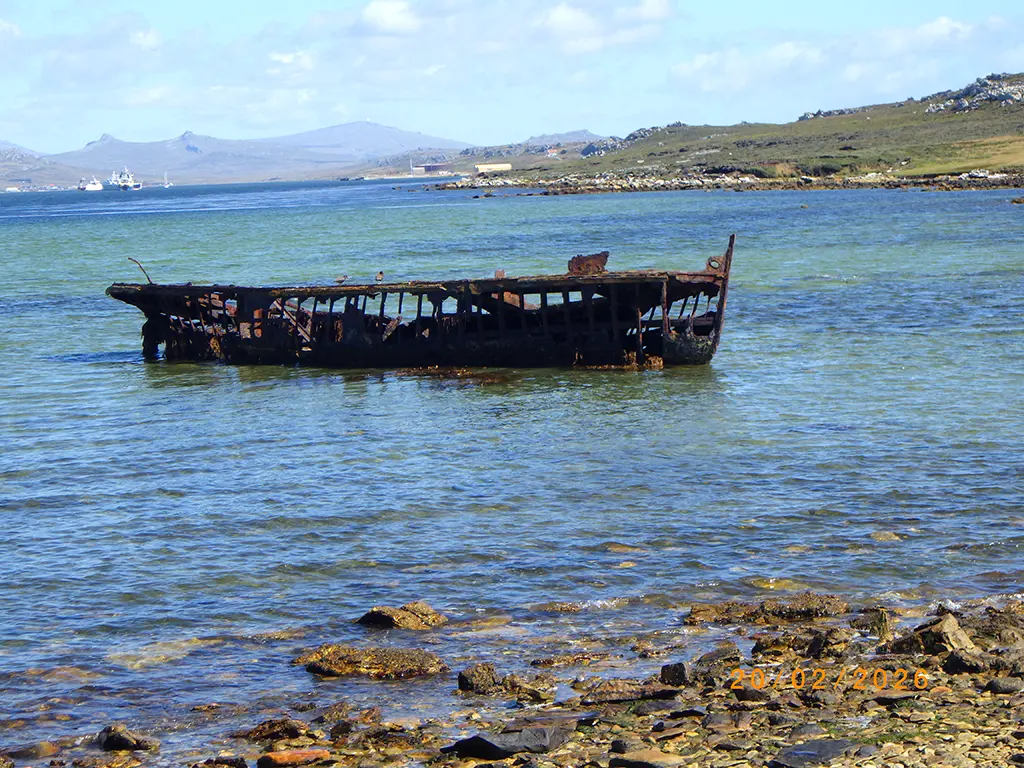
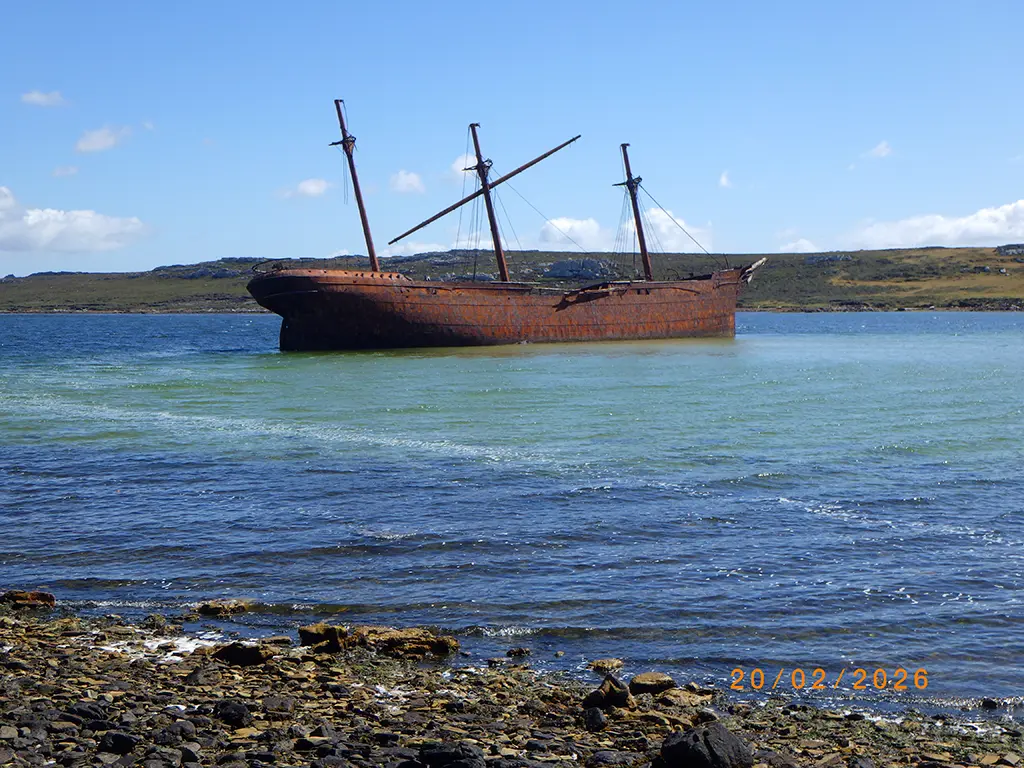
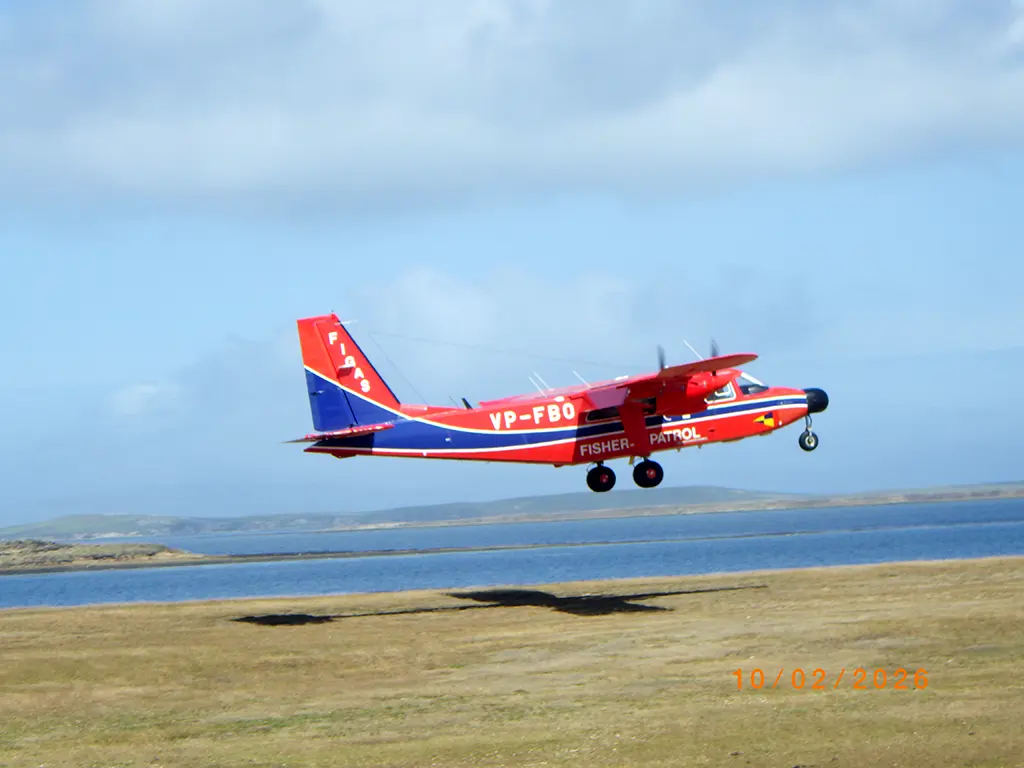
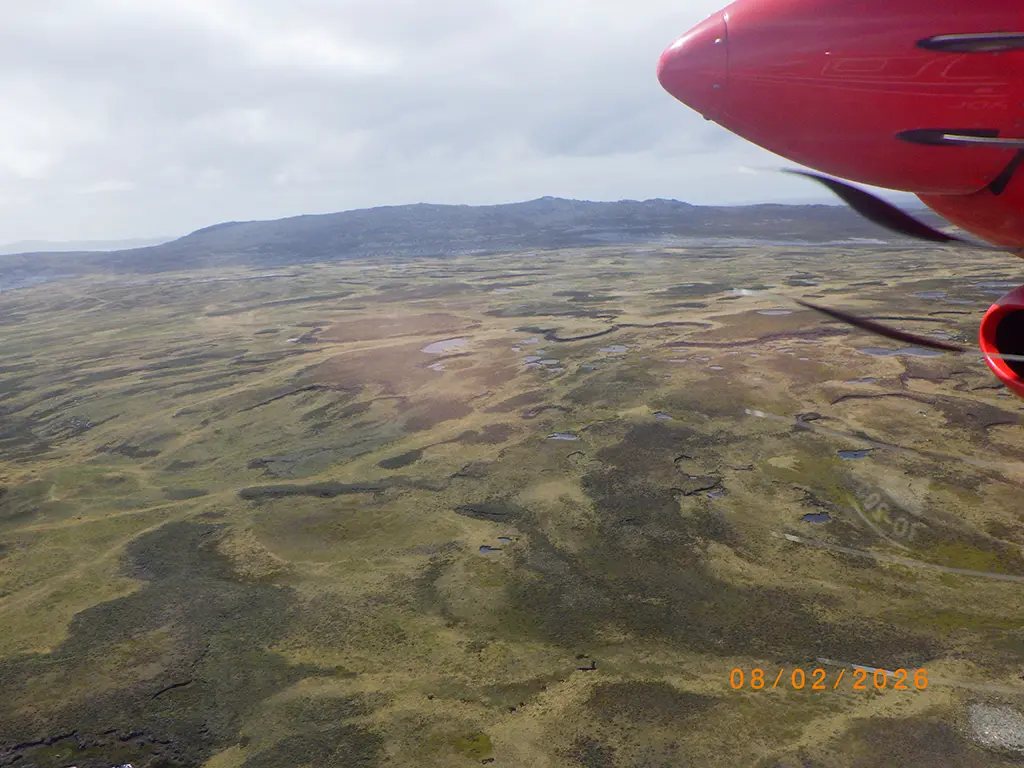
Saunders Island (north west of West Falkland)
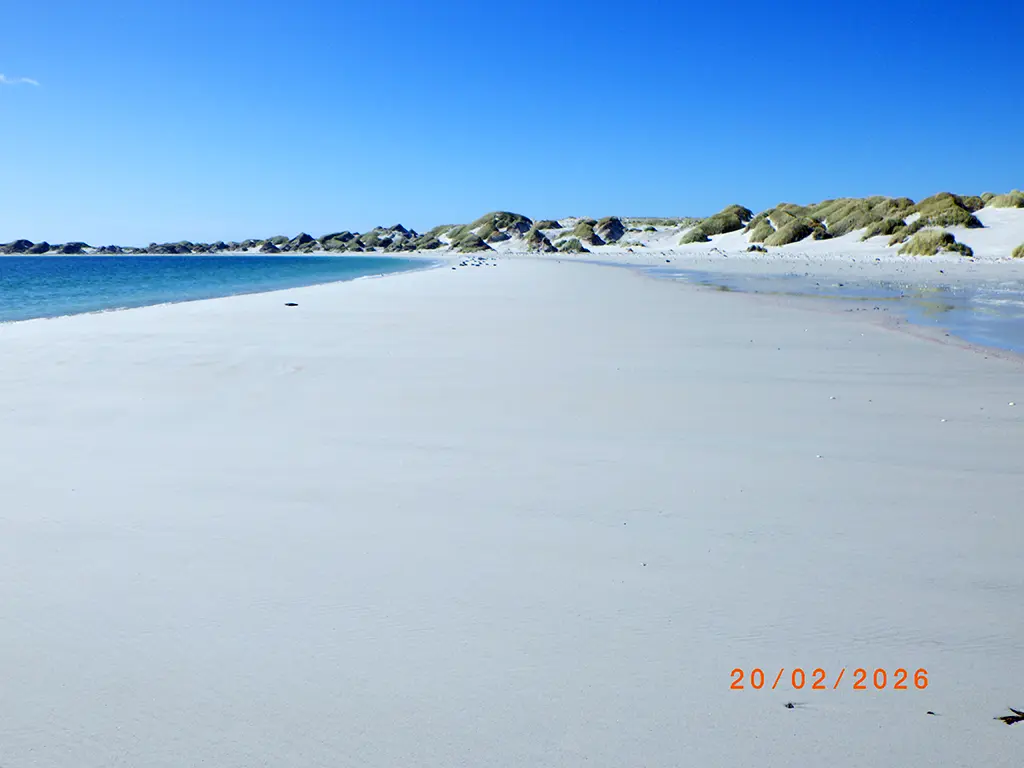
Saunders Island is a 30,000 acre island and has 6000 sheep. It is off the north coast of West Falkland and is reached by a 1 hour flight from Stanley. In 1765 Port Egmont was the site of the first permanent British settlement in Falkland.
I stayed at The Neck, a self catering cabin that sleeps a maximum of 8 people. It is a remote location and I was able to spend my time as I wished
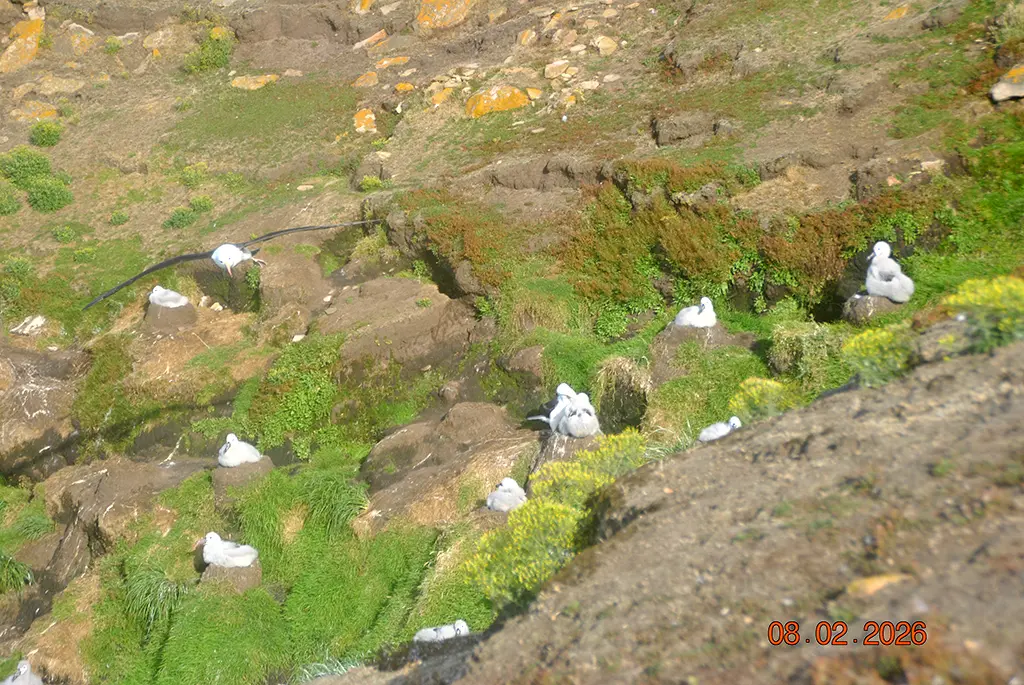
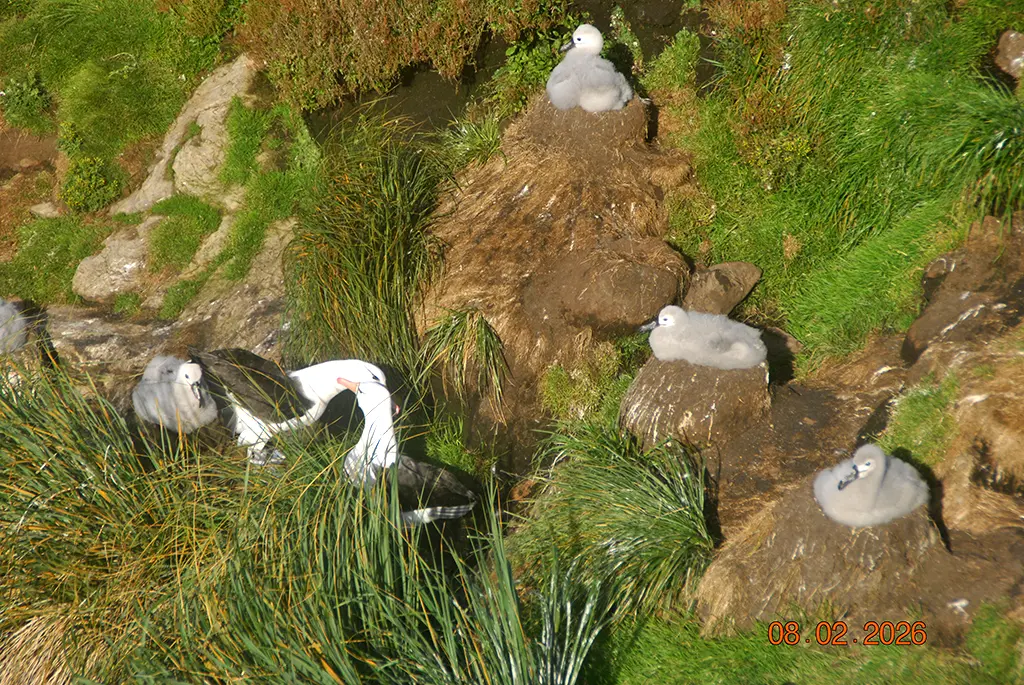
Every Spring about 12,000 pairs of Black-bowed Albatross return to breed. They return to the same nest every year and mate for life. The nest is made of mud, grass and kelp which has a depression on the top to hold their one precious egg. There are 12 colonies of Black-bowed albatross across the Falkland Islands and this accounts for 70% of the worlds breeding pairs.
King, Gentoo, Rockhopper and Magellanic penguins also breed here. There is a wide variety to waterbirds on the many ponds around the area.


Volunteer Point (northeast coast of East Falkland)
This is a privately owned nature reserve on the Johnson’s Harbor farm. The name comes from the ship “Volunteer” which traded there in the 1800’s. It is reached by a 2 hour drive from Stanley over some very difficult tracks, but well worth a day trip.
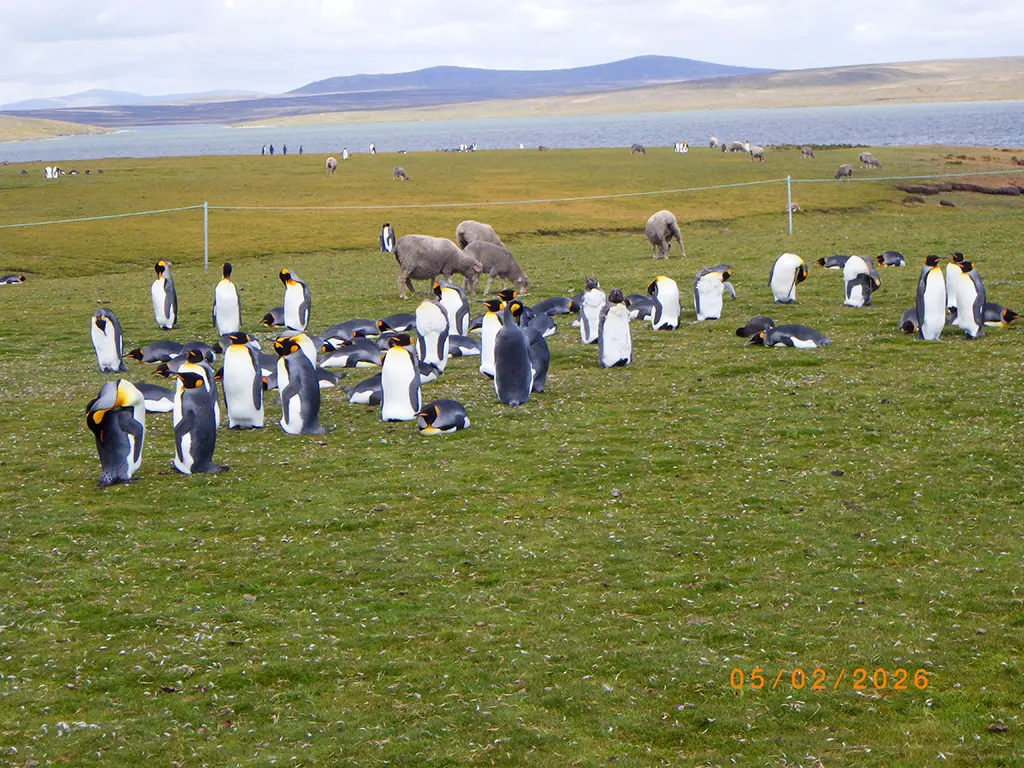
King and Gentoo penguins are resident year round but Magellanic between September to April and lay their eggs in October. They spend the remainder of the year at sea. About 1500 King Penguins reside there and raise about 700 chicks every year.
In addition to the Penguins, as all over the Falkland Islands, there are a wide variety of Gulls, Terns, Skua, Rock Cormorants and Seals.


Sea Lion Island (southern most point of East Falkland)
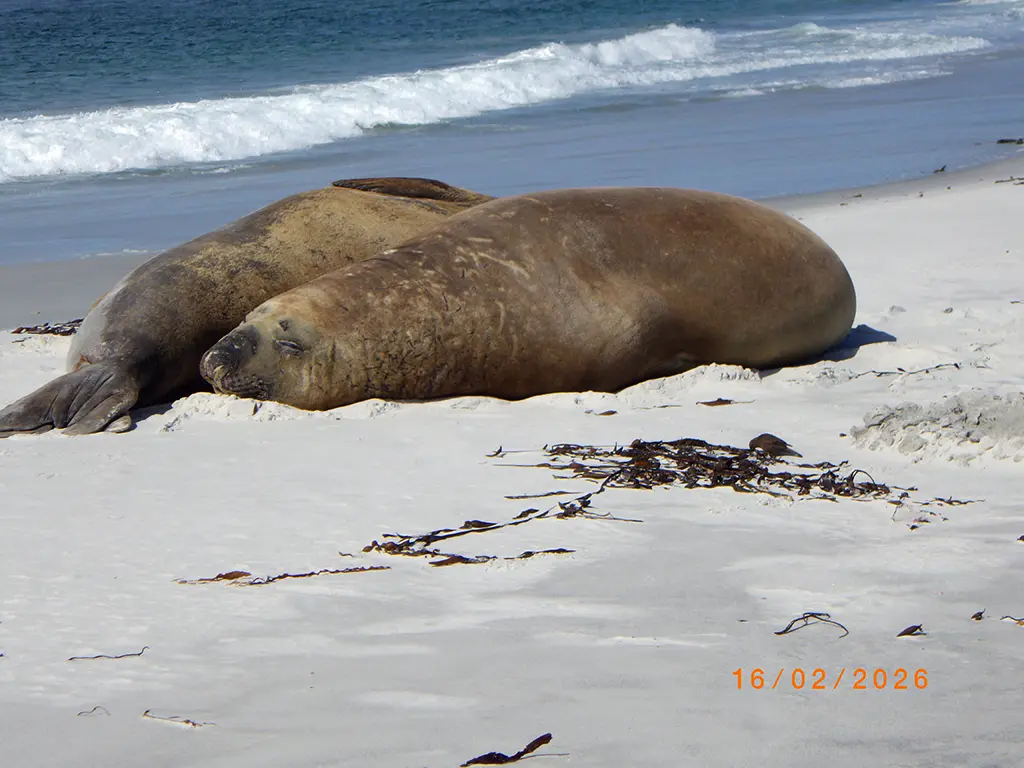
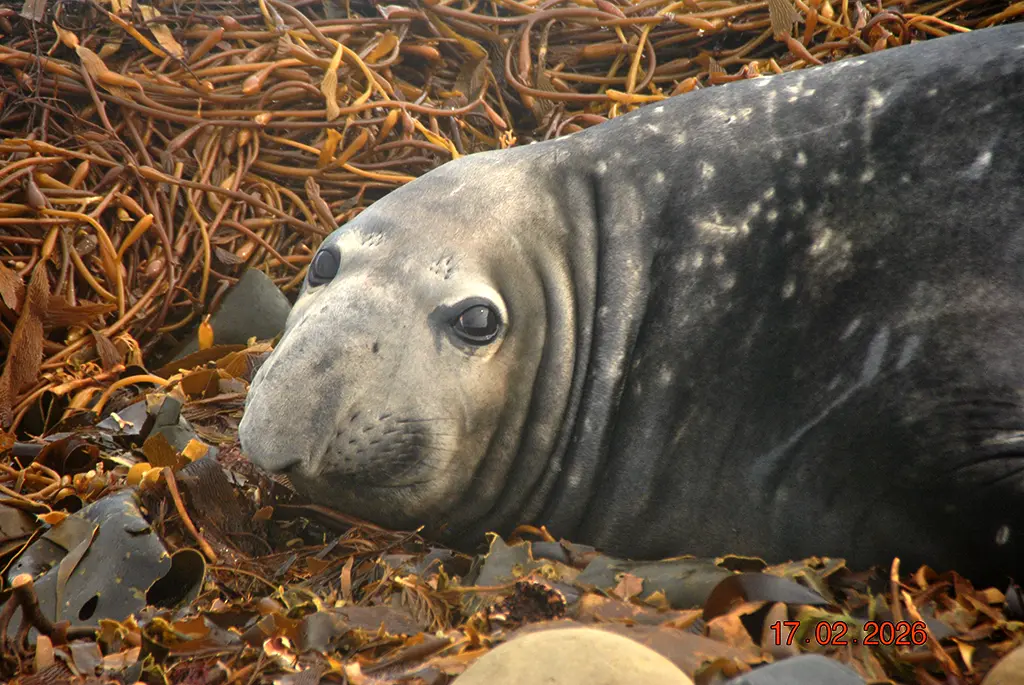
Sea Lion Island is a 15 minute flight from Bleaker Island.. Apart from the large colonies of Penguins and Cormorants it is an important island for Fur Seals and Elephant Seals to breed. These give birth in December and stay long enough to molt before returning to the sea.



Bleaker Island (off the southeast coast of East Falkland)
Bleaker Island lies off the south coast of East Falkland. It was first named Long Island when Captain Robert Fitzroy on the Beagle, with Darwin, visited the islands. I stayed at Cassard House, named after the French sailing ship which was wrecked there in 1906.
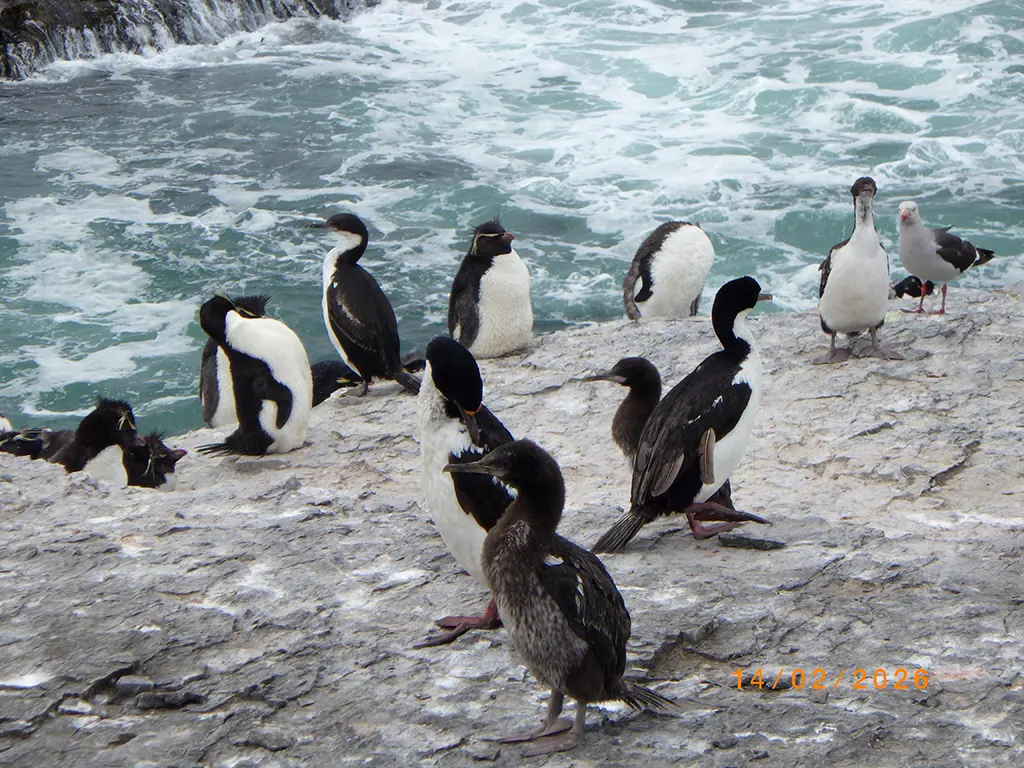
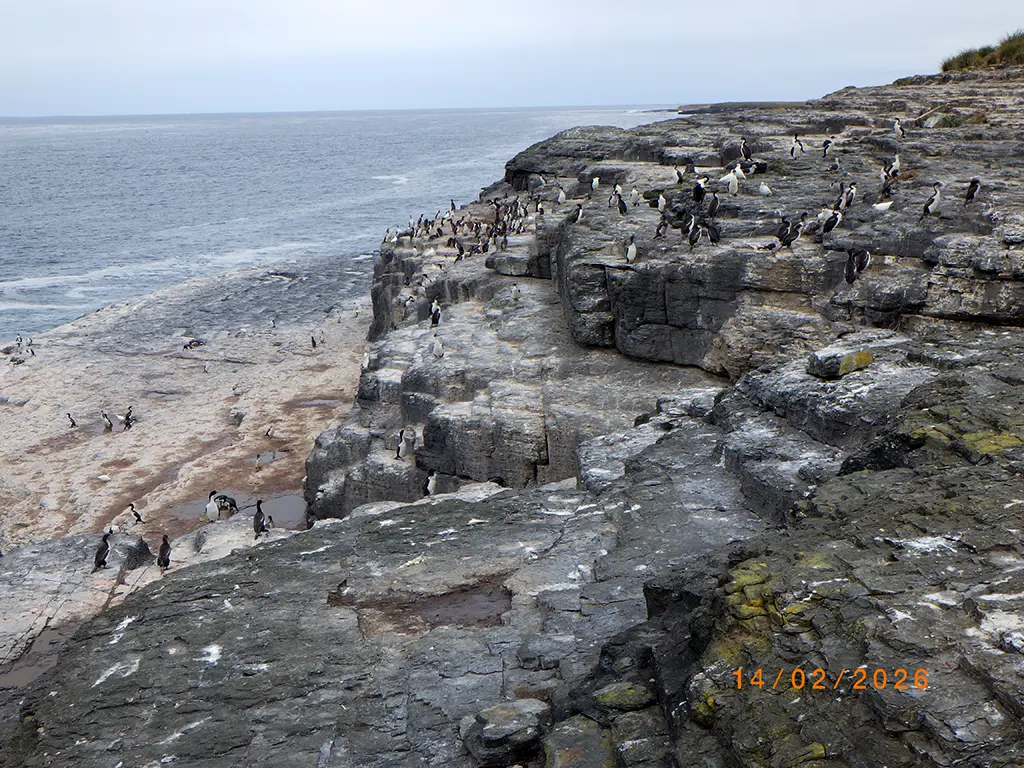
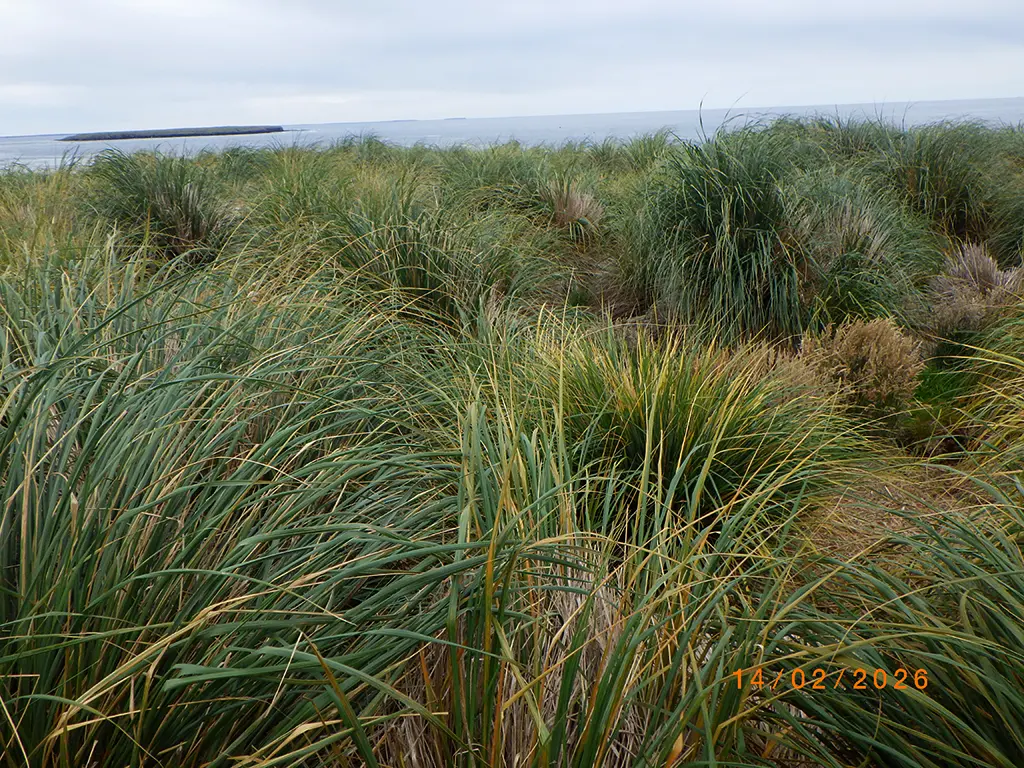
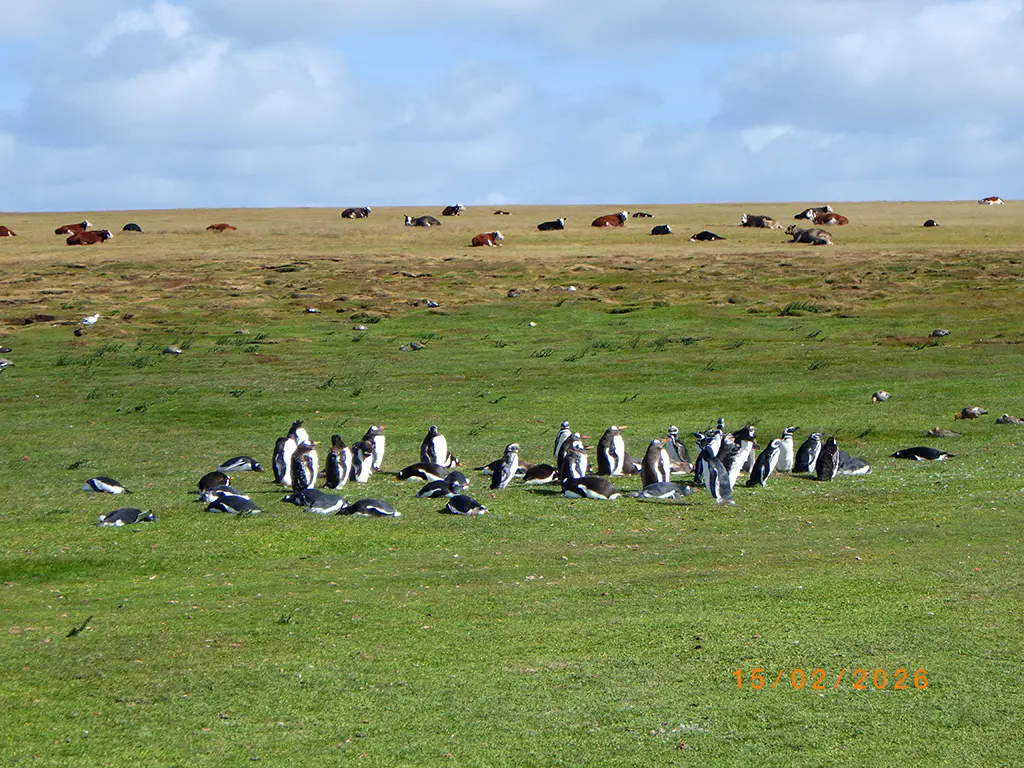
It is just over 5000 acres and has about 1000 sheep and some cows. The native Tussac grass has been re-established and along with the eradication of rats and mice, this is increasing the number of ground nesting birds. In addition to penguins there is also a large colony Imperial Cormorants, which share the Long Gulch cliff with the Rock Hopper penguins.
The island is managed without any use of fertilizers or drugs for the livestock. The cows, sheep and wildlife exist together in a very natural environment.


Pebble Island (north of West Falkland)
Pebble Island is an 26,000 acres island about 15 minutes flight from Saunders Island. The airstrip and settlement are located close to Elephant (Seal) Beach.
It is an important island for Gentoo, Magellanic and Rockhopper Penguins. About 8,500 breeding Rockhopper pairs return to their nests in October after spending the winter at sea. They lay 2 eggs but usually raise one chick.
In addition there are Peregine Falcons and Falkland Grass Wren,Turkey Vultures and around 30 pairs of Black Neck Swans visit the island. Sea Lions frequent Cape Tamar.
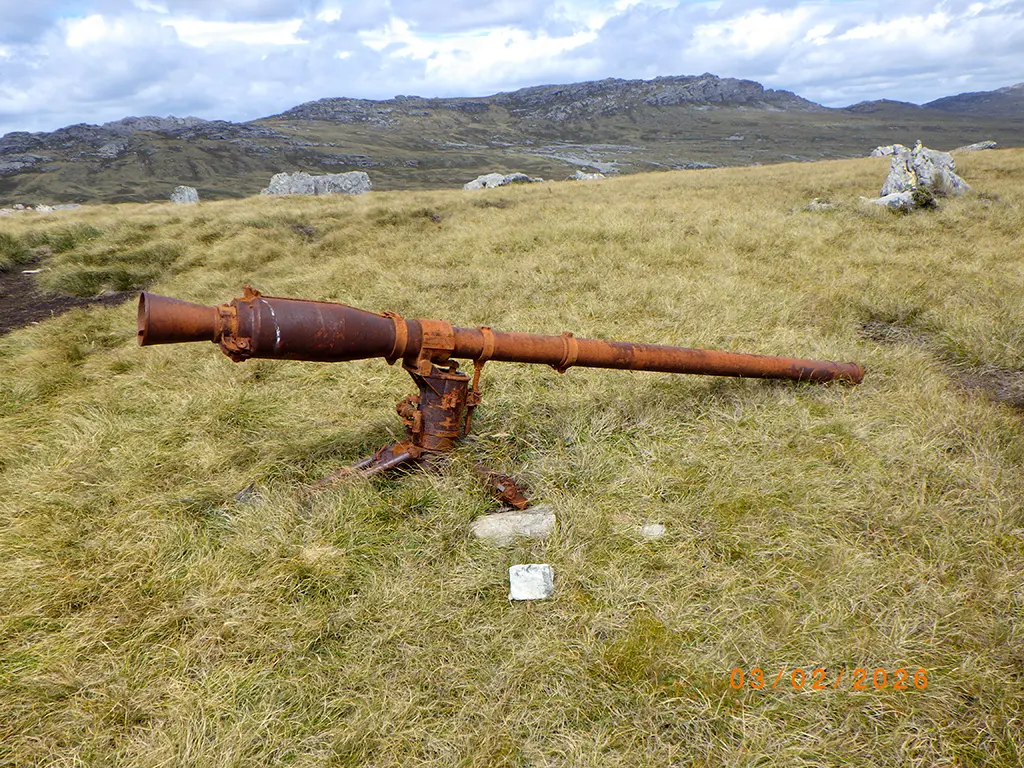
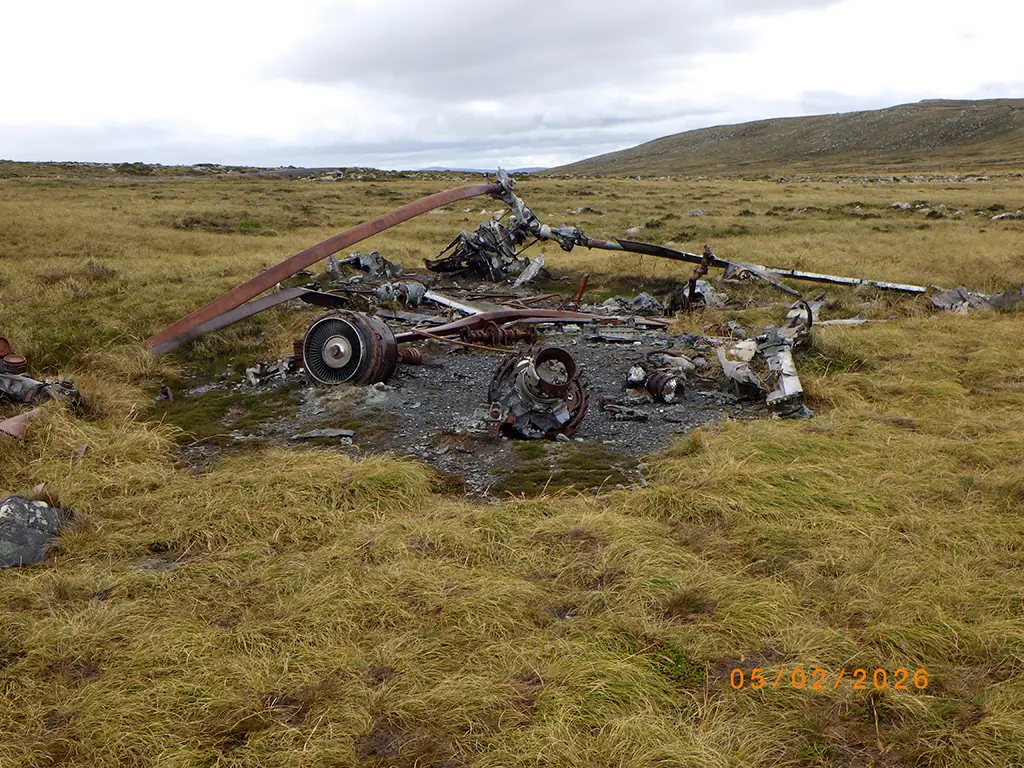
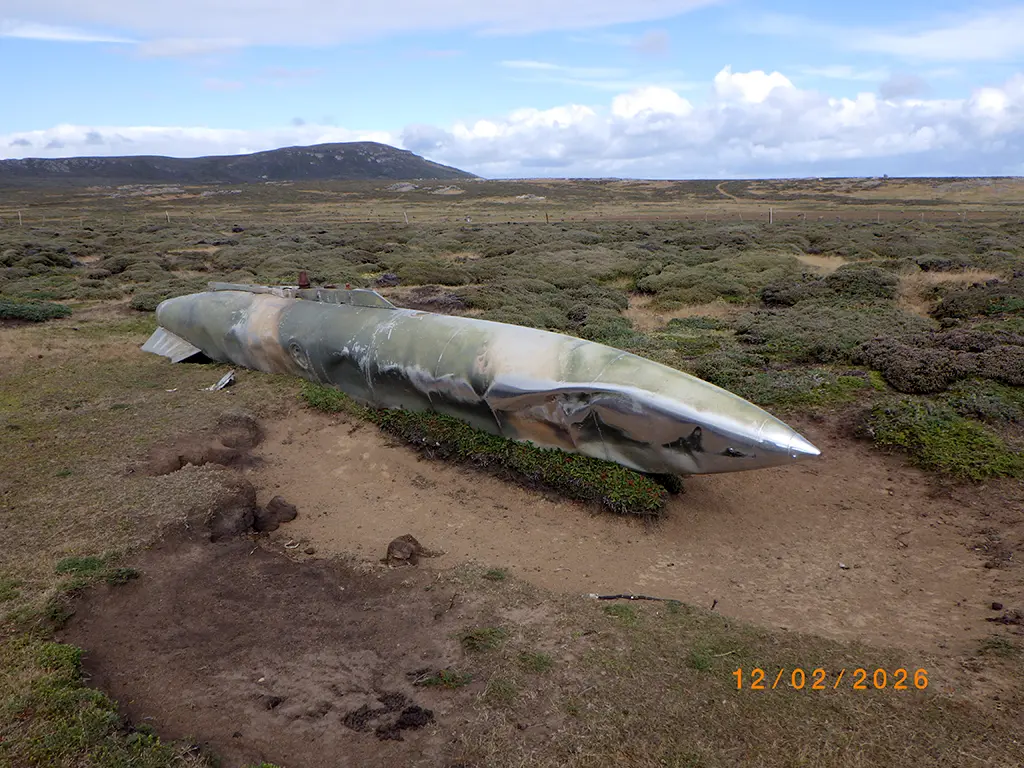
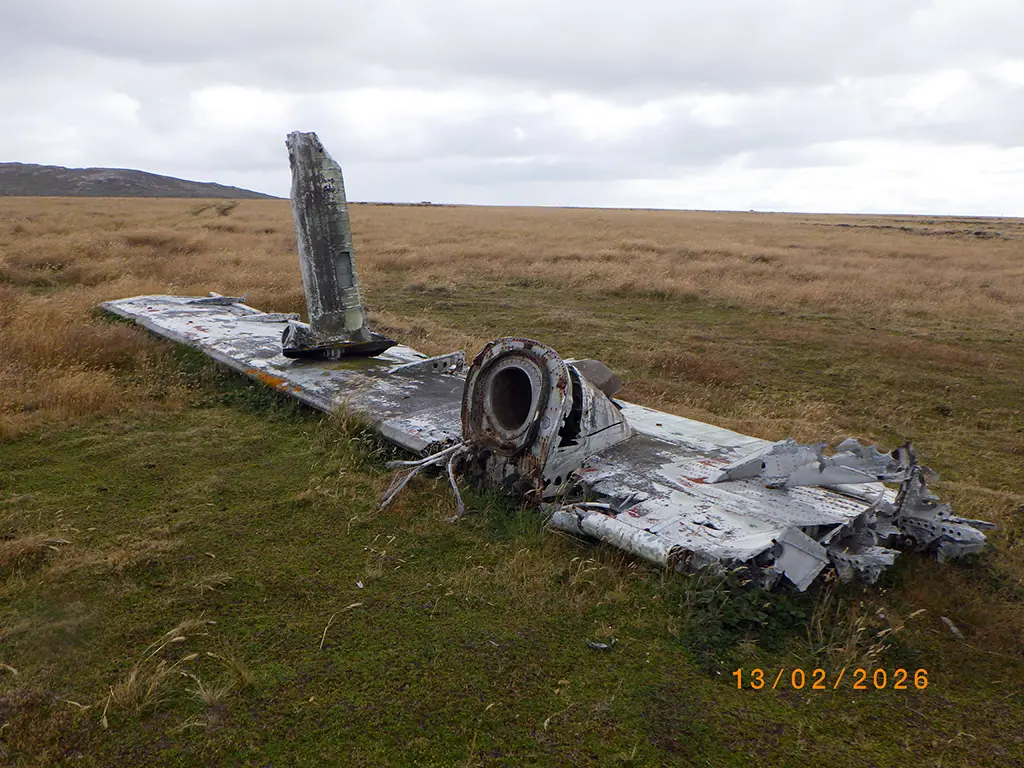
Pebble Island saw a lot of action during the war with Argentina as they had a base there until the SAS destroyed all the of the planes.
HMS Coventry was sunk nearby after she also shot down at least 2 Argentine aircraft operating out of South America.

Falklands War 1982
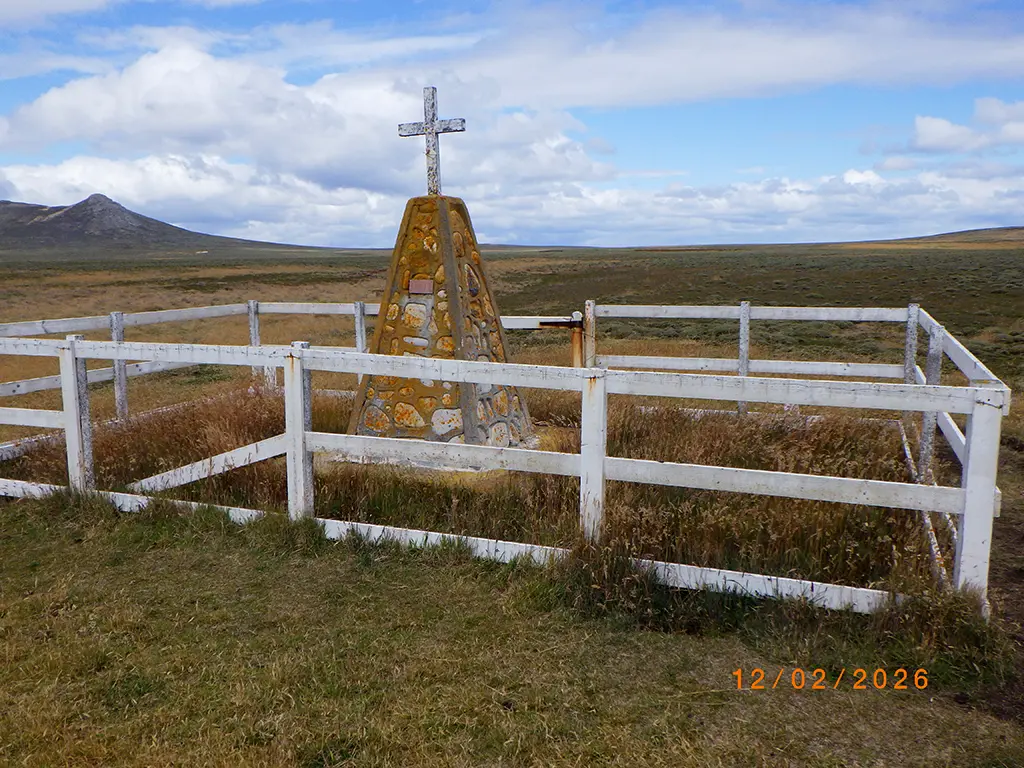
There are a lot of lot of reminders to the 1982 conflict and you should show respect for those who lost their lives. Under no circumstances should any piece, no matter how small, be removed from where it lies.


Notes on my stay…
- My visit was arranged by Falkland Islands Holidays, based in Stanley. From my first contact until I left they provided an interesting, reliable and professional itinerary. Every detail was looked after and when planes were delayed due to bad weather I was always updated to the situation. In Santiago de Chile when the flight was delayed by 24 hours I got better information from Falkland Islands Travel than from the check in desk at the airport.
- While in Stanley I stayed at Malvina House Hotel. It is a comfortable hotel with a very good bar and restaurant that is frequented by locals. The name is from the daughter of the first owners – James Felton. The son of the original owner, Jack Felton is driving Dr. Deane in a Citroën Kégresse K1 at Teal Inlet used as the feature image for this post.
- When on the islands I stayed in small guest houses usually run by the owners of the island. They were very knowledgeable of the wildlife and history of the area and live a very peaceful and happy life. But they work very hard looking after the visitors and caring for their sheep.
- Falkland Islands Government Air Service (FIGAS) provides a very important and reliable link between the islands. The day of your travel is pre-booked but the schedule is arranged the day before you fly when you will be advised of the departure times. The weather can change the schedule. You may be lucky to visit other islands on the way to your destination.
- HPA1 Bird Flu is a threat. Care must be taken is traveling between and around the islands. Foot baths are provided and your shoes and hiking poles need to be disinfected regularly.
- In Santiago de Chile the flight to the Falkland leaves from the Domestic Terminal as it will first stop at Punta Arenas. This is only a 10 minute walk from the International Terminal. There is a hotel between the 2 terminals. Be sure to arrive at the check in 3 hours before the scheduled departure time.
Reference Material
History
- A brief history of the Falkland Islands – Falkland Islands Government
- Photographic Collections – Jane Cameron National Archives, Falkland Islands. The older images from the turn of the turn of the twentieth century highlight what a struggle it must have been to just exist in this bleak British outpost in the South Atlantic Ocean.
Previous BajanThings posts of Bajans who were associated with the Falkland Islands


- Richard Clement Moody
- Revd. James Leith Moody: 1816 – 1896
- Frederick Gustave Ameile Delisle Saphile Wooding Deane
- Prince Albert and Prince George visit Barbados while Midshipmen aboard HMS Bacchante in 1879
Citroën Kégresse K1 photograph
The feature image used in this post has generated considerable attention among Citroën Kégresse enthusiasts, collectors, and restoration specialists. The photograph of Jack Felton sitting in the front seat and Dr. Deane in the rear seat of a Citroën Kégresse K1 at Teal Inlet was originally used in the BajanThings post of: Frederick Gustave Ameile Delisle Saphile Wooding Deane. The photograph was shared by Dr. Deane’s granddaughter, Sarah Jane Card. It was given to her mother, Heather Deane, by her grandmother’s dear friend, Alice Felton. The Deane’s were good friends with the Felton’s. Sarah Jane’s mother, Heather Sewell Wooding Deane, was born on the Falkland Islands about a month after the Deane family arrived in the Falkland Islands in August 1920.
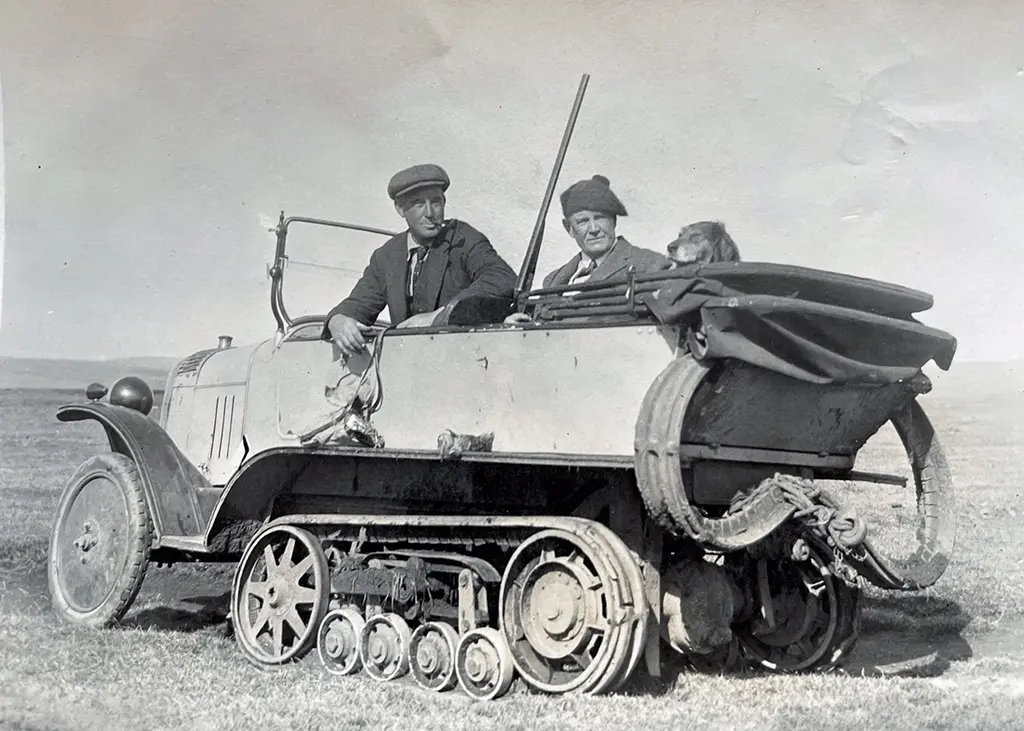
On the rear of the photograph there is a caption:
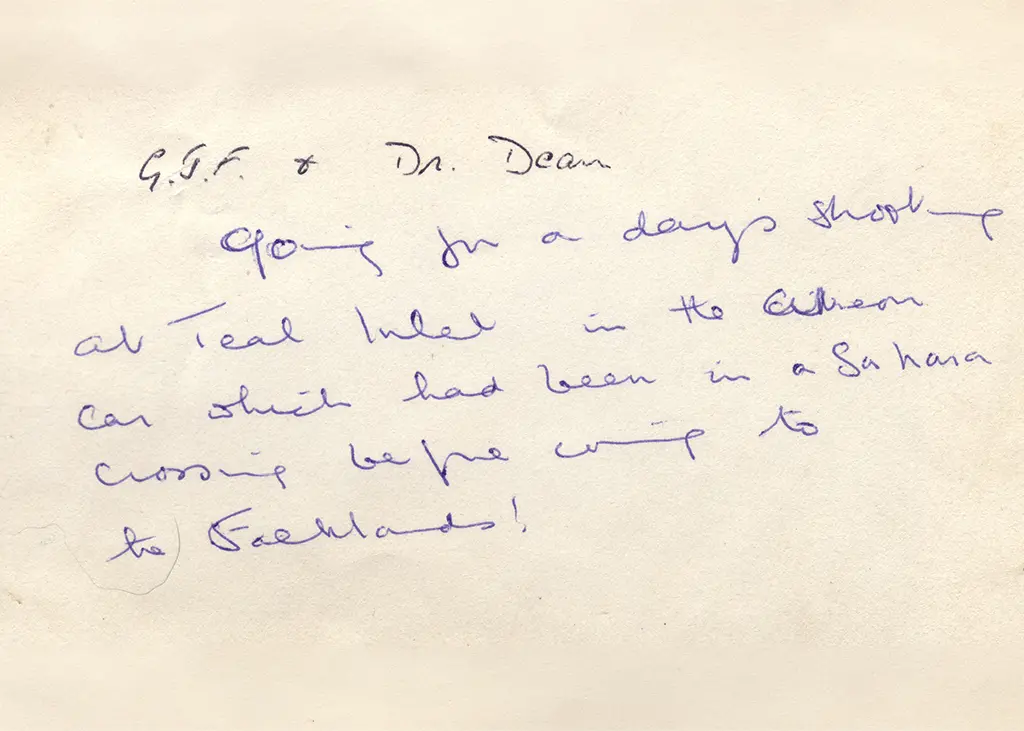
GJF & Dr. Dean[e]
Going for a days shooting
at Teal Inlet in the Citroën
car which had been in a Sahara
crossing before coming
to the Falklands!
GJF is George John Felton (known as Jack) who manged the Felton family sheep farm at Teal Inlet on the northern coast of East Falkland.
The photograph showing Jack Felton and Dr. Deane on a day out shooting at Teal Inlet was probably taken between 1924 and 1928. Motor vehicles were first imported into the Falkland Islands in 1924 and the Deane’s left the Falkland Islands in April 1928.
The Citroën-Kégresse K1 was built to conquer the unforgiving Sahara Desert. On 17th December 1922 five Citroën-Kégresse K1s – nicknamed “Scarabée d’Or” (Golden Scarab), “Croissant d’Argent” (Silver Crescent), “Tortue Volante” (Flying Turtle), “Bœuf Apis”, and “Chenille Rampante” (Creeping Caterpillar) departed the Algerian town of Touggourt and headed into the vast Sahara. On 7th January 1923, after 21 days of travel, the five vehicles having travelled 3,200km across the Sahara Desert, reached their destination: Timbuktu.
This was a monumental public relations coup that established Citroën as an innovator in automotive design. This expedition was a major success for André Citroën, showing that mass produced cars could cross the Sahara Dessert in just 21 days, compared to the 6 – 7 months that it took by camel.
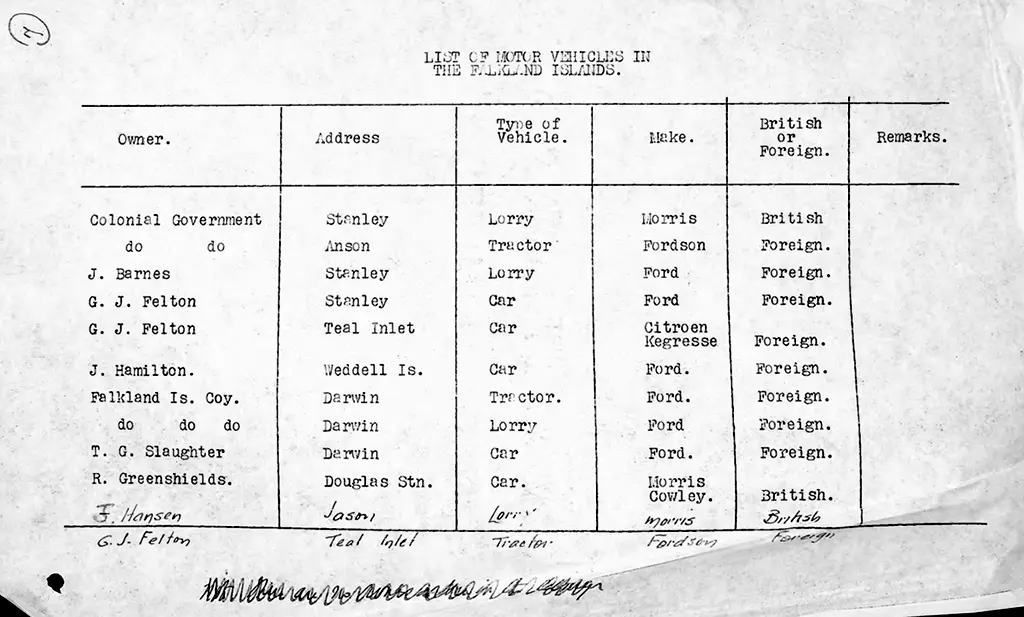
Motor vehicles first arrived in the Falkland Islands in 1924. By 6th January 1926, there were a total of 12 vehicles: five cars, four lorries, and three tractors on the Falkland Islands. One of the cars was a Citroën Kégresse owned by GJ Felton from Teal Inlet. It is likely that this vehicle was brought to the islands between 1924 and 1925. On the rear of the photograph the caption suggests that this vehicle had previously crossed the Sahara Desert before coming to the Falkland Islands – maybe it was one of the five Citroën-Kégresse K1’s that took part in the Citroën expedition to cross the Sahara in 1922?
Sarah Jane Card’s grandmother, Maud Deane (née Batson), sadly died during World War II when the ship SS City of Benares was torpedoed by German submarine U-48 on 18th September 1940. She and her daughter Heather had been staying with her dear friend Alice Felton from the Falkland Islands. Alice went to Liverpool to see Maud off on her fateful voyage. Sarah Jane’s mother Heather who was 20 stayed in the UK and joined the WRAF.
Alice Emma Felton was the first cousin once removed of George “Jack” John Felton. She is often referred to as Jack’s niece. Alice was slightly older than Maud. The two became friends while the Deane family lived in the Falkland Islands from 1920 to 1928. After Alice’s father Arthur Ernest Felton (Jack’s first cousin) died in 1933, Alice took over the lease of his farm on West Point Island managing the farm until April 1937 when she left the Falkland Islands for the United Kingdom. Alice died in 1969 at the age of 84 at her home, “Rockleaze,” in Evercreech, Somerset. She never returned to the Falkland Islands.
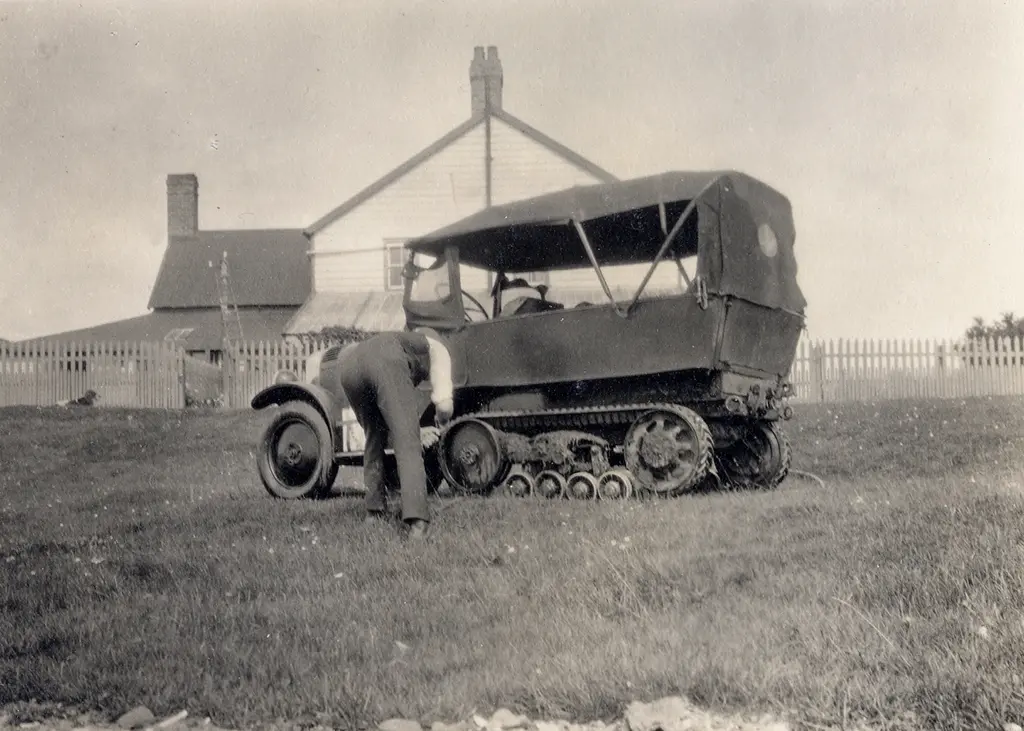
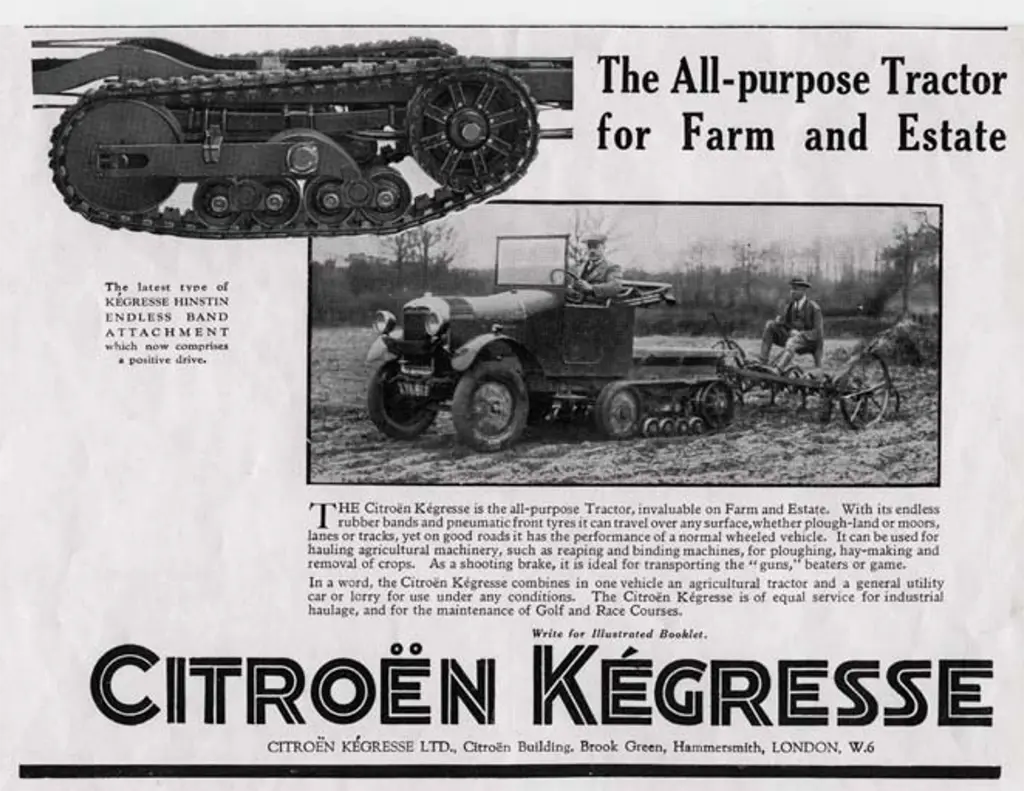
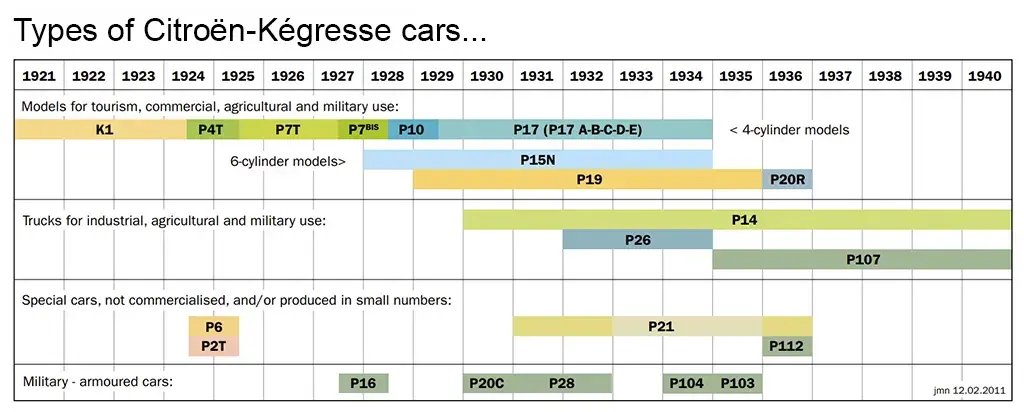
It appears there may have been more than one Citroën-Kégresse on the Falkland Islands. The one owned by George Bonner who ran the Bonner family farm at San Carlos on the north-west coast of East Falkland appears to be a later Type P4T model whereas the one owned by Jack Felton at Teal Inlet appears to be an earlier Type K1 model. The Bonner PT4 model had an improved engine to handle low-speed, high-torque demands compared to the Felton K1. The PT4 also had a heavier-duty track assembly with a solid or more enclosed front idler wheel that helped prevent debris or mud from clogging the internal drive mechanism. These two changes made the PT4 better suited for agricultural tasks than the K1.
The Felton K1 was used as a high-mobility transport vehicle – essentially a modern-day SUV – to move people and supplies through areas where conventional wheeled vehicles would instantly bog down. It allowed for a level of speed and reliability across the peat bogs that was revolutionary for the era. In the mid 1920s there were no roads between Teal Inlet and Stanley, and the 50 mile journey across peaty valleys and “stone runs” was typically done on horseback, taking a full day or more.
The Bonner P4T was used as a tractor, specifically pulling a plough for pasture development around San Carlos.
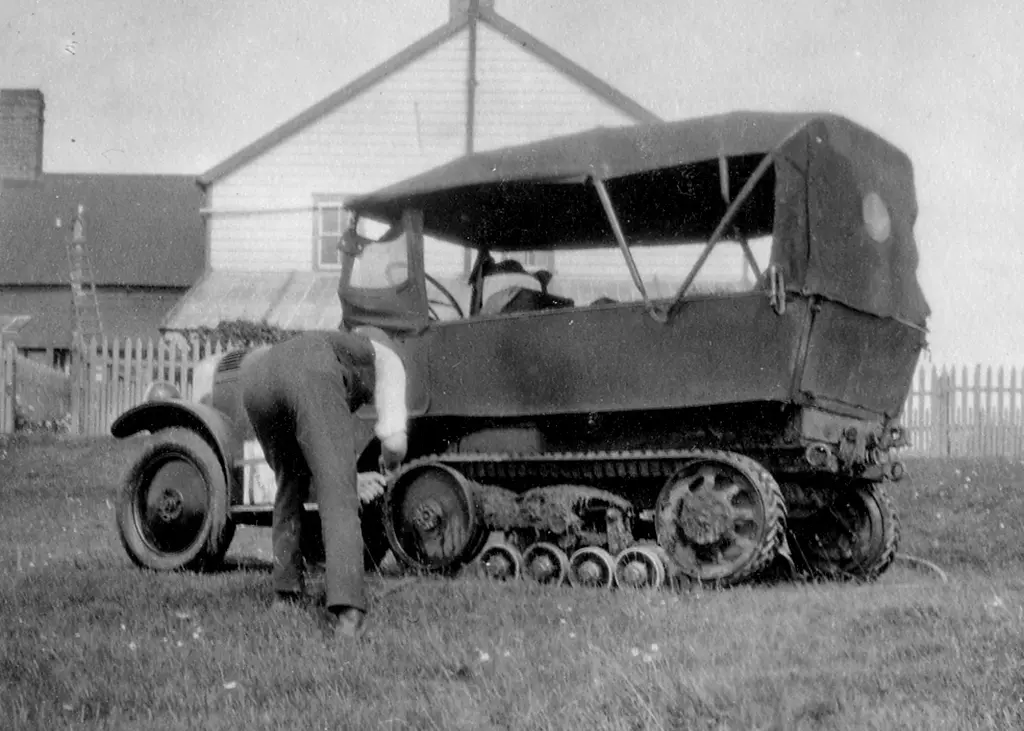
The Jack Felton one (left) used at Evelyn Station, Teal Inlet was an Early Citroën-Kégresse K1 (approx. 1921–1922) used for for general transport.
The George Bonner one (right) used at San Carlos South Station (aka JB Station) was a Mid-Evolution Citroën-Kégresse P4T (approx. 1924–1925) used for agricultural work (ploughing).
A question posed by the Citroën Kégresse enthusiasts, collectors and restorers is: are the remains of either the Felton Citroën Kégresse K1 or the Bonner Citroën Kégresse P4T quietly rusting away in some field in the Falkland’s, a bit like the SS Great Britain that was recovered in 1970 from Sparrow Cove and brought back to Bristol to be restored?
Our thanks to Dr. Deane’s granddaughter Sarah Jane Card and to Chloe Anderson-Wheatley the Corporate Records & National Archives Manager at the Jane Cameron National Archives in the Falklands who both helped us uncover the backstory to the Felton Deane Citroën-Kégresse K1 photograph.


Additional information on the Citroën-Kégresse
- Adolphe Kégresse, the cruising genius
- All Citroën-Kégresse models – platypusgame.com
- All Citroën-Kégresse models – kegresse.dk
- One Vehicle, One Story: The Citroën-Kégresse K1 “Croissant d’Argent” of Louis Audouin-Dubreuil
- Citroën Has Recreated The Amazing Golden Scarab Half-Track That Conquered The Sahara Almost 100 Years Ago
- La Traversée du Sahara
- Kégresse in France
- Kégresse in Great Britain (features the Citroën-Kégresse from the Falklands Archives that belonged to George Bonner who lived in San Carlos)
- Citroën-Kégresse-Hinstin Autochenille – citroenet.org.uk
- Who knew there were Citroën Kégresse in the Falkland Islands? – CITROËNVIE the moniker for the Citroën Autoclub Canada.
The significance of the name Citroën-Kégresse-Hinstin Autochenille is: Citroën: refers to André Citroën, the French automotive industrialist, Kégresse: refers to Adolphe Kégresse, the French engineer who developed the flexible rubber caterpillar track system, Hinstin: refers to Jacques Hinstin, a partner in a gear company with Citroën who played a key role in adapting the tracks to vehicles and Autochenille: refers to a French term meaning half-track vehicle.
Below is an English transcript of the French audio:
André Citroën had a passion for innovation. When Adolphe Kégresse presented him with the concept of half-track vehicles in 1920, he was immediately captivated and secured exclusive rights to the invention. Demonstrations quickly multiplied for both military and civilian uses, from sand dunes to the desert.
After several thousand kilometres of reconnaissance and development, the first major expedition was launched: Citroën would cross the Sahara from Tougourt to Timbuktu. Ten-horsepower B2 type trucks were specially prepared to accommodate tools, spare parts, weapons, bivouac equipment, and even toilet paper.
Citroën’s closest advisor led the expedition, assisted by Louis Audouin-Dubreuil, a Sahara specialist. They were supported by seasoned mechanics, geographer Paul Castelnau, lieutenant pilot Georges Estienne, and warrant officer/interpreter Chapuis—not forgetting Flossie, the little dog acting as the mascot. The five cars were christened: Golden Scarab, Silver Crescent, Flying Tortoise, Creeping Caterpillar, and Ox.
On 17th December 1922, the departure was solemn and military. In the presence of the Governor-General of Algeria, the group set off on a high-risk journey. The desert was largely unexplored and had never been crossed by car. It would be 3,200 km of trials for both men and machines. They navigated high dunes with shifting sand, valleys, and plains battered by wind where any navigational error could mean death.
Despite the hardships, the route offered moments of wonder. Welcoming oases provided opportunities to stroll through markets and witness local festivals and dances.
However, make no mistake: apart from these moments of respite, the expedition was not fun. Most of the time was spent bivouacking in unknown places, staying vigilant, and driving at night to avoid the heat. The crew had to maintain the cars and manage vital fuel reserves. New Year’s Eve was spent in Tinzawaten, meeting a supply group and celebrating the milestone with a glass of champagne.
As they neared the Niger River, the landscape changed to grassy steppes and forests. After 20 days and 3,200 km, the expedition reached Timbuktu on January 7. They were welcomed by a curious crowd and the regional commander. In a symbolic gesture, Georges-Marie Haardt—always elegant—handed over the first Saharan automobile mail to the authorities.
Mission accomplished. To drive the point home, the expedition retraced the route in reverse. André Citroën himself, accompanied by his wife and the engineer Kégresse, personally met the team to celebrate. While they played up the reunion for the cameras with hugs and cheers, the pride was real. New roads were opened, the impact was worldwide, and the brand with the double chevron had achieved a historic feat. Citroën was not going to stop there.
After the 1922 Touggourt-Timbuctoo Expedition the 1924 – 1925 Croisière Noire (Black Cruise) Expedtions, were pioneering automotive journeys designed to demonstrate the reliability of the Citroën Kégresse half-track vehicles.
Led by Georges-Marie Haardt and Louis Audouin-Dubreuil, these expeditions crossed the Sahara Desert and traversed the African continent traveling 20,000km from Algeria to Madagascar to promote technological progress and boost the Citroën brand’s image.