
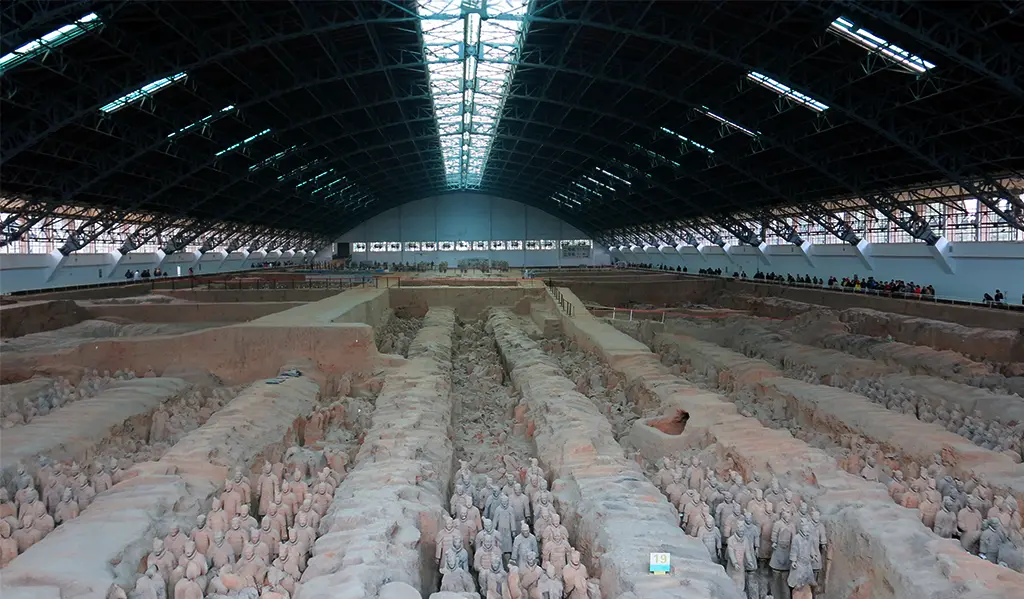
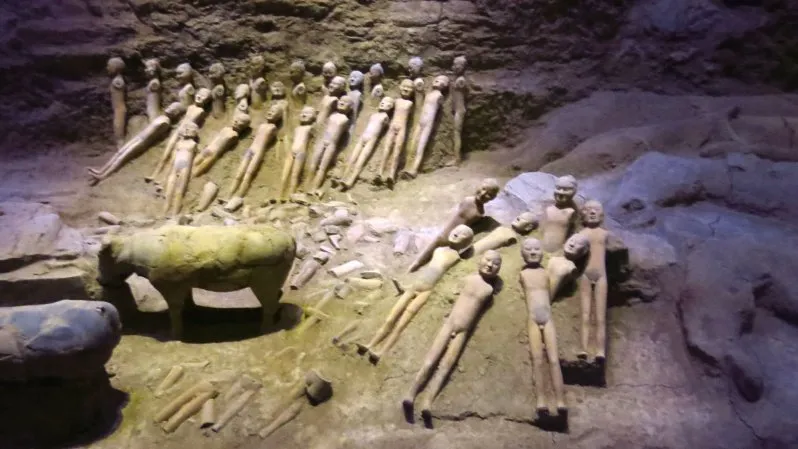
This month we have a double bill. Yesterday we shared our trip to Angkor Wat. Today we share our trip to visit see the army of Terracotta Warriors which were discovered by farmers in Xi’an, China while digging a well back in 1974. Today the excavated fragments are being meticulously pieced back together by a huge team of restorers.
Work is ongoing at this site, which is around 1.5 km east of Emperor Qin Shi Huang’s Mausoleum in Lintong, Xian, Shaanxi Province, China.
It is a sight not to be missed by any visitor to China. The museum covers an area of 16,300 square meters, divided into three sections: No. 1 Pit, No. 2 Pit, and No. 3 Pit.
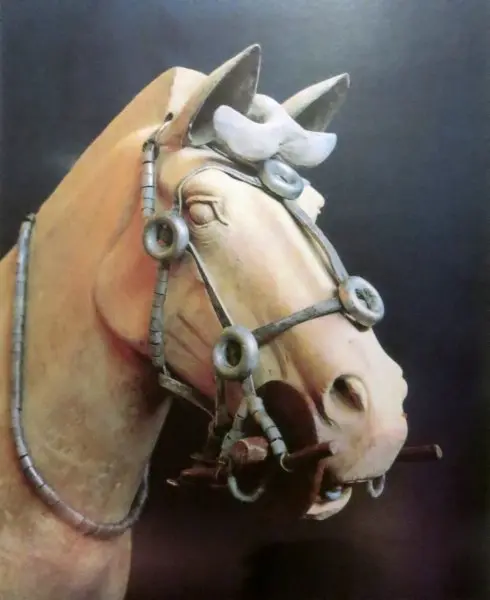
So far over 7,000 pottery soldiers, horses, chariots, and weapons have been unearthed from these pits.
Xi’an is the third most popular tourist destination in China after the Great Wall of China and The Forbidden City both in Beijing. Xi’an is also the starting point of the Silk Road and home to the Terracotta Warriors.
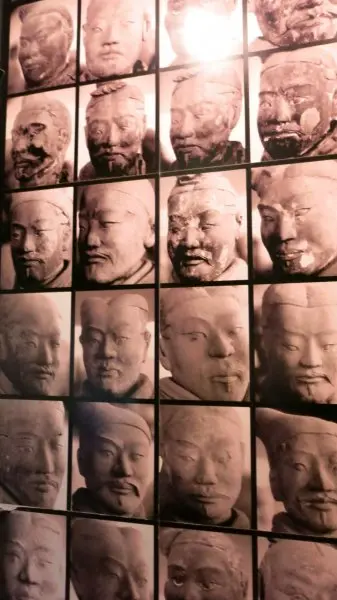
The Terracotta Warriors are thousands of terracotta sculptures each depicting an individual soldier in the first emperor of China: Qin Shi Huang guard troop. It is a form of funerary art, buried with the emperor in 210–209 BCE with the purpose of protecting him in his afterlife.
These life-size terracotta soldier models that represent the Emperor’s guard troops were moulded in parts, fired, then assembled and painted.
The Terracotta Army was discovered on 29th March 1974 by a group of farmers—Yang Zhifa, his five brothers, and neighbour Wang Puzhi—who were digging a well approximately 1.5 km east of the Qin Emperor’s tomb mound at Mount Li (Lishan), a region riddled with underground springs and watercourses. Little did they know at the time that in digging that well they uncovered one of the greatest archaeological discoveries of the 20th century.
For centuries, occasional reports mentioned pieces of terracotta figures and fragments of the Qin necropolis – roofing tiles, bricks and chunks of masonry. This discovery prompted Chinese archaeologists, including Zhao Kangmin, to investigate, revealing the largest pottery figurine group ever found. A museum complex has since been constructed over the area, the largest pit being enclosed by a roofed structure.
The Terracotta Army Museum in Xi’an is a must-see. It is considered one of the greatest archaeological sites in the world.
In March 2014 I accompanied my son on a school trip to Xi’an to see the Terracotta Warriors.
Xi’an is an ancient imperial capital and eastern departure point of the Silk Road. Xi’an has long been an important crossroads for people from throughout China, Central Asia, and the Middle East, and thus a hub of diverse ethnic identities and religious beliefs. Xi’an is just over 3hrs flying time north from Hong Kong – which is about the same time as it takes to fly from Hong Kong to Singapore which is to the west.










For more information on the Terracotta Warriors click here for a guide to the Terracotta Army museum in Xi’an.
Below are two videos on how the Chinese authorities are piece by piece meticulously restoring the Terracotta Army.



Leave a Reply