In France the 8th May is la fête de la Victoire 1945, le jour de la libération. It is a national holiday when those that gave their lives fighting for the freedom of France are remembered. The date celebrates the announcement of the end of World War II by Gen. Charles de Gaulle on 8th May 1945.
2024 is a significant anniversary. It is the 80th anniversary of “D-Day”, “Operation Neptune”, and “Jour-J” with the commencement of the Allied invasion of France that begun on Tuesday 6th June 1944. This operation began the liberation of France, and the rest of Western Europe.
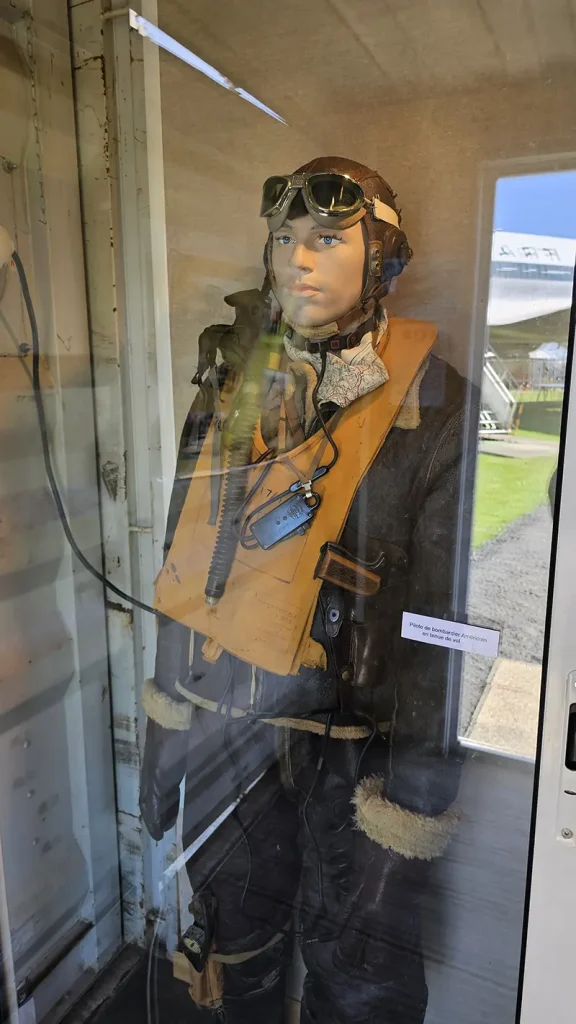
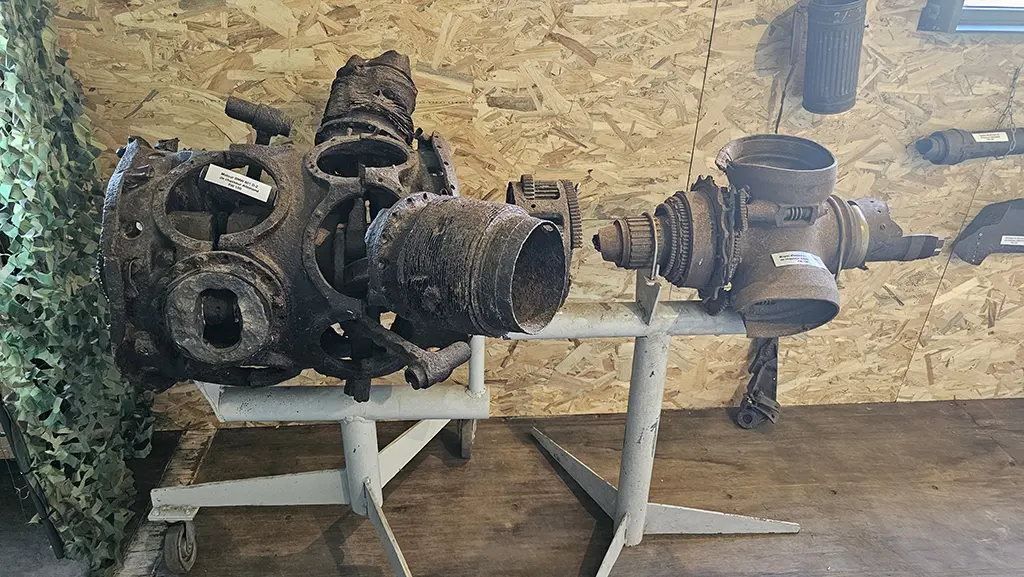
The 8th May 2024 marked the official opening by the Association pour la Recherche d’Epaves Aéronautiques en Pays de Loire (AREA-PL) of a permanent exhibition space that documents the four aircraft and their crews that crashed in Pont-Saint-Martin, France during World War II.
One of those commemorated is Bajan pilot P/O George HF Inniss aged 24 and the aircrew of the Handley Page Hampden Mk. I, AD750 that crashed nose first at La Marionnière farm, La Marsoire, Pont-Saint-Martin, Loire-Atlantique (2 km SE of Aéroport Nantes Atlantique) after being hit by German flak. Their intended mission was to bomb the French aircraft factory: La Société Nationale des Constructions Aéronautiques de l’Ouest (SNCAO) situated adjacent to the aerodrome at Château Bougon (now known as: Aéroport Nantes Atlantique). AD750 exploded when it crashed leaving a crater about 10m long, 6m wide and 1.50m deep. There were no survivors.
This new permanent exhibition contains items that that been retrieved from the crash sites in Pont-Saint-Martin near to Jérôme Batard’s farm La Moricière. They include a:
- German Heinkel He 111 bomber which crashed near the farm in October 1940.
- RAF Handley Page Hampden AD750 that crashed on 4th February 1941.
- RAF Vickers-Armstrong Wellington R1374 that crashed on 8th May 1941.
- German Focke Wulf 190 A that crashed on 4th July 1943.
Jérôme Batard came to the farm at La Moricière with his parents in 1957. He states when ploughing it was common to find small aeroplane pieces. Major excavations were undertaking in 2009 and 2011.
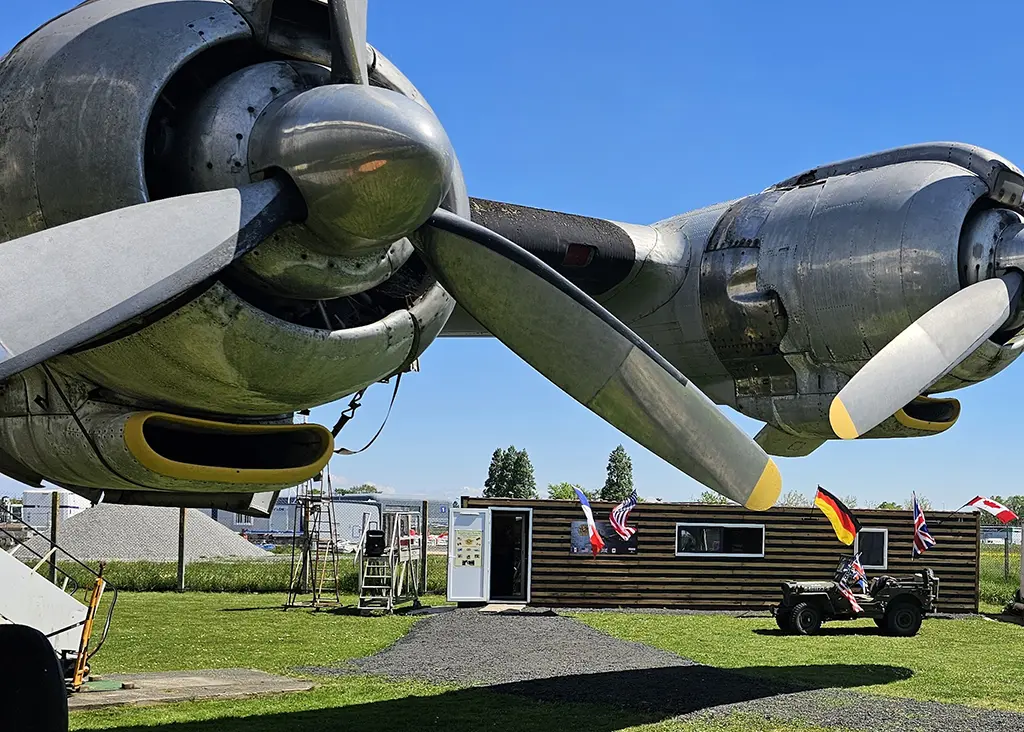
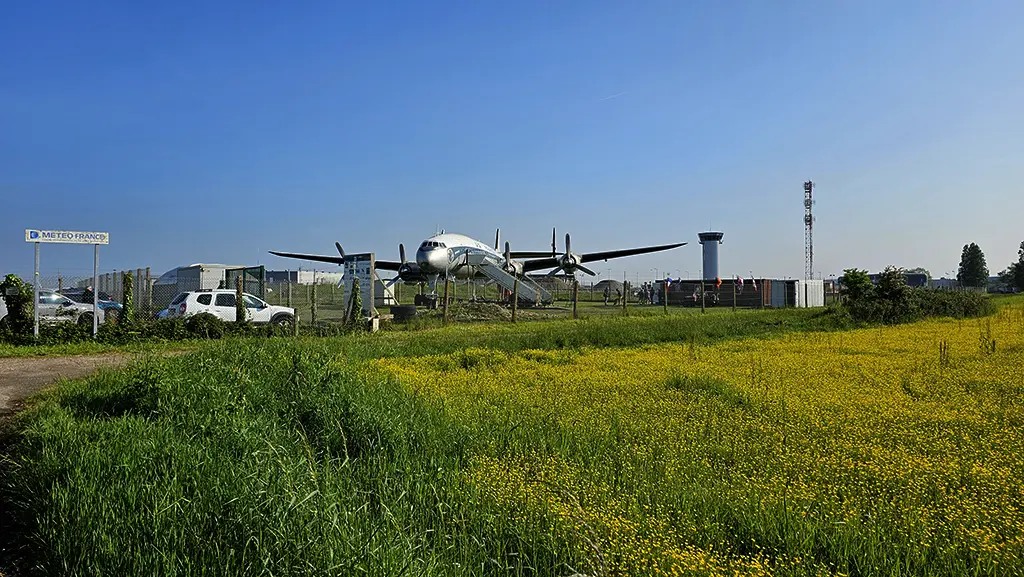
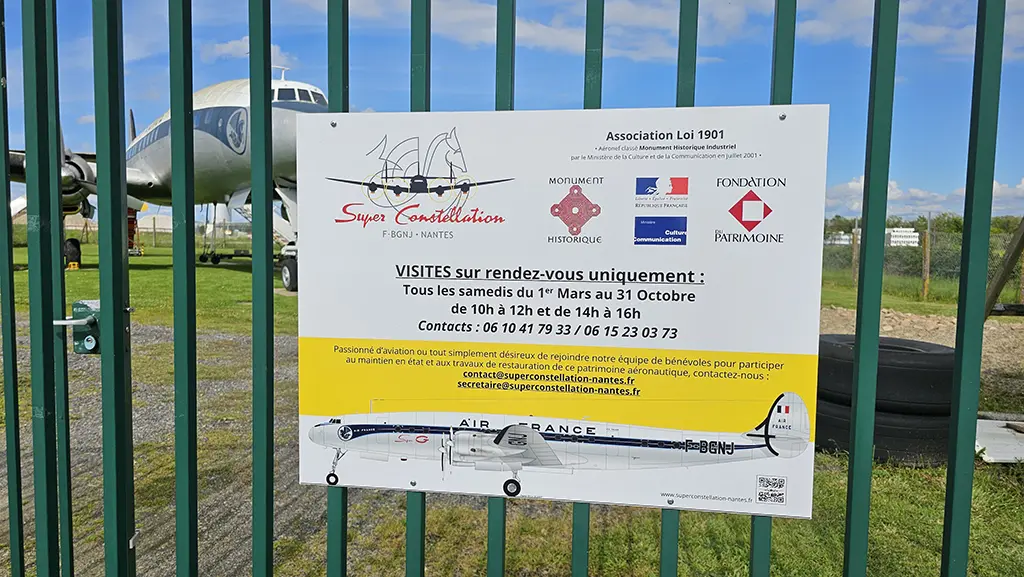
This new exhibition shares the location with the static Air France Lockheed Super Constellation F-BGNJ at Aéroport Nantes Atlantique. This Super Constellation aircraft is being preserved by a team of enthusiasts L’Amicale du Super Constellation (the Super Constellation Friendship Association).
The AREA-PL container museum is open to the public at the same time as the site of the Air France Super Constellation: Every Saturday 10am to 2pm.

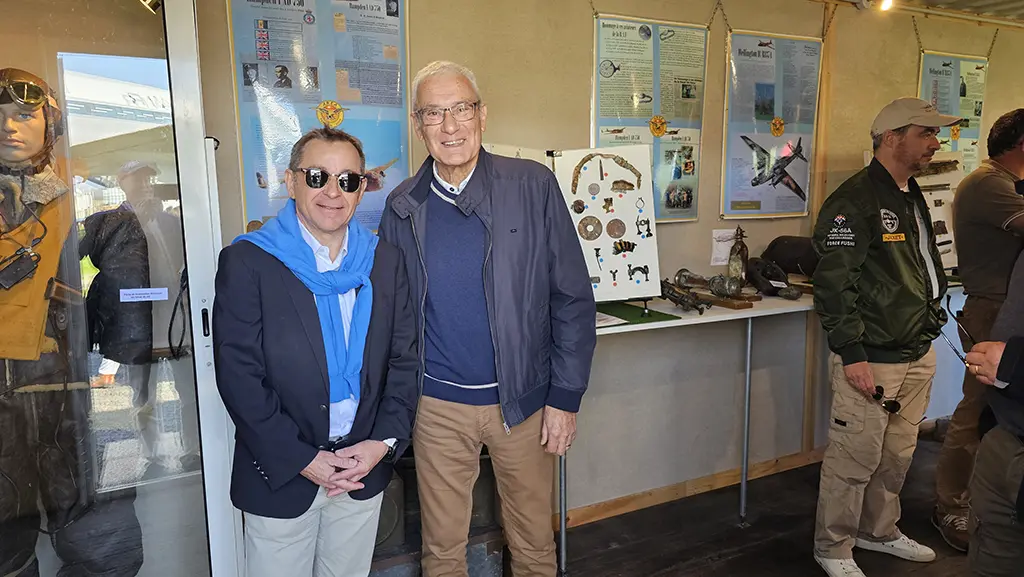
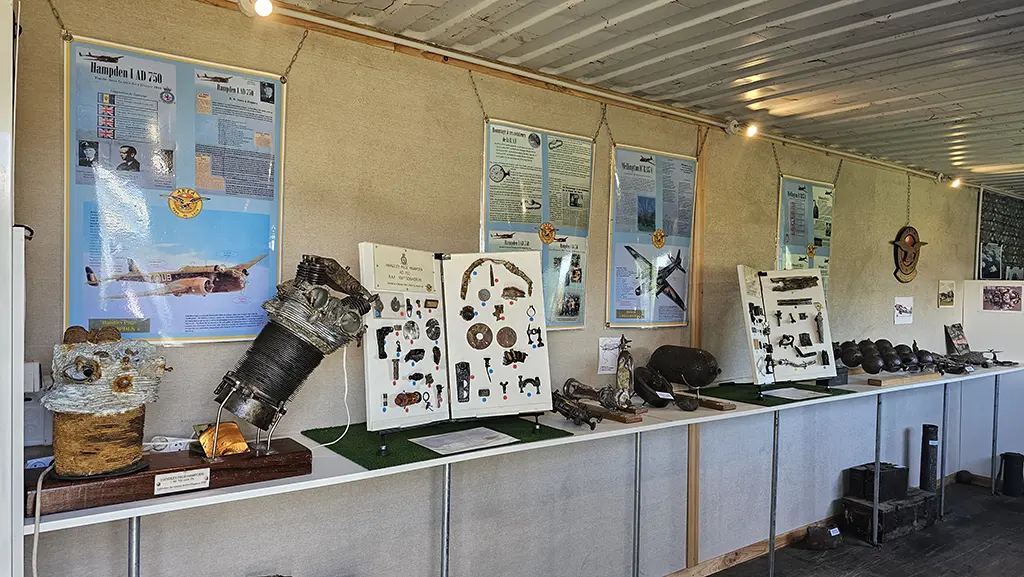
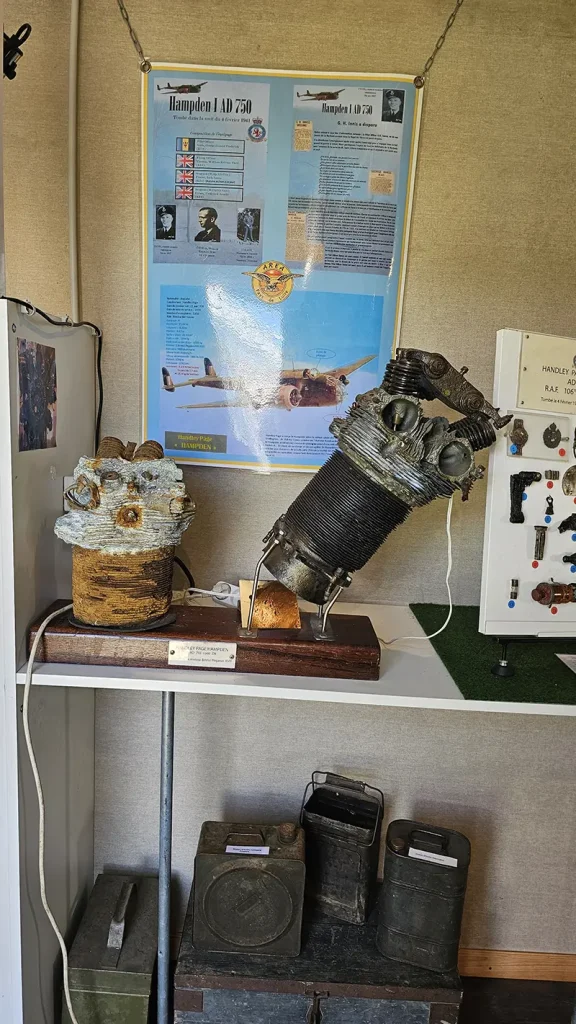

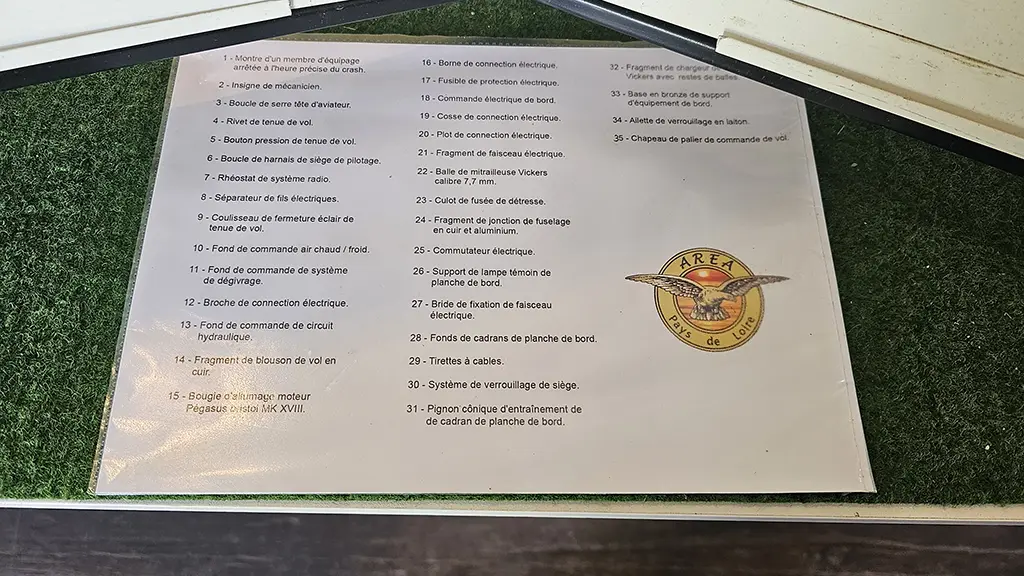
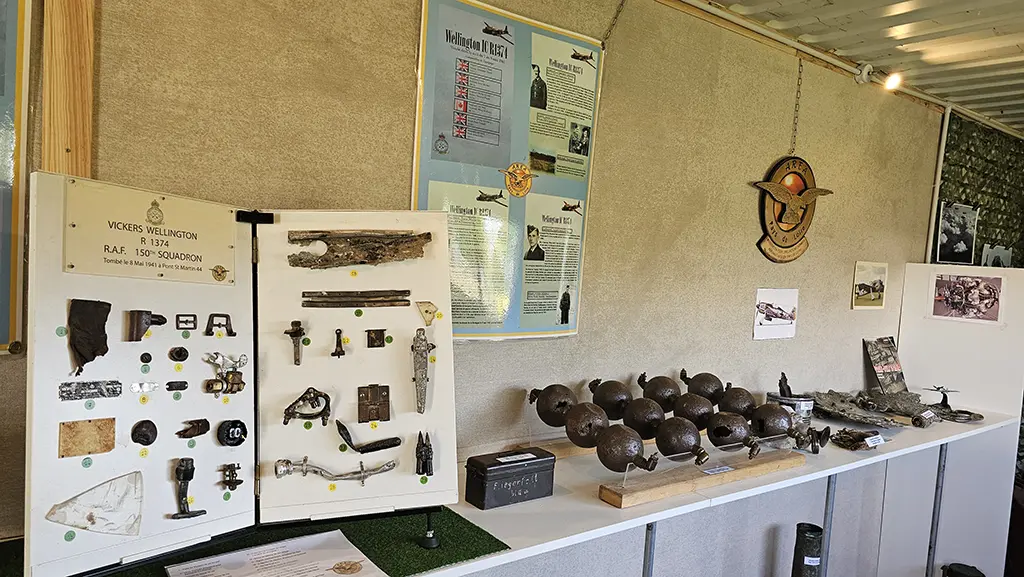
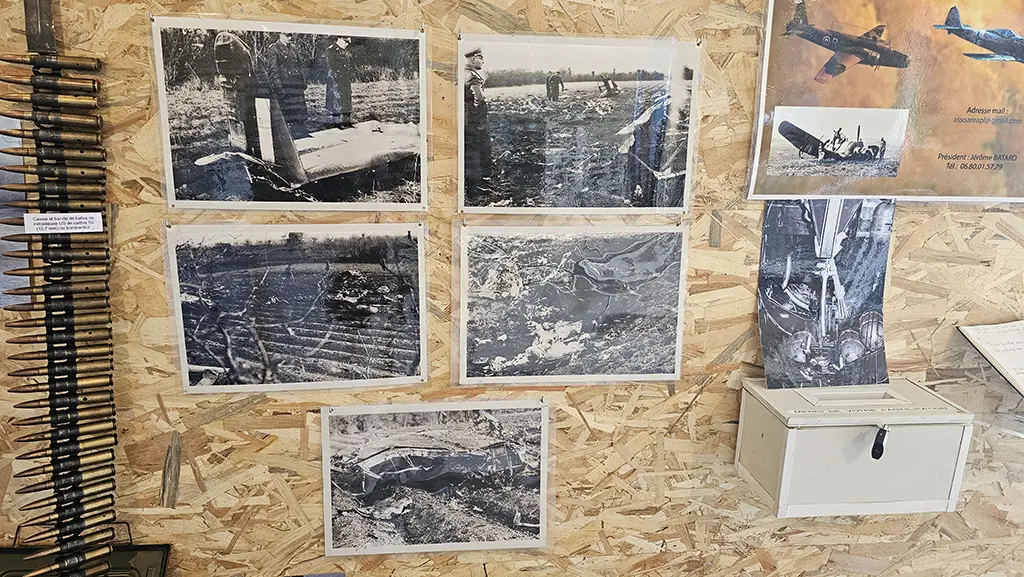
Attending this 8th May inauguration ceremony was a very humbling experience. This new permanent exhibition was opened by the Honorary Mayor of Pont-Saint-Martin, Yves François, who was responsible for setting up a memorial to the crews of the RAF Hampden AD750 and RAF Wellington R1374 in 2011, that is outside the Hôtel de Ville (Mayor’s office) in the centre of Pont-Saint-Martin.
We in the UK, USA, Canada and the Caribbean do not appreciate how important the 8th May – la fête de la Victoire 1945 – is to the French. We were never occupied. France was occupied in June 1940. Liberation on 8th May 1945 had a significant meaning. What became obvious from attending this ceremony is how much it means to the French that these young airmen came to their country to fight for their freedom and died doing so.
The local history is rich. To the South of Nantes there was the Oradour-sur-Glane massacre that occured just four days after D-Day on 10th June 1944. Here a German Waffen-SS company torched the village of Oradour-sur-Glane and executed the 643 villagers as collective punishment for resistance activity in the area. After the war, Gen. Charles de Gaulle decided the village should never be rebuilt, but would remain a memorial to the cruelty of the Nazi occupation.
In much of the local area liberation did not come until 11th May 1945. The Saint-Nazaire pocket (Poche de Saint-Nazaire) was the last area to fall in France as it was heavily protected and fortified given the submarine base at Saint-Nazaire. The Poche de Saint-Nazaire extended to the east as far as Saint-Omer-de-Blain and from La Roche-Bernard in the north to Pornic in the south. (We visited a number of these places with our hosts.)
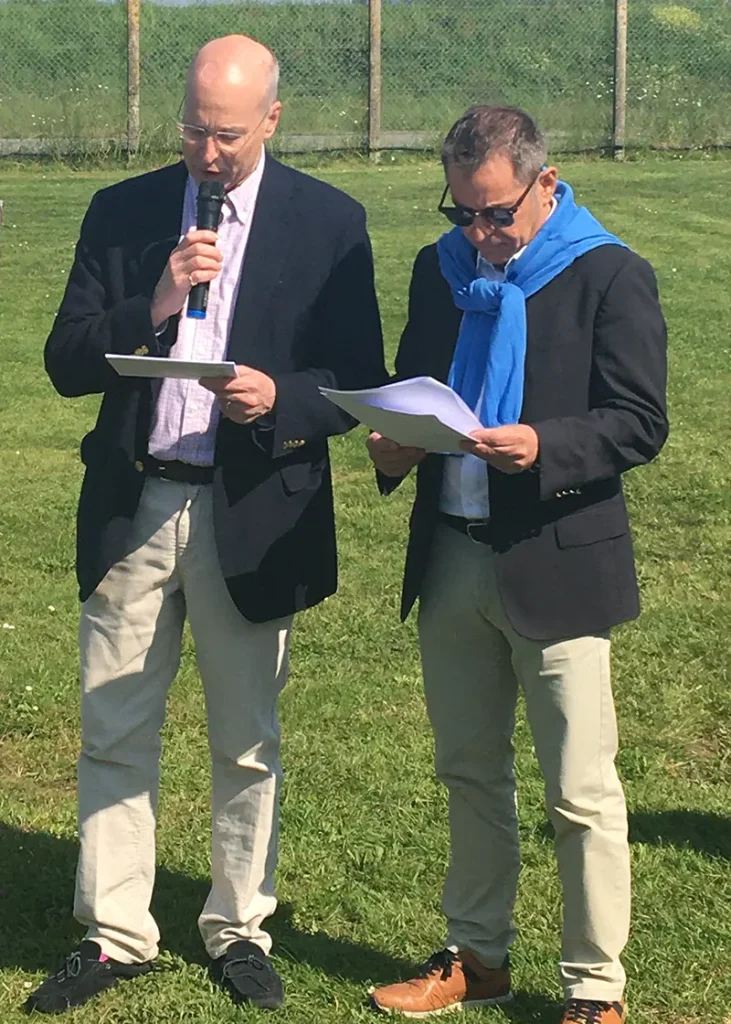
The opening ceremony started with an address by The President of AREA-PL – Jérôme Batard, followed by an address by the secretary – Nicolas Roturier. It was followed by a few words of thanks from me on behalf of my cousin’s in Barbados and then the opening address by the Honorary Mayor of Pont-Saint-Martin, Yves François.
Message of thanks from Peter Burton on behalf of the Inniss family in Barbados

I am honoured to be here today representing my cousins, the nephew and niece of P/O George Inniss who was shot down and killed when his aircraft was hit by German flak while attempting to bomb the French aircraft factory La Société Nationale des Constructions Aéronautiques de l’Ouest situated behind us on 4th February 1941.
George was from Barbados. His older brother, Charlie, was married to my aunt. On my aunt’s side-board was always a photo of George that he had sent to his family in Barbados when he gained his RAF wings in July 1940. It is inscribed “with love from George”. It was and is a very cherished photo. It is the only photograph the family have of George in uniform.
Growing up all the cousins knew the photo on the side-board of the RAF pilot was Uncle Charlie’s brother, George, who was shot down and killed in France at the start of World War II.
That was all the family knew.
With the help of Jérôme Batard and Nicolas Roturier of the Association pour la Recherche d’Epaves Aéronautiques en Pays de Loire, by requesting George’s RAF Record of Service from the UK Ministry of Defence and by searching RAF 106 Squadron Daily Operations Record Books and associated Personal Experience Reports we were able to piece together George’s story.
George was a Barbados scholar. Having completed a classics degree he had just finished a teaching diploma at London University. Three days after the declaration of war he volunteered for the RAF.
At that time the RAF was extremely short of pilots. Pilot training generally took 2 years with pilots accumulating 320 flying hours. George qualified as a pilot in 14 months with just 170 flying hours!
Having completed his training, George was with 106 Squadron for just 51 days. We think this was his first operational flight. For this sortie he was assigned to a more experienced pilot and was flying as the Navigator which was common practice for new pilots to give them some operational experience.On this special day in France we remember George and all the others that gave their lives fighting for the freedom of France. He gave his tomorrow that we might live today in a democracy under the rule of law.
On behalf of the Inniss family in Barbados thank you for inviting us to this opening ceremony today.
Address by Peter Burton – 8th May 2024. My special thanks to Jean-Michel Guignard who acted as my translator.
Permanent exhibition opening address by the Honorary Mayor of Pont-Saint-Martin – Yves François.
Today, this exhibition allows us to look at a past that touches us in a sensitive way because of the geographical proximity of the plane crashes and because of the friendly, physical acquaintance of the English, Canadian and Barbadian families of the young airmen who died on our soil. This morning, I salute Peter Burton, nephew of George Inniss, co-pilot of the Hampden I AD750 which left Yorkshire with five other aircraft, hit by German flak over Saint Nazaire and fell at Pont-Saint-Martin at 10.30 p.m. on 4th February 1941 while trying to land on the runway of this airport.
This exhibition is not an inert collection, a furtive temporal act, or a backward-looking act. Too many people today want to turn the page on commemorations, sometimes with only a lasting grudge.
This exhibition is an invitation to understand that if man is capable of abominations such as humanly destructive wars for a little more territory, to impose a culture, a language, a religion, to shamelessly enrich himself with the riches of others, man is just as capable of heroic acts at the risk of his life, of fraternity, of strong humanity towards his fellow men to restore – or help to preserve – a freedom of life, of territory, ideas, convictions and mutual respect to which everyone is entitled.
This exhibition on past events is an act of faith in a more inclusive future. I have already had the opportunity, of course, during ceremonies in our twin city of Brockenhurst in Hampshire, England, to recall the tragic events linked to the crashes of Allied planes in our region, to express our deep gratitude as Frenchmen, to thank our English and allied friends.
They were happy and grateful for the warm thanks. With a smile and a lot of modesty, of course, I remember that a former mayor of our twin city [Brockenhurst], former ambassador of the United Kingdom and former Governor of Bermuda, Thorold Masefield, present at the British war memorial on 11th November 2013, even whispered in my ear after my words: “Even General de Gaulle did not thank us like this“…
On this 8th May, I thank all those who have made it possible to find and keep these concrete traces of the commitment of all these young airmen who came with so many others to liberate France from external dominating wills.
Let’s not forget to say “thank you.”
Today’s presentation is an object of reflection, hope, and action also at our level.
Thank you to the members of the associations and especially to you, dear Jérôme [Batard]. You are the transmitter of this memory that invites us to look squarely in the face of tomorrow, to build a future of peace together, for all, to a more united, more humane future in this world – but also in our cities – which sometimes lose that humanity that allows us to live together, different but complementary.
Good day to each and every one of you.
Address by Yves François – the Honorary Major of Pont-Saint-Martin on 8th May 2024 at the opening of the permanent exhibition at Aéroport Nantes Atlantique of aircraft relics found at crash sites in the nearby village of Pont-Saint-Martin.

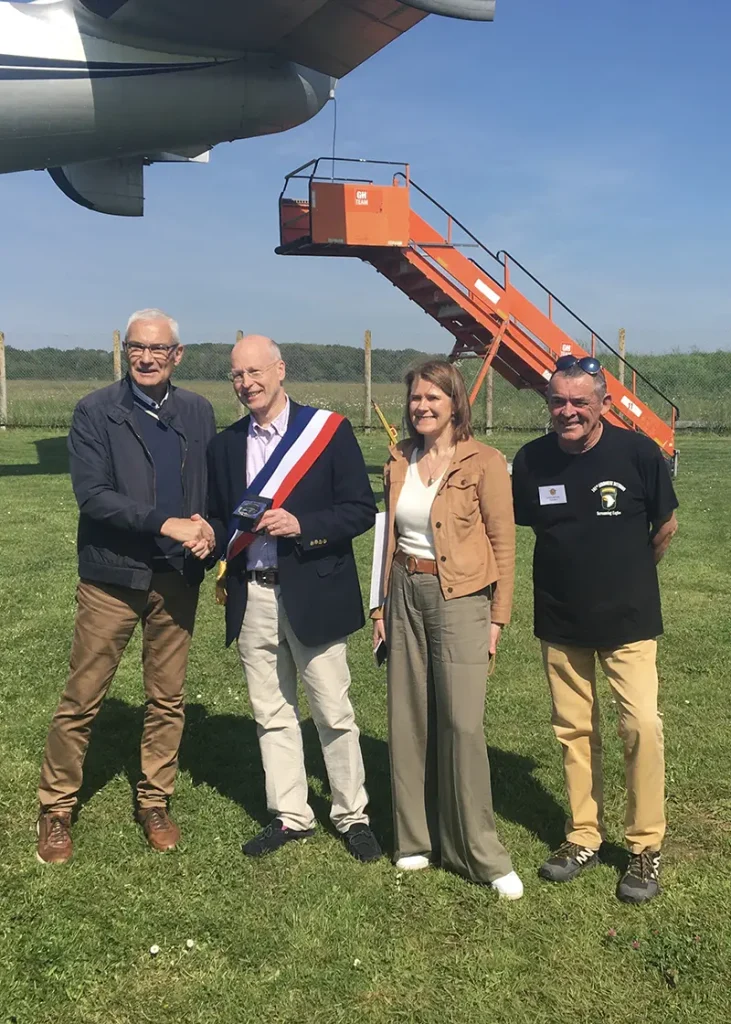
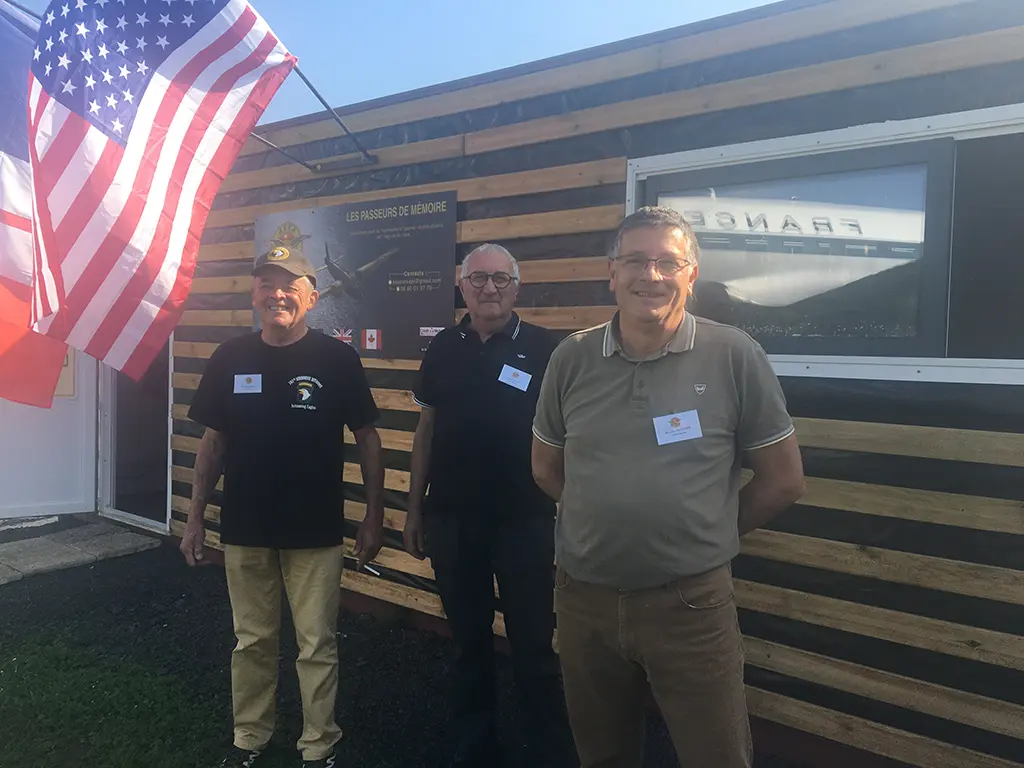
Following the opening I was able to meet in person a number of the people that helped BajanThings piece together George Inniss‘ story. Those included:
- The Poisson brothers niece – Brigitte Lecalvez.
- Jérôme Batard – AREA-PL (our host).
- Nicolas Roturier – AREA-PL.
- Yves François – Honorary Mayor of Pont-Saint-Martin.
- Daniel Dahiot – ABSA 39-45.
- Benoit Paquet – ABSA 39-45.
- Rene Brideau – historian and journalist.
- Stéphane Pajot – journalist and book author.
- Hugo Deschamps – journalist Radio France / France Bleu Loire Océan.
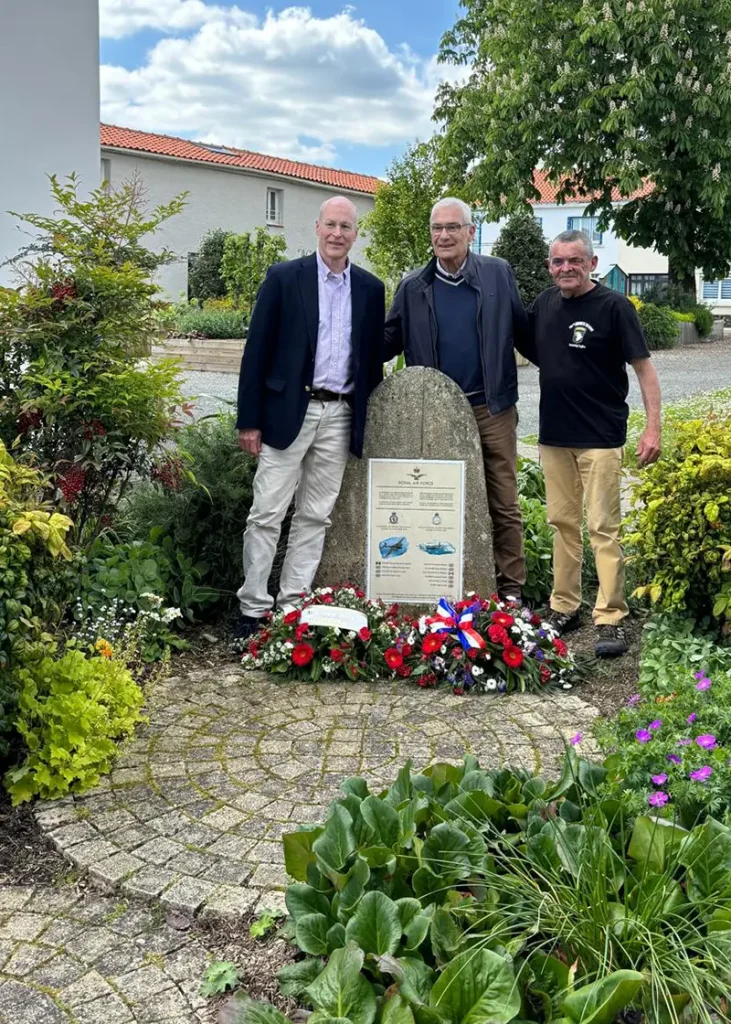
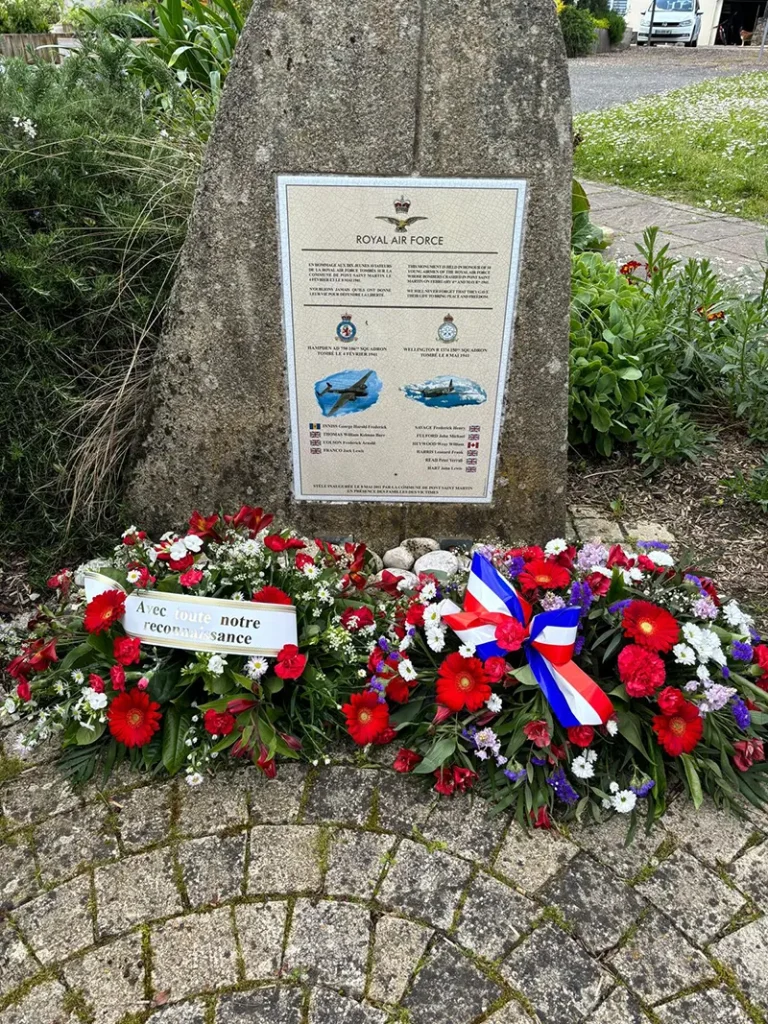
Later that afternoon we also placed a wreath at the memorial at the Hôtel de Ville, Pont-Saint-Martin to the crews of the RAF Hampden AD750 that crashed on 4th February 1941 and the RAF Wellington R1374 that crashed on 8th May 1941.

Source: Google Maps: 47.143440, -1.588860
My wife Susan and I would like to express our heartfelt thanks for the hospitality we received from our hosts Jérôme and Valerie Batard and Jean-Michel and Laurence Guignard. We were treated like royalty for the six days we were in France.
While in Nantes we visited:
- Réserve Naturelle du Lac de Grand-Lieu which we visited with Jérôme’s brother Jean-Pascal Batard. This natural lake is close to ocean and the Loire River. The lake extends in winter to cover more than 6,000 hectares and then becomes one of the largest natural lakes on the French plains. Lac de Grand-Lieu was a key landmark that pilots used for locating La Société Nationale des Constructions Aéronautiques de l’Ouest (SNCAO) aircraft factory situated adjacent to the aerodrome at Château Bougon (now known as: Aéroport Nantes Atlantique).
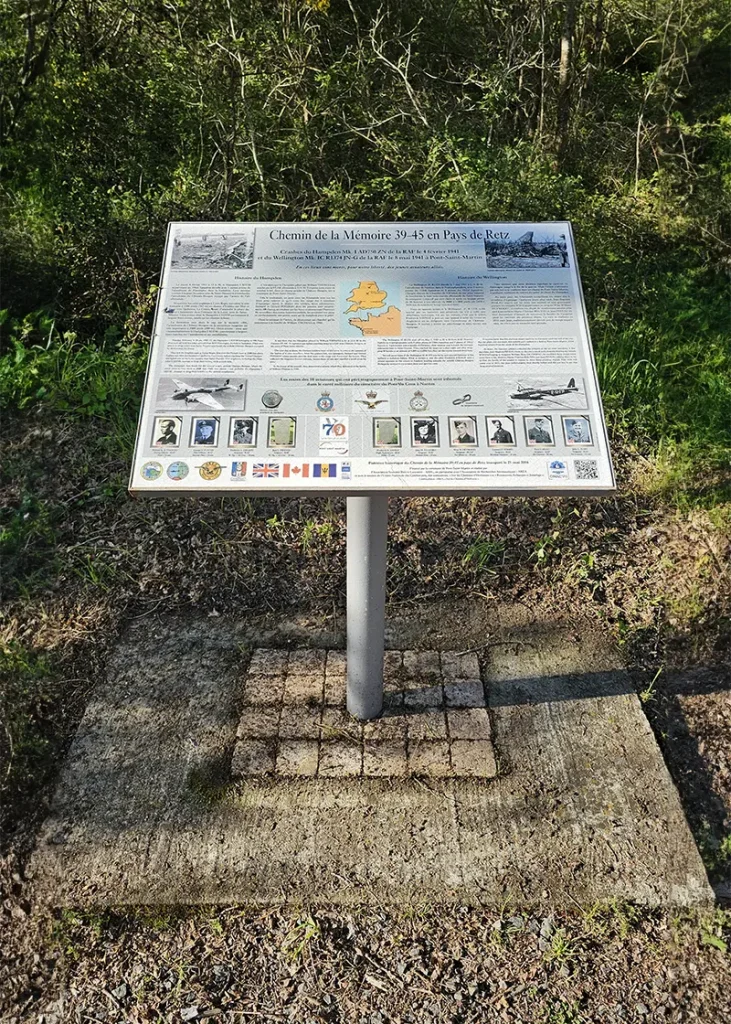
- At La Marionnière farm, La Marsoire, Pont-Saint-Martin we visited the crash site of the RAF Wellington R1374 of 150 Squadron and the RAF Hampden AD750 of 106 Squadron. Equidistance between the two crash sites is a plaque. Digital latlong coordinates: 47.14344,-1.58886.
- The memorial to the four aircrew of the RAF Hampden AD750 of 106 Squadron and the six aircrew of RAF Wellington R1374 of 150 Squadron, which is outside the Hôtel de Ville (Mayor’s office) in the centre of Pont-Saint-Martin. Here we placed a wreath with the Honorary Mayor – Yves François. The location of the memorial was chosen adjacent to the Hôtel de Ville rather than at the crash site, so people would pass the memorial every day. It is close to the school, so succeeding generations will be reminded of the sacrifice made by the young airmen.
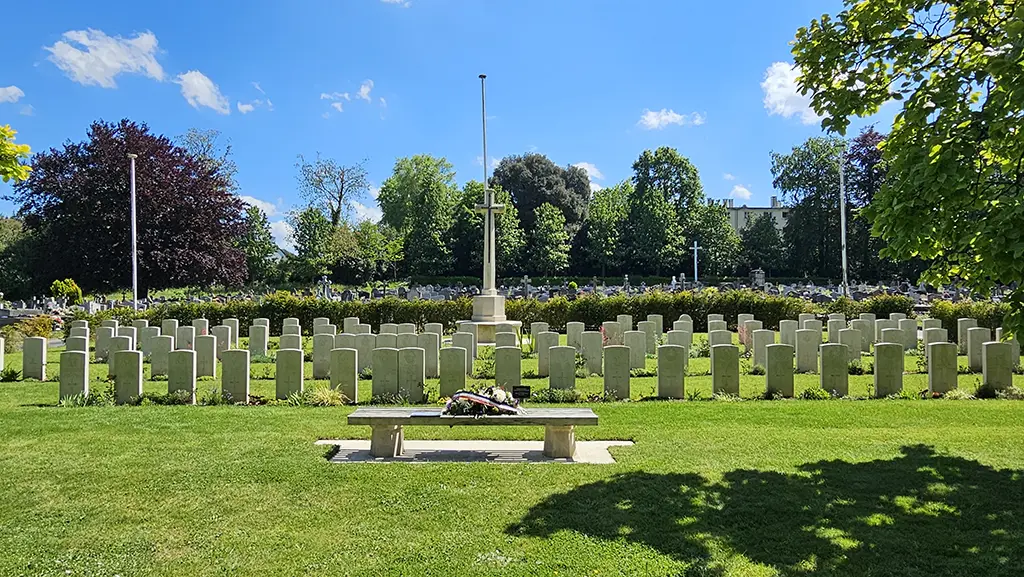
- Commonwealth War Graves Commission, Pont-du-Cens Communal Cemetery within Parc de la Gaudinière, Nantes where the four aircrew of the RAF Hampden AD750 of 106 Squadron and the six aircrew of RAF Wellington R1374 of 150 Squadron are buried.
- Guérande.
- Kerignon (to buy sea salt from a roadside stall).
- Le Croisic for lunch.
- Le Grand Blockhauss – Batz-sur-Mer which was built as part of the Atlantic Wall defence.
- Commonwealth War Graves Commission on the outskirts of Saint-Nazaire – Cimetière Militaire Britannique d’Escoublac-La-Baule near Le Piloca where soldiers from the sinking of the Lancastria on 17th June 1940 and from the Campbeltown raid on St. Nazaire on 28th March 1942 are buried. Most were the age of our children who are 19 and 23. These World War II Cemeteries are very moving places.
- The Saint-Nazaire submarine base which was one of the bases that submarines terrorising the Caribbean were based see: The torpedoing of the Cornwallis in Carlisle Bay, Barbados on the afternoon of Friday 11th September 1942 by German U-Boat 514.
- Pornic for dinner.
- Attended a World War II re-enactment show near near Casson where 400+ enthusiast had working mainly American World War II equipment from 1945 that included: bridges, tanks, trucks, food trailers, tents…
- Explored Nantes – which was a major slave port in the 18th century. Nantes was France’s largest slave trading port. An estimated 450,000 African captives were transported in slave ships that originated in Nantes during the eighteenth and nineteenth centuries.
Media coverage
These stories are all in French. If you view them in with Google Chrome they will be translated.
- AREA, a newcomer to the Frémiou field
- IN PICTURES – Pont-Saint-Martin exhibits the traces of its aviators from the Second World War
- IN PICTURES – Pont-Saint-Martin exhibits the traces of its aviators from the Second World War
- Near Nantes, an exhibition so as not to forget war pilots
- The memory of war pilots exhibited near the airport in Saint-Aignan-de-Grand-Lieu
- These plane debris tell of broken destinies
- ABSA 39-45 – Handley Page Hampden Mk I AD750 Pont-Saint-Martin, “La Marionnière”
- ABSA 39-45 – Wellington Ic R1374 Pont-Saint-Martin “La Marionnière”
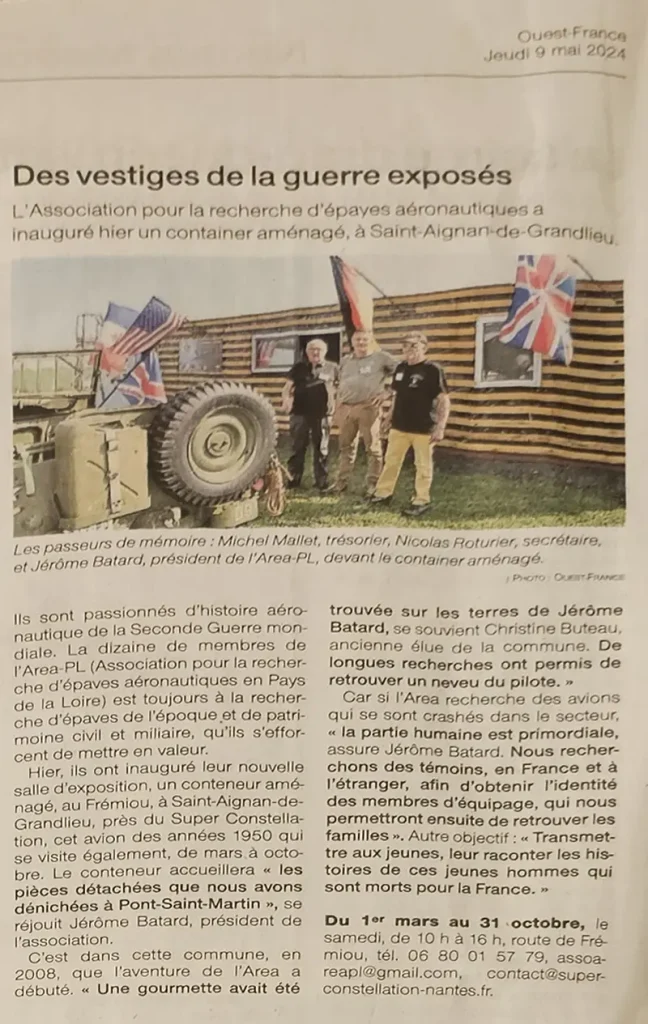
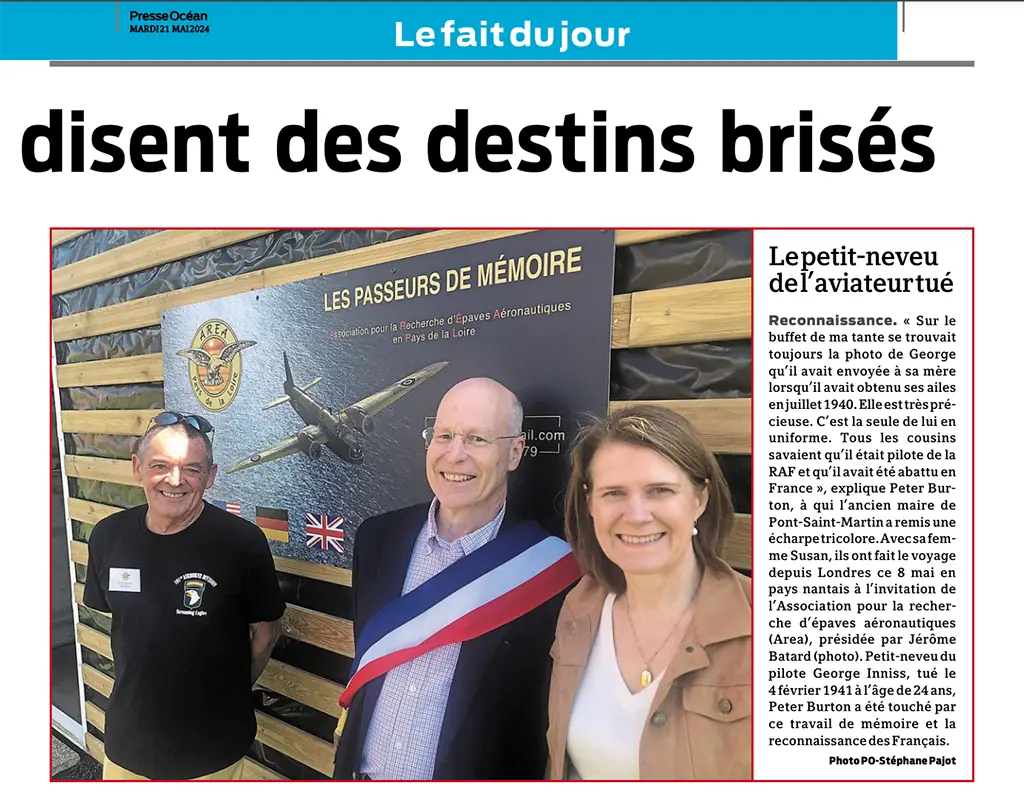
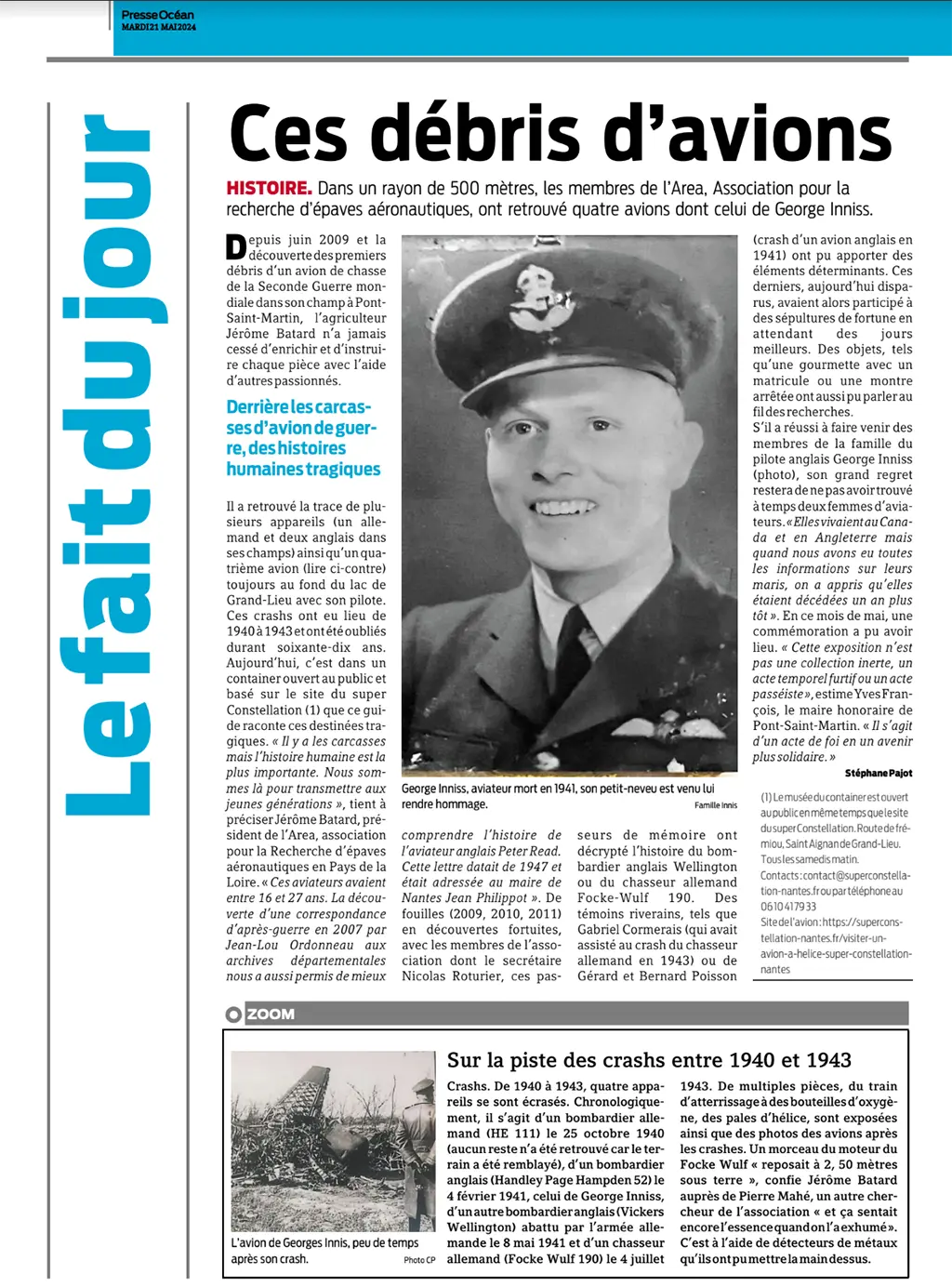
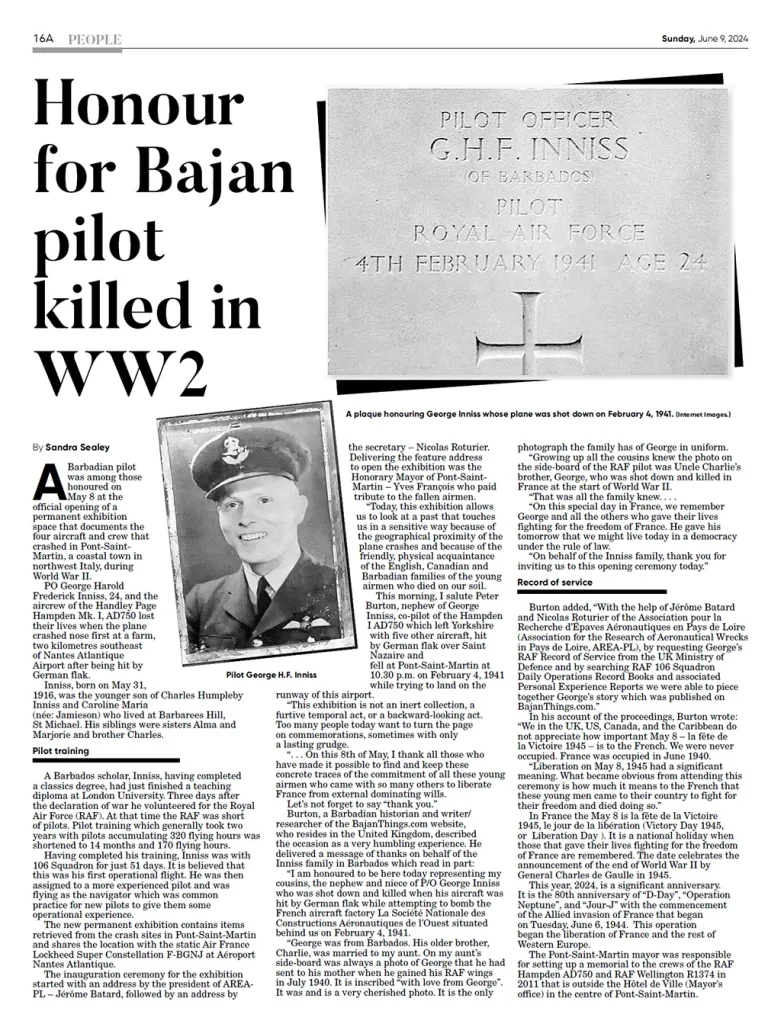
Erratum: the copy at the end of the first paragraph that says: “…that crashed in Pont-Saint-Martin, a coastal town in northwest Italy, during World War II”. It should read “…that crashed in Pont-Saint-Martin, a town south of Nantes in France, during World War II”.
Future AREA-PL project
The AREA-PL Association next project is the raising of a fifth aircraft a Focke Wulf 190 that crashed in Lac de Grand-Lieu which is South of Nantes.
An additional thank you
Our thanks also to BajanThings contributor Bill Hern who has been assisting Jonathan Ives in his ongoing search for the family of SGT. Jack Lewis Franco.
Jonathan has spent the last 15 years trying to trace distant members of Franco’s family. Under current UK disclosure rules the fully redacted records for SGT. Jack Lewis Franco will not be released until 2O30!
To date no information has been able to establish the whereabouts pre- World War II of SGT. Jack Lewis Franco’s mother and hence possibly trace any siblings of her, or uncles and aunts.
SGT. Jack Lewis Franco’s father seemingly vanishing after 1921, and his mother does not appear in any census records for 1901, 1911, 1921 or 1939.
SGT. Jack Lewis Franco’s father was Romanian his mothers (maiden name Lee) came from London. There is the possibility that his father, Emile Samuel Franco, was Jewish. It’s not recorded but it is consistent with his name, Romanian origins and movement to Rhodesia at the start of the 20th century, a time of Pogroms in Romania…


Leave a Reply