This post “Cuba – A different persecutive” was originally published on 22nd March 2022 and was updated on 12th July 2025 with details of my 2023 trip to Cuba, photographs from my 2024 trip to Cuba and with details of an upcoming BMHS study tour to Cuba from 24th November 2025 to 1st December 2025.
After two years of Covid I finally was able to return to Cuba. Getting there via Trinidad and Panama, with lengthy stop overs in both airports, was a long and tiring journey.
This time I re-visited some familiar places and some new ones. At first it did not appear that much had changed in the last two years. The process through the Jose Marti International Airport was quick and efficient. So was the taxi to Havana and bus to Camaguey. But once I settled in I realised that things are harder for the Cuban people. This is due mainly to the loss of the tourist arrivals due to Covid and the continued economic isolation by the USA.
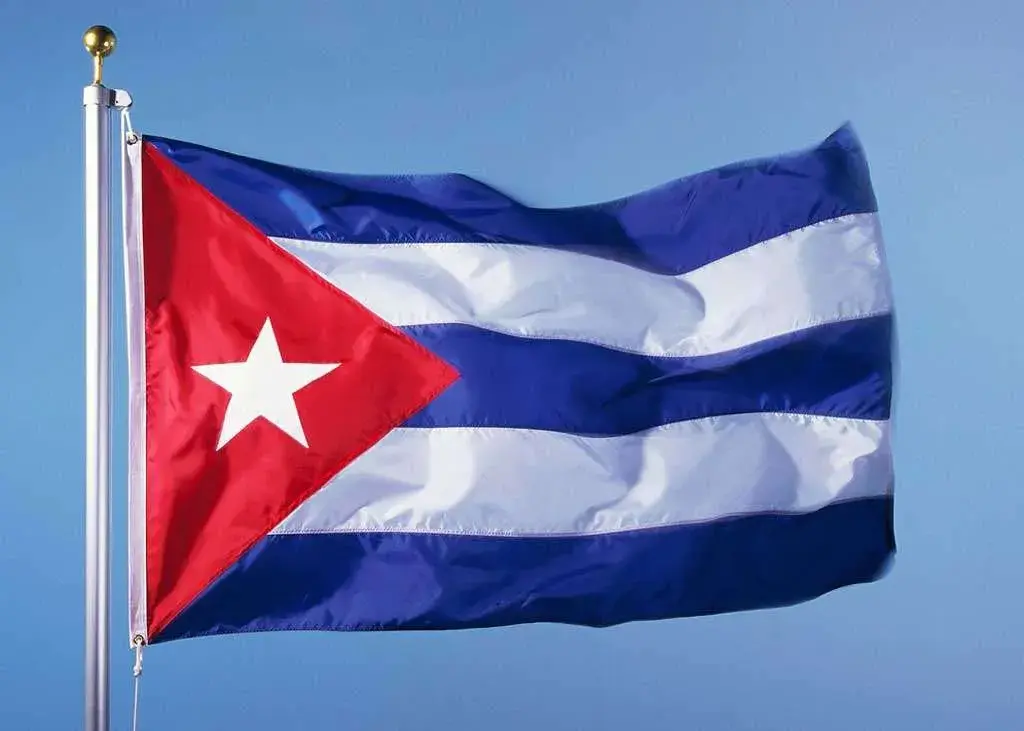
This narrow minded policy will soon give the USA a lot of trouble as the Chinese are providing a lot of aid and support to Cuba, and the Caribbean as a whole. On the bus trip back to Havana I saw two large drilling rigs proudly flying Chinese and Cuban flags side-by-side. A very clear statement of intent.


It is only a matter of time before China sends a warship through the Caribbean on a “goodwill” visit.
However, the US embargo has had some good results for the Cubans. Cubans have learnt how to be independent and self-reliant. Their Medical industry is very advanced and the best in the Central and South America. All medical care is free for all Cubans. Over the past decades this investment by previous governments made it possible for Cuba to develop their own Covid-19 vaccine.
As of December 31st 2021 95% of the Cuban population have had 3 doses of their “home-made” vaccine which has proved to be very effective. They are in the process of administrating an additional dose to combat the new mutations. Every person I spoke to was very proud to tell me that they have the 3 doses and have either got the fourth or have an appointment to get it. In addition anyone can visit a medical centre and get tested in a few minutes.
In August 2022 the Cuban medical team were administering their fifth Covid-19 booster . There are very few new cases and almost no Covid Related deaths among the population. Cuba is open for business again with no restrictions.
The result is that schools and businesses re-opened on 15th November 2021. Compare that to Barbados, where the vaccination rate is about 60%, where partial face to face education resumed in February 2022.
The only sign of the virus is that everyone wears a face mask when in public. I spent 3 weeks traveling on public transport, visiting shops and restaurants and staying in private homes. There was no requirement for social distancing in a shop, restaurant or bus. I was Covid free when I took the test to leave the country.
One aspect I was happy to see is the increase on electric powered motorcycles, bicycles and small vehicles. At times it seemed like every other vehicle was electric powered.


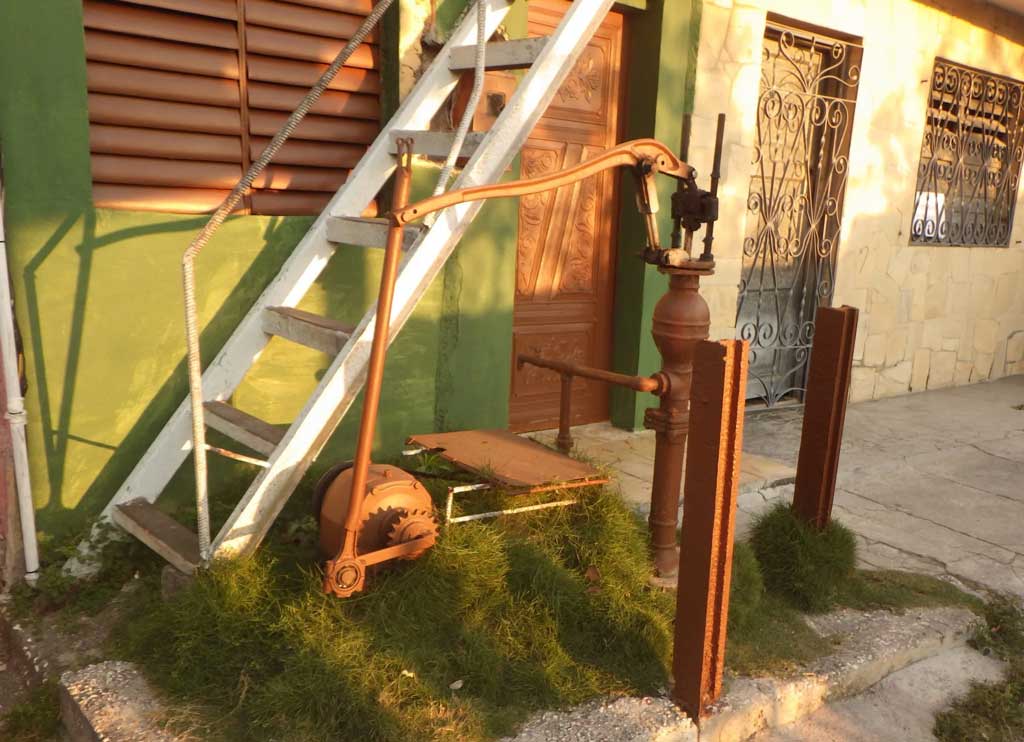
The Cubans are also masters at taking old equipment, that would either be scraped or put in a museum, and keeping it working for its original purpose. More often than not modifying it to meet current needs.


Cuba is famous for its 1950’s and 1960’s American and Russian cars and trucks. Most have had their V8 engines removed and are now powered by a 4 cylinder Diesel engine. These are much more fuel efficient that the original engines.


At Santa Lucia, on the North Coast, are beaches with calm and shallow sea. The Hotels are spaced far apart so that it is possible to have space alone as you relax. There are no beach salesmen to harass you. An area is set aside where you can go to buy a wide range of locally made craft and souvenirs.

Fernando’s Restaurant is owned by a Cuban family in Santa Lucia. It is popular with locals and tourists. We had many meals there.

In Santa Clara I visited the monument to Ernestro “Che” Guevara and the museum dedicated to him and his comrades in the battle against the government forces in December 1958. This is well worth a visit and gives a good record of “Che” Guevara’s life and the times he lived in.


Santiago de Cuba is located in south eastern Cuba, and is the second largest city on the island after Havana. It has a rich history dating back to the 16th century, and has played a significant role in the political, economic, and cultural development of Cuba.


The large bay of Santiago de Cuba is guarded by the San Pedro de la Roco Castle, better known as the Morro Castle. The narrow inlet is very similar to Cienfuegos.
It was built to guard the city from pirates that roamed the area in the 18th century. Today it is a world heritage site and is well worth a visit.


The Moncada Barracks was attacked by Fidel Castro and his small band of fighters on 26th July 1953. This coincided with another attack on Carlos Manuel de Cespedes garrison in Bayamo . Both attacks failed and Castro spent time in prison for his part. After his release he went to Mexico where he organised and equipped a small band of loyal followers.
They were joined by a young Argenina doctor on a motorcycle tour of South America. His name was Ernesto Guevara.
On 2nd December 1956 they landed at Las Coloradas and after an initial setback they made steady progress in changing the government.
This time they were joined by the university students and together they waged a guerrilla war against the Batista government. On 1st January 1959 Batista fled to the USA and Castro and became leader of Cuba.


Dagoberto Ramos made these life sized sculptures in The Prehistoric Valley of animals from the Jurassic Period. They are spread over a large area in a realistic setting.


In January 2023 I made my 5th visit since 2019 and I stayed in over 12 “Casas Particulars”. These are private owned houses that you can rent a room.
I got the opportunity to mix with the family and share their meals. All of them were clean, safe and friendly and had a TV and a full range of kitchen appliances.
I was free to travel wherever I wanted to without any restrictions on where I, or any Cuban, could go. There are very few police on the streets and the few I saw are relaxed and not aggressive. But it is a country where there is a punishment for every crime and it is adhered to. It does not depend on how much you can pay a lawyer.
Cuba is a safe and friendly destination for a traveller who wishes to enjoy the beach and the many historical sites all over the country. It is a country that is proud of its history. Every city has many museums that record the 500 years since the first Europeans arrived and the centuries before. Old buildings are carefully restored and returned to their past glory.
For the nature lover there is an abundance of flora and wildlife in the many parks. The island is surrounded by coral reefs that make for good diving.
Hiking is not well developed at present but it is possible to organise walks in most of the towns. On a previous visit I was able to walk unaccompanied for hours through the fields of Vinales without any restrictions.
In 2024 I again returned to Cuba.
Trinidad is a town in the province of Sancti Spíritus, central Cuba. Together with the nearby Valle de los Ingenios, it has been a UNESCO World Heritage Site since 1988, because of its historical importance as a centre of the sugar trade in the 18th and 19th centuries. Trinidad is one of the best-preserved cities in the Caribbean from the time when the sugar trade was the main industry in the region.


The above 2 pictures were taken from the same spot, looking in opposite directions.
Camagüey is Cuba’s 3rd largest city, located in the heart of Cuba, is one of the country’s oldest and most historically rich cities. Founded in 1528, it is renowned for its labyrinthine layout.


Bajans and Cuba – some additional reading
These books by Sharon Milagro Marshall give a good account of some of the Bajans, and West Indians, who migrated to Cuba in the early 1900’s. They will give the reader a better understanding of the political and cultural ties between Barbados and Cuba and of the economic and political changes experienced by Cuba since the early 1900’s. These books are available at all good book stores and online from Amazon.


Upcoming BMHS tour to Cuba – November 2025
PSST!
We Gine Cuba Fuh Independence Tour

The Barbados Museum & Historical Society is organising a study tour to Cuba from 24th November 2025 to 1st December 2025, in collaboration with the Embassy of Barbados in Havana and Going Places Travel.
The tour aims to explore: the sights, sounds, and stories of Cuba, including Old Havana, Revolution Square, and the Viñales Valley.
Tour Details
Dates: 24th November 2025 to 1st December 2025.
Organisers: Barbados Museum & Historical Society in collaboration with the Embassy of Barbados in Havana and Going Places Travel.
Activities: Exploring Old Havana, Revolution Square, Viñales Valley, and other cultural and historical sites.
To book a place on this BMHS tour to Cuba please call: Lynette Rice at Going Places Travel on: +1 (246) 431-2400 ext 2462 or email her at: lynette.rice@goingplacestravel.com.
Click here for the We Gine Cuba Fuh Independence tour brochure available on the Barbados Ministry of Foreign Affairs and Foreign Trade website.